


 Upwork
 Fiverr
 People Per
Hour
People Per
Hour
What Are the Key Principles of Effective Shopify Store Design
 By Manoj Kandwal
|
30-Sep-2026
By Manoj Kandwal
|
30-Sep-2026
A beautiful storefront means little if shoppers can’t find what they want. Strong Shopify store design shapes how visitors move through your store, what they trust, and whether they buy. Many brand owners chase a stylish look and forget the basics: clear menus, fast pages, and a smooth path to checkout. The result is a pretty store that quietly loses sales. This guide covers the core principles that turn a storefront into a sales tool. You’ll learn how the platform shapes design choices, what skills to look for in a design team, how location affects cost, and how to keep your store sharp as it grows.
Not sure if your current design costs you sales?
Get a free store design review. Our team will check your navigation, product pages, and mobile layout, then send you a clear list of fixes.
What Makes Store Design for Shopify Different From Other Platforms
Shopify runs on themes. Each theme uses Liquid templates, sections, and blocks that store owners can rearrange in the theme editor. Since the Online Store 2.0 update, merchants can add sections to almost any page without code. That flexibility helps, but it also sets limits. Checkout pages follow Shopify’s own rules, and apps can inject code that changes how a page looks and loads.
This is why platform knowledge matters in store design for Shopify. A designer who knows only WordPress or Webflow may create a layout that fights the theme structure. The developer then spends extra hours to force the design to fit. A designer who knows Shopify plans around sections from day one, so the store stays easy to edit and cheap to maintain.
Core Principles Behind Strong Shopify Website Design
Good shopify website design follows a few steady rules. Each one helps shoppers find products faster and feel confident about a purchase.
- Visual hierarchy: Large product images, bold prices, and one clear Add to Cart button.
- Navigation clarity: Plain category names and a search bar that shoppers can spot at once.
- Consistent branding: The same fonts, colors, and tone on every page.
- White space: Room around key elements so pages feel calm, not crowded.
Simplicity often beats complexity. Sliders, popups, and animated banners look impressive in a pitch deck, but they slow pages and distract buyers. A clean layout with one strong message per section usually converts better. Shoppers came to buy, not to admire motion effects.
How a Shopify Expert Approaches the Design Process
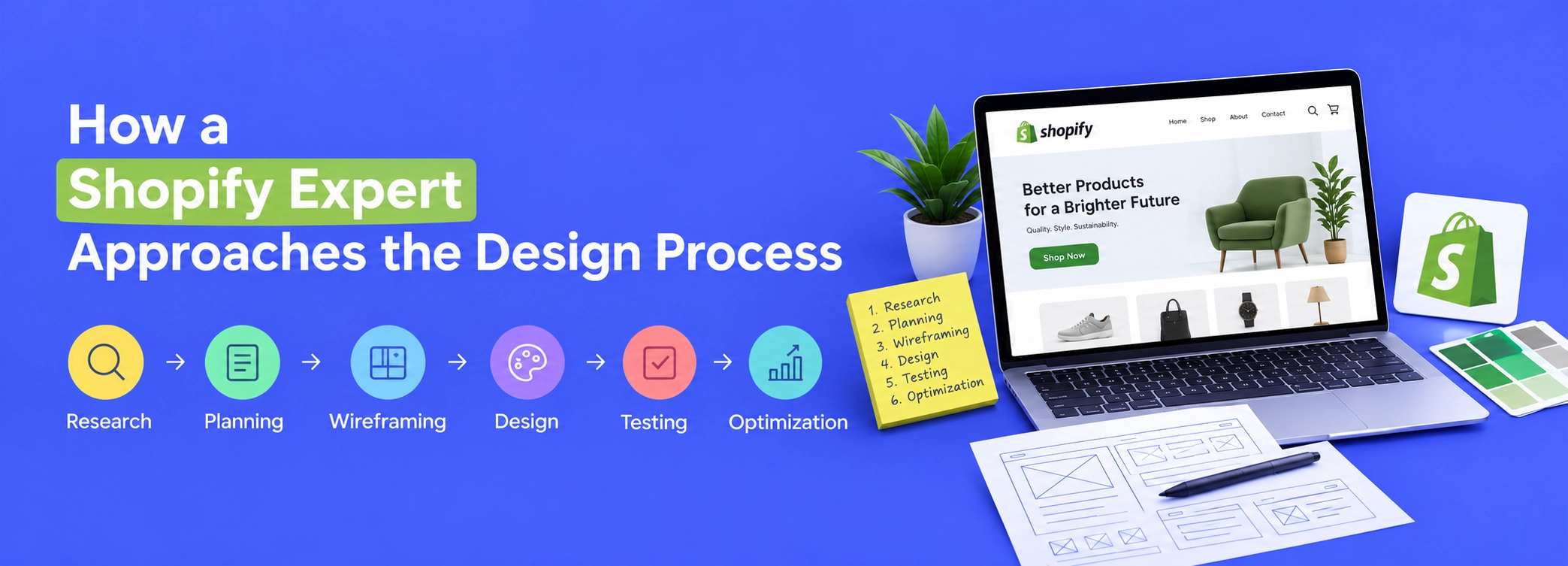
Skilled Shopify experts start with questions, not mockups. The discovery phase covers the brand story, target buyers, top products, and current sales data. They study competitor stores and review analytics to see where visitors drop off. This research shapes every layout choice that follows.
Next comes balance. The brand needs a distinct look, yet the layout must still guide people toward a purchase. A good designer keeps brand personality in photos, colors, and copy while the structure stays familiar. Shoppers shouldn’t have to learn a new way to shop on every site.
Why Mobile-First Design Is a Non-Negotiable Principle
Most Shopify traffic now comes from phones. For many brands, the small screen is the main screen. Mobile-first design starts with the phone layout and then scales up to tablets and desktops. This order forces tough choices about what matters most on each page. Watch for these common mobile mistakes:
- Tap targets that sit too close together
- Text too small to read without a zoom
- Popups that cover the whole screen
- Menus with deep nested levels
- Large hero images that push products far down the page
Each of these issues adds friction. Friction costs sales. Test your store on real phones, not just a desktop browser squeezed to look narrow. Sticky Add to Cart buttons and thumb-friendly menus make a real difference on small screens.
Comparison Table 1: Strong vs. Weak Shopify Store Design Elements
The gap between a store that sells and one that struggles often comes down to a handful of elements. Here’s how they compare.
| Design Element | Strong Design | Weak Design |
|---|---|---|
| Navigation structure | Five or six clear categories with a visible search bar | Long menus with vague labels and a hidden search |
| Page load speed | Under three seconds on mobile | Heavy scripts and large images that drag past five seconds |
| Product page layout | Large images, clear price, reviews, and one main button | Cluttered text blocks and buttons that compete for attention |
| Checkout flow clarity | Few steps, guest checkout, and visible trust badges | Forced account creation and surprise fees at the end |
Use this table as a quick audit list. Score your own store on each row and fix the weakest area first.
How to Hire Shopify Expert Talent for a Custom Store

When you set out to hire Shopify expert talent, start with the portfolio, but read it with care. Pretty screenshots prove little. Ask for live store links and, where possible, results such as conversion lifts or lower bounce rates after launch. A designer who tracks outcomes thinks about sales, not just style.
Then ask direct questions about process:
- What happens during discovery?
- How many revision rounds does the quote include?
- Who builds the design once you approve it?
- How do you test the design on mobile?
Clear, confident answers signal a mature process. Vague replies often signal trouble later.
Hire Shopify Developer Skills That Support Strong Design Execution
A strong design only works if someone can build it well. The developer turns mockups into a live theme that loads fast and works on every device. Before you hire Shopify developer talent, check for key skills such as Liquid, HTML, CSS, JavaScript, and a solid grasp of Shopify’s section and block system.
Theme customization experience matters most. Some developers bolt on an app for every feature, which bloats the store. Better developers write lean custom sections instead. Ask candidates how they would add a size guide or product bundle without an extra app. Their answer shows how they think about speed and upkeep.
What a Shopify Specialist Brings to Design Beyond Coding
Code alone doesn’t make a store easy to use. The best shopify specialists also think like shoppers. They ask why a visitor might hesitate on a product page and how to remove that doubt. This UX mindset shapes button placement, copy, and the order of information on the page.
Design and development skills work best in the same team. When designers hand files to developers who never saw the research, small details get lost. When one team owns both, the final build matches the plan, and fixes happen faster.
Shopify Expert Developer: Balancing Design and Performance
Rich visuals attract shoppers, but heavy files push them away. Every large video, custom font, and app script adds load time. Slow pages hurt both conversions and search rankings. Skilled Shopify expert developers keep the look without the weight:
- Compress images and serve them in WebP format
- Lazy-load images that sit lower on the page
- Limit custom fonts to two families
- Remove leftover app code after you uninstall an app
The goal is balance. A hero video might stay if it drives sales, but it should load after the main content. Developers should test speed with tools like Google PageSpeed Insights before and after every major design change.
When to Bring in a Shopify Consultant for Design Strategy
Shopify Consultants add the most value early. Before any design work starts, they review your brand, audience, and sales goals, then map out a clear plan. This step prevents expensive redesigns later. Brands that launch new product lines or enter new markets often gain a lot from this outside view.
Consulting guidance is enough when you have an in-house team ready to build. You get a strategy and a roadmap, and your team handles execution. If you lack design or development staff, a consultant alone won’t finish the job. In that case, full-service support that covers Shopify store design from strategy to launch makes more sense.
How Expert Shopify Developers Design for Customer Trust
Trust drives every online purchase. Shoppers look for proof before they hand over card details. That’s why expert Shopify developers add customer reviews with photos, clear return policies, secure checkout badges, and real contact details, since each one lowers doubt. They place these signals near the Add to Cart button, where hesitation peaks.
Consistent branding builds credibility too. When fonts, colors, and tone shift from page to page, the store feels unfinished. WillShall Consulting has applied this principle in product page UI/UX and mobile design work for Shopify brands such as Bison Ridge Labs and Queen Bee, with clean layouts and consistent visuals that give shoppers a reason to trust the store.
Choosing the Right Shopify Partner for Long-Term Design Support
A store launch marks the start, not the finish. Products change, seasons shift, and customer habits evolve. A one-time build freezes the design at launch day. Ongoing support from a trusted Shopify partner lets the store adapt with fresh banners, new collection pages, and small layout fixes based on real data.
Long-term partnerships often outperform one-off projects for a simple reason. The team already knows your brand, code, and customers, so they move faster and make fewer mistakes. Over time, small monthly improvements to your Shopify store design add up to bigger gains than a full redesign every few years.
What Sets Shopify Expert Developers Apart From General Developers
General web developers can build almost anything, but Shopify has its own rules. Platform specialists know the limits of the theme editor, the checkout, and the app ecosystem. They know which features need custom code and which ones Shopify already handles. That knowledge saves time and money.
Experience across many store types adds another edge. A developer who has built fashion, beauty, supplement, and home goods stores knows what each audience expects. They bring proven patterns instead of guesswork, and they spot problems before customers do.
Want to know what a custom design would cost?
Request a custom design quote built around your products, goals, and timeline. You get a clear plan and a fair price, with no pressure.
Shopify Agency New York: Local Design Trends Worth Knowing
New York brands often lean toward bold, editorial design. Think large type, strong photography, and layouts that feel like a fashion magazine. Fashion, beauty, and lifestyle brands lead this trend, and they expect stores that match the energy of the city.
A Shopify agency New York brands hire will usually charge premium rates to cover local costs. In return, you get easy in-person meetings and teams that know the local market well. Expect a fast pace, tight deadlines, and a strong focus on brand storytelling.
Los Angeles Shopify Agency Approaches to Visual Design

Los Angeles Shopify agencies often serve fashion, wellness, beauty, and entertainment brands. Many also work with creator-led and influencer brands that sell directly through social media. This client mix pushes their design focus toward lifestyle imagery and short video.
West Coast design tends to feel relaxed and airy. Soft color palettes, natural light photography, and plenty of white space show up often. These stores aim to sell a feeling as much as a product, so visuals carry much of the message.
Shopify Developer Manchester: Design Standards to Expect
UK stores face rules that US stores may not. Designers must plan for UK GDPR cookie consent banners, VAT-inclusive prices, and accessible layouts. Good Manchester developers build these needs into the design from the start rather than tack them on at the end.
Shopify developer Manchester usually offers lower rates than London while keeping strong quality. Many agencies there serve retail, fashion, and sports brands across the north of England. You often get senior talent without the capital city price tag.
Shopify Developer London: What Sets Design Quality Apart
London hosts one of the most competitive online retail markets in Europe. Agencies there compete for luxury, fintech-backed, and global direct-to-consumer brands, so standards run high. When you work with a Shopify developer London brands rely on, expect polished design, detailed strategy documents, and close attention to accessibility and speed.
Local collaboration offers face-to-face workshops and easy office visits. Remote teams offer lower costs and wider talent pools. Many brands now mix both, with a local lead for strategy and a remote team for production. Clear communication tools and set meeting times keep either option on track.
Comparison Table 2: Shopify Store Design Costs by Location
Costs vary by city, agency size, and project scope. The figures below reflect typical ranges for a custom theme project. Treat them as a starting point, not a quote.
| Location | Average Project Cost | Typical Design Timeline | Revision Rounds Included | Ongoing Design Support |
|---|---|---|---|---|
| New York | $15,000 to $50,000 | 8 to 14 weeks | 2 to 3 | Widely available through monthly retainers |
| Los Angeles | $12,000 to $40,000 | 8 to 12 weeks | 2 to 3 | Widely available |
| Manchester | £6,000 to £20,000 | 6 to 10 weeks | 2 | Common, with flexible plans |
| London | £10,000 to £35,000 | 8 to 12 weeks | 2 to 3 | Widely available at premium rates |
| Remote or Offshore Team | $3,000 to $15,000 | 4 to 8 weeks | 2 to 4 | Common, often at a lower monthly cost |
Price alone shouldn’t decide your choice. Compare what each quote includes, such as discovery, mobile testing, and support after launch.
Common Shopify Design Mistakes That Hurt Conversions
Some design errors show up again and again. They look small, but they chip away at sales every day:
- Cluttered homepages with too many banners and messages
- Unclear calls to action, or several buttons that compete
- Inconsistent branding across product, collection, and cart pages
- Shipping costs that appear only at checkout
- Low-quality or mismatched product photos
The fix usually starts with subtraction. Remove any element that doesn’t guide shoppers toward a purchase. Give each page one main goal and one main button. Then align fonts, colors, and image styles across the whole store.
How to Test and Refine Shopify Store Design Over Time
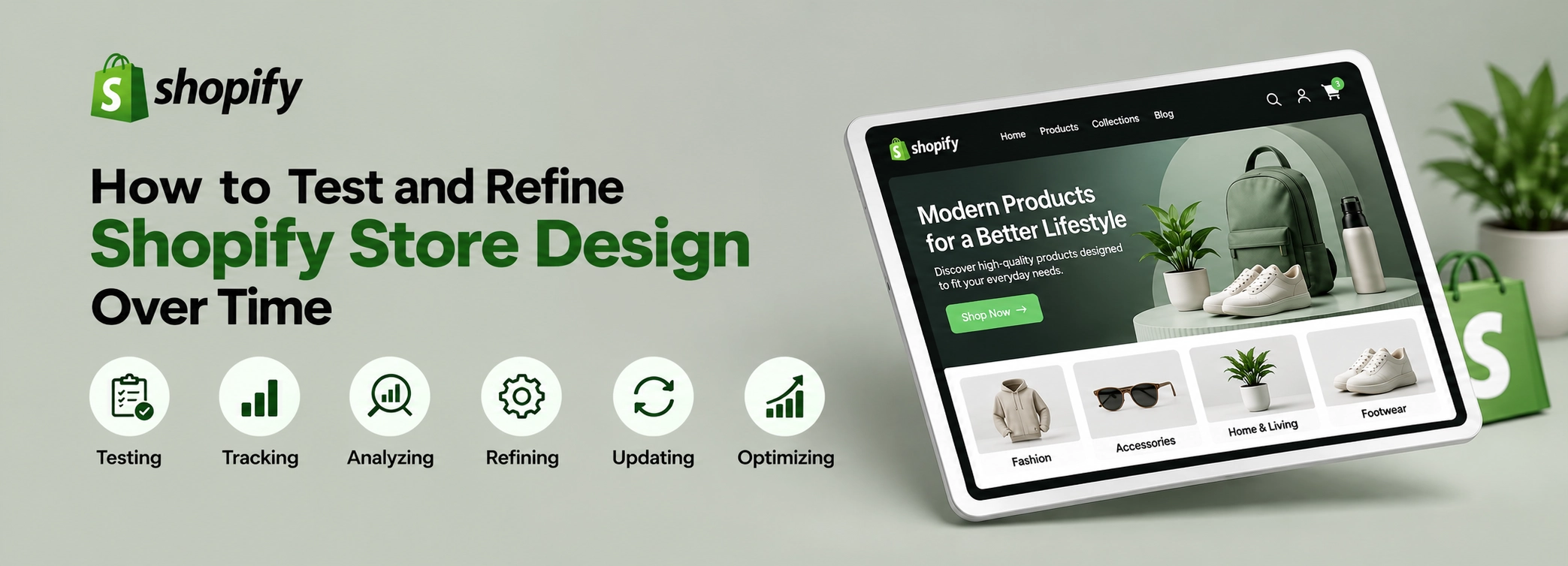
Great stores evolve through testing. An A/B test compares two versions of a page element, such as a button color, headline, or image layout, and shows which one wins. Test one change at a time so you know what caused the result.
Analytics tell you what to test next. Shopify reports, Google Analytics 4, and heatmap tools like Hotjar or Microsoft Clarity show where visitors click, scroll, and leave. If most shoppers exit on a certain product page, start there. Data beats opinion every time.
Questions to Ask Before Hiring for Shopify Store Design
Ownership comes first. Make sure you own the final theme files, design source files, and all custom code. Before you sign, ask these questions:
- Who owns the design files and custom code?
- Will I have admin access to every tool the team uses?
- What does support after launch include, and for how long?
- How fast do you respond to urgent bugs?
- What does extra design work cost after launch?
Support terms matter just as much. A clear agreement prevents surprise bills and long waits when something breaks during a busy sales week.
Building a Design Strategy That Grows With Your Store
A scalable design system saves time as your catalog grows. Define reusable sections, a fixed color palette, font rules, and image size standards. When you add new products or collections, the team simply fills in the templates.
Consistency gets harder as more people touch the store. A simple style guide keeps marketers, designers, and developers on the same page. Review the guide every quarter and update it when the brand evolves, so growth never breaks the look.
Conclusion
Effective Shopify store design rests on a few clear principles: simple navigation, strong visual hierarchy, mobile-first layouts, visible trust signals, and fast pages. None of these work alone. Design and technical execution must move together, or the store looks great and sells poorly. The right team makes that balance possible. WillShall Consulting, a certified Shopify agency with more than 1,200 projects delivered since 2012, helps brands pair conversion-focused design with clean, fast development that supports real growth.
Ready for a store that looks great and sells even better?
Book a free consultation or request a custom design proposal today.
I bring a wealth of knowledge and experience to WillShall Consulting with two decades of expertise in Website Design, Development, and Digital Marketing, My journey has been marked by a passion for creating innovative web solutions that not only meet but exceed client expectations. As an avid analyst, I dedicate myself to understanding each customer’s unique needs, ensuring that our web solutions are not just functional but exceptional.
Frequently Asked Questions About Shopify Store Design

Looking to boost your online presence and reach more customers in your local area?
Explore Local SEO ServiceKnow your website’s SEO Score.
Get a customize SEO Audit report & improve your website statistics.