Every growing Shopify store hits the same wall eventually. The theme that looked perfect at launch suddenly can’t support the features the business actually needs to compete. Store owners often don’t realize how much a theme limits them until they try to push past it, whether that means a custom checkout flow, a smarter product filter, or an integration their app stack simply won’t handle. This is usually the point where owners decide to hire Shopify developersupport built for real custom work, not just theme tweaks and settings toggles.
Get a free Shopify theme limitations audit and see exactly where your current setup is holding you back.
Shopify themes get built for general use. A theme has to work reasonably well for thousands of stores selling completely different products, so it never gets tuned to any one business. That works fine at the start, but it creates real friction the moment a store needs something specific.
The flexibility runs out fast once customization requests get complex. A feature might look possible in the theme editor, showing toggles and settings that suggest it can do almost anything. Then the store owner tries to push it further and the feature breaks under real traffic, real orders, or real product variety.
5 Signs Your Shopify Theme Can’t Keep Up With Your Business
Some warning signs show up long before a store owner admits the theme is the problem. Watch for these patterns:
You need a feature, and the theme settings simply don’t support it
You keep adding apps just to patch gaps the theme should have covered
Checkout or cart limitations are hurting your conversion rate
Design constraints keep blocking any real brand differentiation
Page speed keeps dropping because of stacked workarounds
Any one of these signs on its own is manageable. Three or four of them together usually mean the theme has hit its ceiling and the business needs something built around its actual workflow.
What Happens When Businesses Try to Force a Theme to Do Too Much
Stores that keep stacking apps to force a theme past its limits tend to end up worse off than when they started. Every app adds its own script, its own tracking, and its own load time. The store gets heavier and slower with each new fix.
The user experience suffers too. A checkout upsell app might work fine on desktop but break the mobile layout. A filtering app might conflict with the theme’s own search. Costs climb as well, since app subscriptions add up fast and rarely solve the root problem they were meant to fix.
What You Actually Unlock When You Hire Shopify Developer Support
Custom functionality changes the equation completely. Instead of forcing a generic theme to approximate what the business needs, a developer builds the feature around the business itself. Store owners who hire Shopify developers for this kind of work usually notice the difference within the first project.
That means solutions that don’t depend on stacking more apps on top of each other. Features get built directly into the store’s architecture, so they scale as the business grows rather than breaking under new demands. A custom subscription model built today can flex to support new tiers next year without a rebuild.
Why Hire Shopify Theme Developers Instead of Settling for Theme Limitations
Theme developers work directly in the code instead of working around it. Rather than layering an app on top of a limitation, they modify the Liquid templates, the JavaScript, and the CSS to solve the problem at its source.
That approach preserves performance while still adding new functionality. A well-built custom feature loads faster than three apps trying to accomplish the same thing, and it avoids the visual and functional compromises that come with app-only fixes. This is exactly why teams that hire Shopify theme developers see fewer conflicts down the line.
What Makes Hire Shopify Expert Services Different From General Developers
Not every developer understands Shopify the same way. Platform-specific knowledge of Liquid and Shopify’s architecture separates a genuine Shopify expert from a generalist who happens to know some e-commerce code.
Experts also understand the app ecosystem itself, including which apps tend to conflict with each other and which ones cause slowdowns. That experience comes from solving problems unique to e-commerce, not just building generic web features and hoping they translate to a storefront.
How a Shopify Developer for Hire Approaches a Custom Feature Request
A good developer starts by asking whether the request actually needs custom code or whether an existing app can solve it cleanly. Not every feature requires a full build, and a skilled developer will say so.
Once custom development makes sense, the developer weighs the performance impact before writing a single line. Testing happens thoroughly before anything goes live, since a broken checkout costs far more than the time it takes to test properly. A Shopify developer for hirewho skips this step usually creates more problems than they solve.
Theme-Only Customization vs Custom Developer-Built Features
Factor
Theme Only Customization
Custom Developer Built Features
Flexibility
Limited to built-in settings
Built around specific needs
Performance impact
Can slow down with app stacking
Optimized for the actual use case
Long-term scalability
Breaks as business grows
Built to scale with the store
Cost over time
Rises with more app subscriptions
One-time investment, less ongoing cost
Uniqueness
Looks similar to other stores
Fully distinct from competitors
Custom Checkout and Cart Features Themes Typically Can’t Offer
Checkout is where most themes show their limits fastest. Custom development can add personalized upsell flows that respond to what a shopper already has in their cart, something standard theme checkout pages just can’t do without an app.
Custom shipping and payment logic also becomes possible, letting a store apply different rules to different regions or customer types. A streamlined mobile checkout experience often makes the biggest difference here, since most Shopify traffic now comes from phones and a clunky mobile checkout kills conversions fast.
Expert insights from
Srishti Sharma Web Developer
“Custom development almost always costs less over the long run than stacking five apps to patch a theme limitation. Store owners just don’t see that cost until the app bills start adding up.”
Advanced Product Page Features Beyond Standard Theme Settings
Product pages carry a lot of the conversion weight on any Shopify store, and custom filtering and search functionality lets shoppers find what they want without scrolling through pages of irrelevant products.
Dynamic product bundling adds another layer, letting a store group items together in ways a theme’s built-in settings never anticipated. Personalized product recommendations based on actual shopper behavior tend to outperform generic “you may also like” widgets by a wide margin.
6 Custom Features a Shopify Web Design Agency Can Build That Themes Can’t
Custom loyalty and rewards integrations tied directly to the store
Advanced inventory logic across multiple locations
Tailored subscription or membership models
Custom admin dashboards that simplify daily management
Integrations with third-party business tools like ERPs or CRMs
Personalized landing pages built around customer segments
Each of these features solves a real operational problem rather than adding a cosmetic layer on top of an existing theme.
How a Shopify Web Agency Balances Custom Features With Site Speed
Adding features without watching performance is how stores end up slower than when they started. A responsibleShopify web agencyruns performance testing before and after every implementation, so nothing ships without a clear before and after comparison.
Avoiding unnecessary bloat from poorly built custom code matters just as much as building the feature itself. The best agencies prioritize features that add real business value first, rather than building everything a client asks for regardless of impact.
How a Shopify Agency New York Businesses Trust Handles Complex Custom Requests
Fast-scaling, competitive brands need aShopify agency New Yorkteam that is recognized for handling complex builds without slowing down. These markets move quickly, and a developer who understands that pace tends to build with growth already in mind.
Balancing custom design with performance matters even more in high-traffic markets, where a single slow page can cost real revenue. Familiarity with enterprise-level feature needs also helps, since brands operating at this scale usually need integrations far beyond what a small store would ever require.
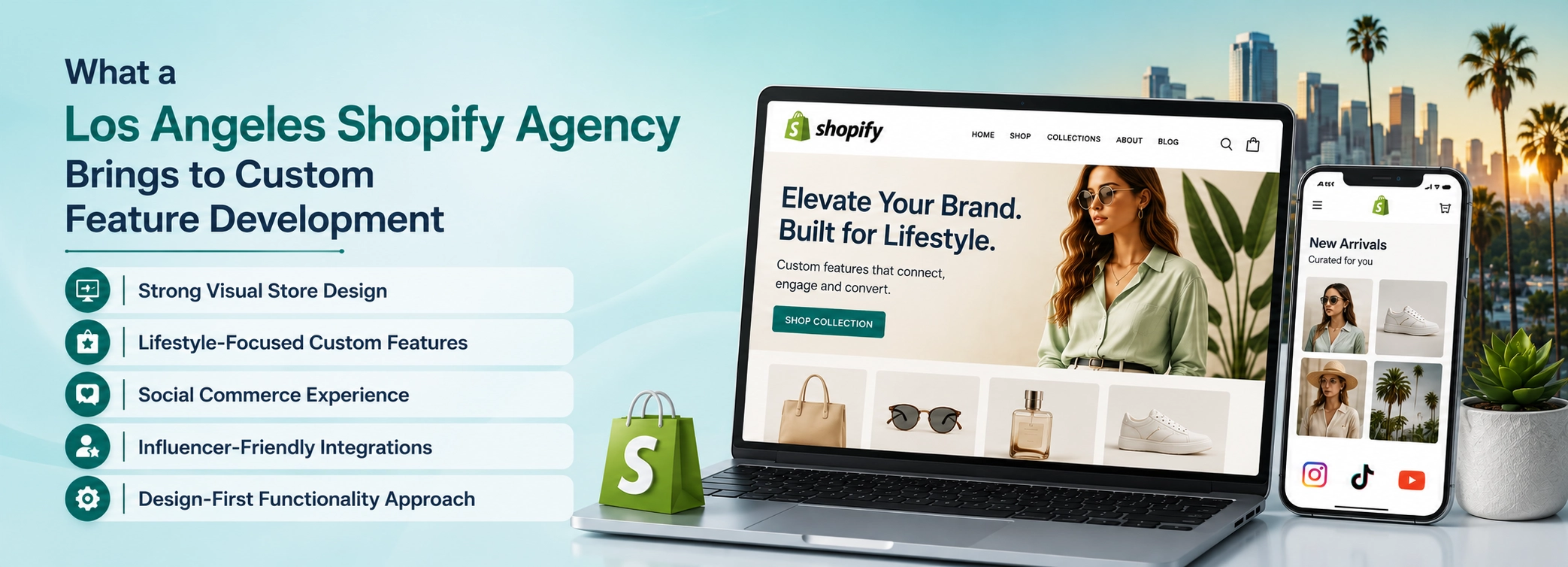
What a Los Angeles Shopify Agency Brings to Custom Feature Development
Visual and lifestyle-driven customizations tend to define stores built by a Los Angeles Shopify agency, since brands here often lean heavily on strong visual identity to stand out.
Experience with social commerce and influencer-driven features also shows up often in this market, where a store might need custom integrations for shoppable content or creator partnerships. A design-forward approach to custom functionality tends to separate these builds from more utilitarian projects elsewhere.
How Shopify Experts Houston Approach Custom Development for Growing Businesses
Practical, ROI-focused recommendations tend to define how Shopify Experts Houston teams approach new builds. Growing businesses in this market usually want a clear return before committing to any custom feature, and a good developer respects that.
Understanding regional and industry-specific needs matters here too, since Houston’s business landscape covers everything from energy to retail. Straightforward communication throughout complex builds keeps expectations aligned even when a project takes several weeks to complete.
Hiring a Local Shopify Developer vs a Remote Shopify Expert Team
Factor
Local Shopify Developer
Remote Shopify Expert Team
Communication ease
Face-to-face meetings possible
Scheduled calls and async updates
Cost
Often higher due to local rates
Frequently more competitive
Availability
Limited to local business hours
Often available across time zones
Market familiarity
Strong grasp of local market
Varies by team experience
Scalability
May have limited team size
Often backed by larger teams
Why Shopify SEO Services Should Be Considered During Custom Development
New features can quietly hurt a store’s search visibility if nobody checks the SEO impact before launch. SolidShopify SEO servicesmake sure new features don’t slow page speed or block crawlability during the build itself.
Structuring custom pages with SEO in mind from the start avoids the far more expensive process of fixing indexing problems after launch. A rushed custom feature that ignores SEO can undo months of ranking progress in a single update.
How a Shopify SEO Agency Protects Rankings During Feature Rollouts
A Shopify SEO agencyworth hiring monitors site performance before and after every major change goes live, catching problems before they show up in search console reports.
Checking indexing and technical SEO right after updates helps catch issues fast, since search engines can drop pages from the index quickly if something breaks. Coordinating development and SEO teams during rollout keeps both sides working from the same plan instead of fixing conflicts after the fact.
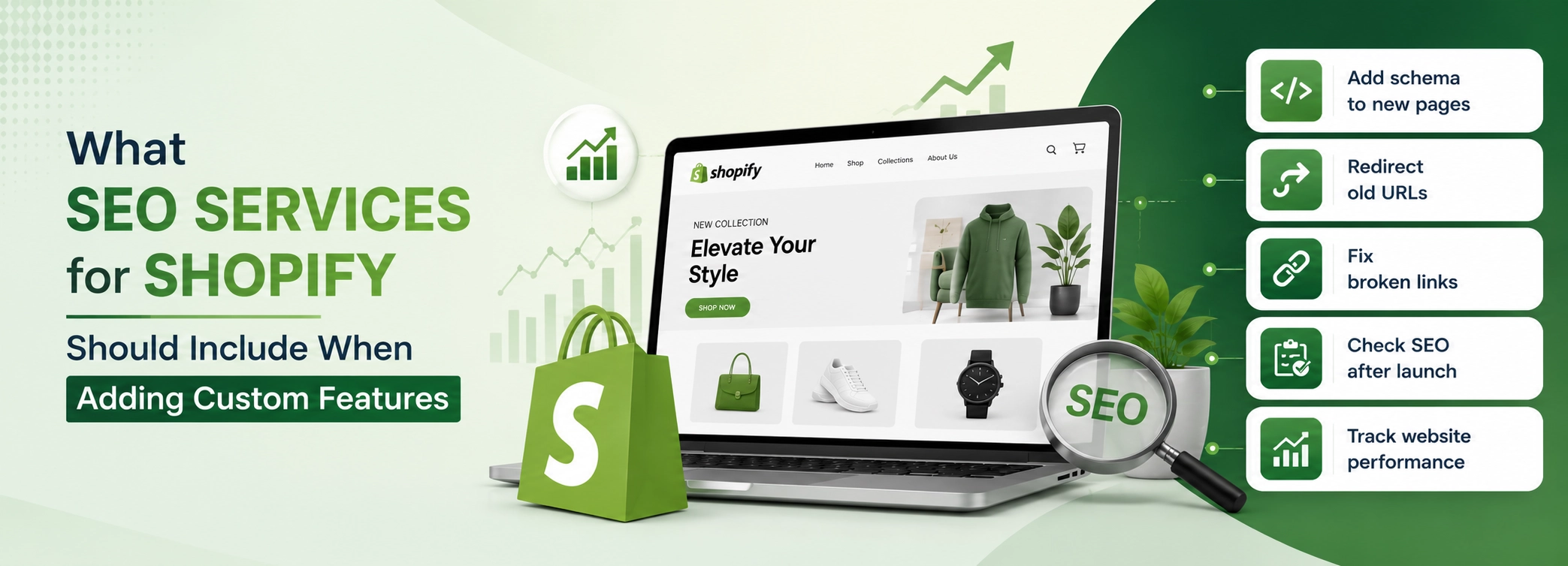
What SEO Services for Shopify Should Include When Adding Custom Features
Structured data updates matter any time a new page type gets added, since search engines rely on that markup to understand what the page actually contains. Good SEO services for Shopifytreat this as a standard step, not an afterthought.
Redirect handling becomes critical if URLs change during a custom build, since broken links quietly bleed traffic and rankings. Ongoing monitoring after launch rounds out the process, catching any drop in traffic or rankings before it becomes a bigger problem.
5 Questions to Ask Before You Hire Shopify Developer Help for Custom Features
Before signing on with any developer, ask these questions directly:
Can you show examples of similar custom features you have built
How do you test performance before launching changes
How do you approach SEO during custom development
What ongoing support is included after the feature goes live
How do you handle unexpected issues during a custom build
A developer who answers these clearly, without vague reassurances, is usually the safer choice for a long-term project.
Closing Thoughts
Themes remain a solid starting point for any Shopify store, but real growth almost always depends on features only custom development can provide. Store owners whohire Shopify developersupport gain the ability to unlock new functionality without sacrificing performance, design, or search visibility, and teams likeWillShall Consultinghave built a track record helping stores make that exact shift from theme limitations to custom capability.
Book a free Shopify development consultation and get a custom quote for your store.
I bring a wealth of knowledge and experience to WillShall Consulting with two decades of expertise in Website Design, Development, and Digital Marketing, My journey has been marked by a passion for creating innovative web solutions that not only meet but exceed client expectations. As an avid analyst, I dedicate myself to understanding each customer’s unique needs, ensuring that our web solutions are not just functional but exceptional.
Frequently Asked Questions About Shopify Developer
Custom checkout logic, advanced product filtering, loyalty programs, and multi-location inventory rules are common examples of themes rarely supported well.
Costs vary based on scope, but most custom builds cost less over time than stacking multiple apps to patch the same limitation.
Apps work for simple needs, but a developer makes more sense once a feature needs to fit the business exactly and scale with it.
Well-built custom code usually performs better than several stacked apps trying to achieve the same result.
They can, which is why SEO checks should happen before and after any major feature rollout.
Rising app dependency, slow page speed, and features you simply cannot build usually signal that a theme has reached its ceiling.
Local agencies offer easier face-to-face communication, while remote teams often bring broader availability and more competitive pricing.
Timelines depend on complexity, but most custom builds take anywhere from a few weeks to a couple of months.
I bring a wealth of knowledge and experience to WillShall Consulting with two decades of expertise in Website Design, Development, and Digital Marketing, My journey has been marked by a passion for creating innovative web solutions that not only meet but exceed client expectations. As an avid analyst, I dedicate myself to understanding each customer's unique needs, ensuring that our web solutions are not just functional but exceptional.





 Upwork
 Fiverr
 People Per
Hour
People Per
Hour

 By Manoj Kandwal
|
27-Jul-2026
By Manoj Kandwal
|
27-Jul-2026