

 Upwork
 Fiverr
 People Per
Hour
People Per
Hour
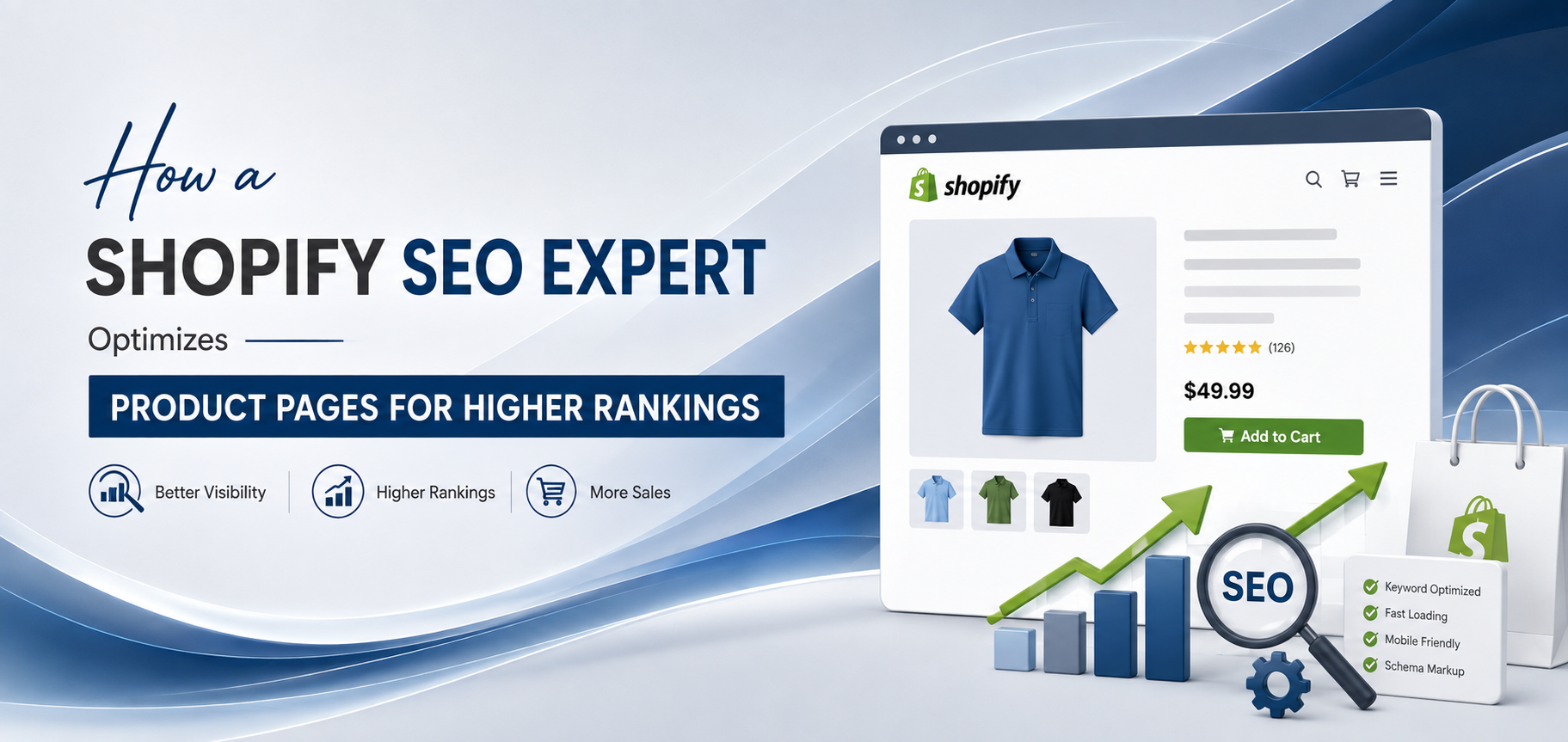
How a Shopify SEO Expert Optimizes Product Pages for Higher Rankings
 By Sachin Sharma
|
31-Aug-2026
By Sachin Sharma
|
31-Aug-2026
Product pages carry the weight of an entire Shopify store, yet most owners spend their SEO budget on blog posts instead. A generic description and a thin technical setup can quietly stop a page from ranking at all, even when the product itself sells well in person or through ads. A Shopify SEO expert looks at product pages first because that is where browsing turns into revenue, and this article breaks down exactly how that process works, from the first audit to the fixes that move rankings within weeks. Get a free product page SEO audit before you read further, so you can compare your own store against the checklist below as we go.
Get a free product page SEO audit and see what’s blocking your rankings.
Why Most Shopify Product Pages Never Rank Well
Most Shopify stores use product descriptions straight from the manufacturer or a quick paraphrase that reads the same as fifty other listings online. Search engines treat this as thin content, and thin content rarely earns a spot on page one. Missing metadata compounds the problem: no unique title tag, no meta description, and alt text left blank on every product photo.
Duplicate content across variants adds another layer of difficulty. A shirt in five colors often gets five nearly identical pages, and Google struggles to decide which one deserves to rank. Without a plan to fix these three issues together, a product page stays invisible no matter how good the product is.
5 Signs Your Product Pages Need SEO Attention
A quick audit usually reveals the same red flags across stores of every size. Watch for these signals before they cost more sales:
- Low or no organic traffic reaching the product listings, even months after launch
- High bounce rate on product pages, meaning visitors leave within seconds
- Pages that never show up in search results, even for the exact product name
- Duplicate content flags inside Google Search Console
- Slow load times on pages loaded with large, uncompressed images
If two or more of these apply to your store, the pages need structural attention, not just a content refresh.
What Hire a Shopify SEO Expert Actually Fixes First
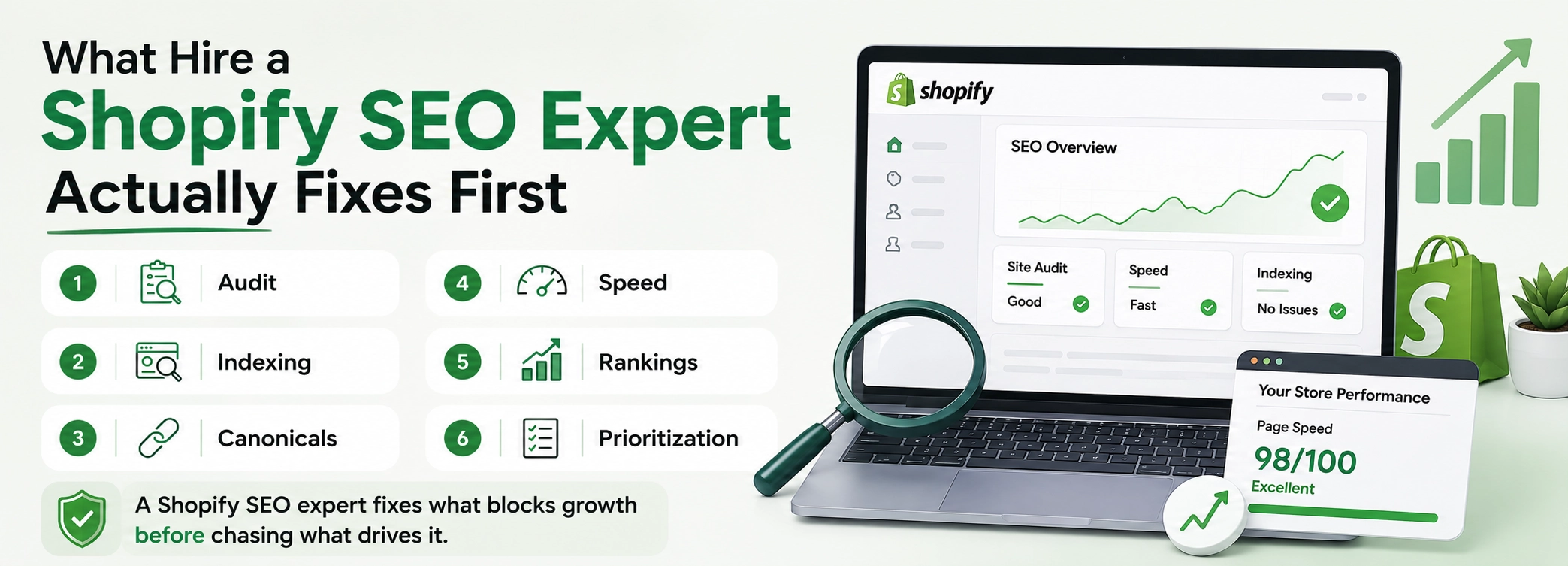
The first move is never content. A technical audit comes before any rewrite because writing new copy on top of broken indexing or duplicate URLs wastes the effort. The audit maps out crawl errors, canonical issues, and page speed problems that block rankings regardless of how good the writing is.
Once the technical picture is clear, the next step is spotting which pages already have ranking potential. A page sitting on page two of Google needs a smaller push than one that never got indexed. Fixes get prioritized by revenue impact, so bestsellers and high-margin products move to the front of the line before low-traffic items.
How a Shopify SEO Specialist Writes Product Descriptions That Rank
Good product copy reads as if a person wrote it for another person, not like a keyword list stuffed into paragraph form. A Shopify SEO specialist builds descriptions around the exact questions a buyer types into Google before purchase, things like sizing, material, or how a product compares to a close alternative.
Manufacturer copy-pasted straight from a spec sheet almost never ranks, because thousands of other retailers carry the same text word for word. The original copy that answers real buyer questions, written in a natural tone with the target keyword working where it fits, gives a page a real shot at ranking instead of sitting buried under competitors using the same boilerplate.
Why Shopify SEO Services Focus Heavily on Metadata
Metadata sounds small compared to a full-page redesign, but it often decides whether a page even appears in search results. Strong Shopify SEO services start with a unique title tag and meta description for every product, written to match how real buyers phrase their search rather than a generic template repeated across the catalog.
Structured data adds another layer by feeding search engines details that can trigger rich results, like star ratings or price, directly in the search listing. Alt text finishes the job, describing each product photo in a way that helps both search rankings and accessibility for visitors using screen readers.
How a Shopify SEO Consultant Solves Duplicate Content Issues
Variant pages create one of the most common SEO problems on Shopify stores. A Shopify SEO consultant applies canonical tags to point search engines toward the primary version of a product, so five color options do not compete against each other for the same keyword.
Unique descriptions across near-identical products help further, even if the differences are small, because it gives Google a reason to treat each page as distinct content. In cases where several variants barely differ, consolidating them into a single page with clear options often works better than maintaining five thin pages that never rank on their own.
What a Shopify SEO Company Does About Product Page Speed
Speed affects rankings directly, and image-heavy product pages are usually the slowest pages on a Shopify store. A Shopify SEO company compresses images without losing visible quality, cutting load time significantly without changing how the page looks to a shopper.
App bloat is the other common culprit. Stores often run five or six apps on the product template, each adding scripts that slow the page down. Lazy loading, where images below the fold load only as the visitor scrolls, cuts the initial load time further and keeps the page responsive even on a catalog with dozens of photos per product.
Unoptimized Product Page vs. SEO Optimized Product Page
| Factor | Unoptimized Page | SEO Optimized Page |
|---|---|---|
| Load Speed | Slow, often 4+ seconds | Fast, typically under 2 seconds |
| Metadata Quality | Generic or missing tags | Unique, keyword-matched tags |
| Content Uniqueness | Duplicated across variants | Distinct copy per page |
| Structured Data | Absent | Product schema present |
| Ranking Potential | Low or invisible | Strong, page one possible |
How Shopify SEO Experts Structure URLs for Better Rankings
A clean URL tells both search engines and shoppers what a page is about before they even click. Shopify SEO experts build URL structures around the actual product name and relevant category, stripping out random characters, tracking parameters, and duplicate folder paths that add no value.
Consistency matters as much as cleanliness. Collections and products should follow the same pattern across the entire store, so a shopper browsing one category can predict what a URL in another category will look like. That consistency also makes it far easier to fix redirects later without breaking dozens of links at once.
Why Internal Linking Matters for Product Page SEO
Internal links act as a map that tells search engines which pages matter most. Linking related products together builds topical relevance, showing Google that a store has real depth in a category rather than a single isolated listing.
Blog content plays a role here too. A well-written guide on choosing the right product type can link directly to the matching product pages, sending both authority and interested readers straight to a listing ready to convert. Distributing links this way across the catalog keeps authority from pooling only on the homepage, spreading ranking power to the pages that actually generate sales. WillShall Consulting has used this exact linking approach across Shopify catalogs, pairing blog content with product pages to spread authority without relying on paid traffic.
What SEO Services for Shopify Include for Structured Data
Structured data turns a plain listing into a rich result in search, and complete SEO services for Shopify always include product schema markup as a baseline. This markup tells search engines the exact product name, price, and availability in a format they can read instantly.
Review and rating markup adds visible stars directly in search results, which tends to increase click-through rates even before a shopper reaches the page. Price and availability data round out the picture, letting Google show current stock status and cost right in the search listing, which cuts down on visitors who click through only to find an item sold out.
6 Technical Fixes Shopify SEO Experts Prioritize
Technical debt builds up fast on a growing Shopify store, and a handful of fixes tend to make the biggest difference:
- Fixing broken links and long redirect chains that waste crawl budget
- Resolving indexing issues that keep pages out of search entirely
- Improving mobile usability, since most shoppers browse on a phone
- Optimizing image file names to match the product instead of a random string
- Cleaning up thin or orphaned pages with no internal links pointing to them
- Confirming canonical tags point to the correct primary version of each page
Working through this list in order clears the biggest blockers before moving on to content-level improvements.
Ready for a custom Shopify product page SEO strategy built around your actual catalog?
Book a free strategy call
What Sets the Best Shopify SEO Agency Apart on Product Pages
Plenty of agencies claim SEO expertise, but the best Shopify SEO agency choices show proven results in improving product page rankings specifically, not just blog traffic or brand awareness metrics. A portfolio with real before-and-after ranking data separates a genuine track record from a sales pitch.
Understanding Shopify’s platform-specific limits also matters more than general SEO knowledge. Shopify handles URLs, apps, and themes differently than WordPress or a custom-built site, and an agency without hands-on Shopify experience often misses fixes that only apply to this specific platform.
How Shopify SEO Agencies Prioritize High-Impact Pages First
Not every product page deserves equal attention on day one. Experienced Shopify SEO agencies start by identifying bestsellers and high-margin products, since ranking gains on those items move revenue faster than spreading effort evenly across an entire catalog.
Wasting time on low-priority pages is one of the most common mistakes stores make when handling SEO alone. Focusing early effort where ranking gains connect directly to sales, keep the whole project efficient, and gives a store visible results within the first few weeks instead of months of scattered work.
Why Hire Shopify SEO Expert Help Instead of DIY Fixes
DIY SEO attempts often start strong and stall once the technical issues get complicated. Choosing to hire Shopify SEO expert support instead gives a store a faster, more accurate diagnosis, since an experienced team recognizes patterns that take a store owner months to learn through trial and error.
Avoiding costly mistakes matters just as much as speed. A wrong canonical tag or a botched redirect can drop rankings that took months to build, and fixing that damage often takes longer than the original project. Ongoing strategy also replaces one-time tweaks, since search algorithms shift constantly and a page that ranks well today needs continued attention to hold that position.
What Shopify SEO Experts Track After Making Changes
Optimization does not end once changes go live. Keyword ranking movement gets tracked over time to confirm the fixes actually worked, with weekly or monthly checkpoints depending on how competitive the keyword is.
Organic traffic and conversion changes get measured alongside rankings, since a page can climb in position without necessarily driving more sales, and both numbers matter. Continuous monitoring also catches new technical issues early, like a broken redirect introduced by a theme update, before it undoes the ranking progress already made.
Comparison Table 2: DIY Product Page Fixes vs. Hiring a Shopify SEO Expert
| Factor | DIY Fixes | Hiring an Expert |
|---|---|---|
| Accuracy | Trial and error, mistakes common | Diagnosed and applied correctly |
| Time to Results | Slow, often months of guesswork | Faster, guided by experience |
| Risk of Mistakes | High, especially with technical SEO | Low changes tested before launch |
| Long-Term Consistency | Inconsistent, often abandoned | Ongoing strategy maintained |
| Overall Cost | Cheap upfront, expensive if errors occur | Predictable, avoids costly rework |
5 Questions to Ask a Shopify SEO Specialist Before Hiring
Before signing any contract, ask direct questions that reveal how a specialist actually works, not just what they promise:
- How do you decide which product pages to optimize first
- Can you show past product page ranking results with real data
- How do you handle duplicate content across product variants
- What gets included in ongoing reporting after the project starts
- How do you approach structured data for a Shopify catalog
Clear answers to these five questions usually separate a solid hire from a risky one.
How to Know If Your Shopify SEO Agency’s Choice Is Working
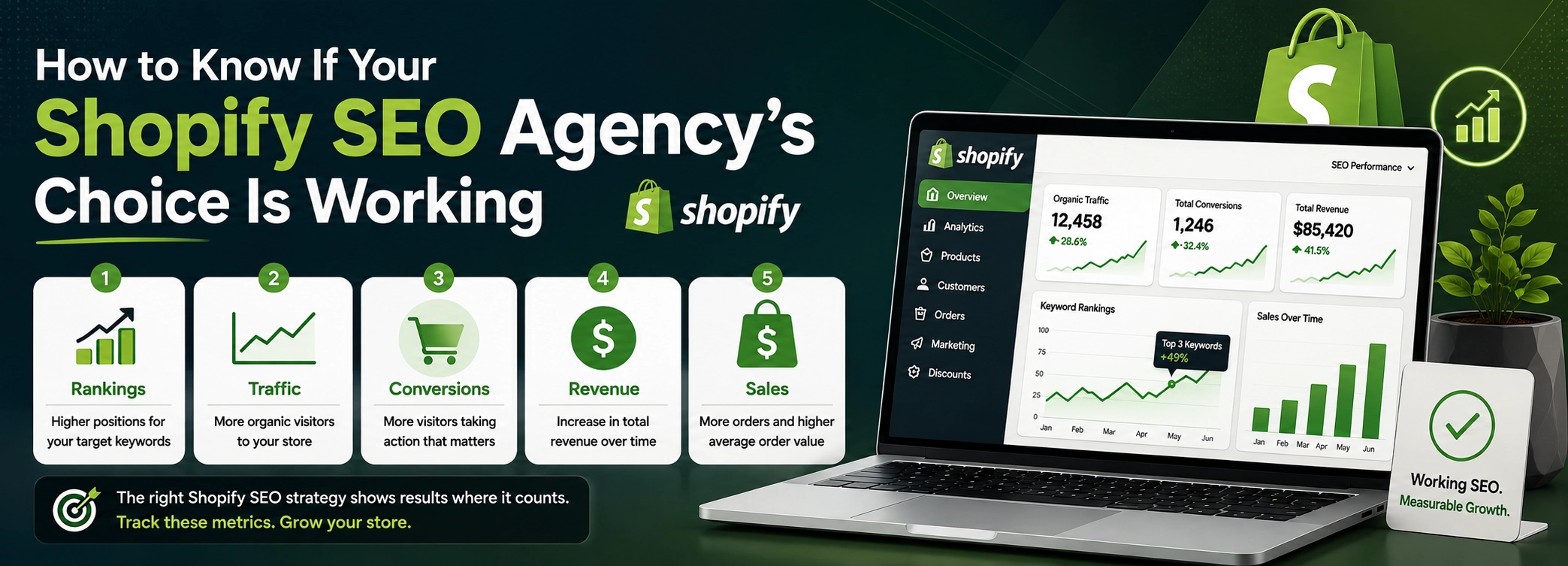
Results should show up in specific, measurable places rather than vague promises of improvement. Tracking ranking improvements for target product keywords gives the clearest early signal, since a page moving from position forty to position twelve is easy to confirm.
Organic traffic growth to specific pages backs up the ranking data, showing that improved positions actually bring more visitors. Conversion rate changes on optimized pages complete the picture, since the real goal was never rankings alone but the sales those rankings produce.
What Realistic Timelines Look Like for Product Page Ranking Gains
Patience matters with SEO, though not endless patience. Early technical fixes, like resolving indexing errors or fixing page speed, often show measurable impact within a few weeks of going live, since these issues were actively blocking pages before.
Content and structural changes take longer, usually a few months, before rankings stabilize in a new position. Gains compound as more pages get optimized across the catalog, since internal linking and topical relevance strengthen with each additional page that ranks well, making later improvements faster than the first ones.
Closing Thoughts
Product pages remain the fastest, highest-impact place to focus Shopify SEO efforts, since they sit closest to the purchase decision and often need only a handful of technical and content fixes to start climbing. A skilled Shopify SEO expert blends technical repair, natural content, and structured data into one plan rather than treating these as separate projects, and firms like WillShall Consulting have built entire workflows around exactly this kind of prioritized, revenue-focused approach for Shopify catalogs of every size.
Get a free Shopify SEO consultation or request a custom quote today.
With a Bachelor’s in Commerce and 15 years of experience in Ecommerce SEO and Shopify Development, I bring extensive expertise to the digital field. As Managing Partner at WillShall Consulting, I lead a team delivering exceptional Digital Marketing, Web Development, and Web Designing services. My passion for innovation and commitment to excellence help businesses thrive in the digital age.
Frequently Asked Questions About Shopify SEO Experts

Looking to boost your online presence and reach more customers in your local area?
Explore Local SEO ServiceKnow your website’s SEO Score.
Get a customize SEO Audit report & improve your website statistics.