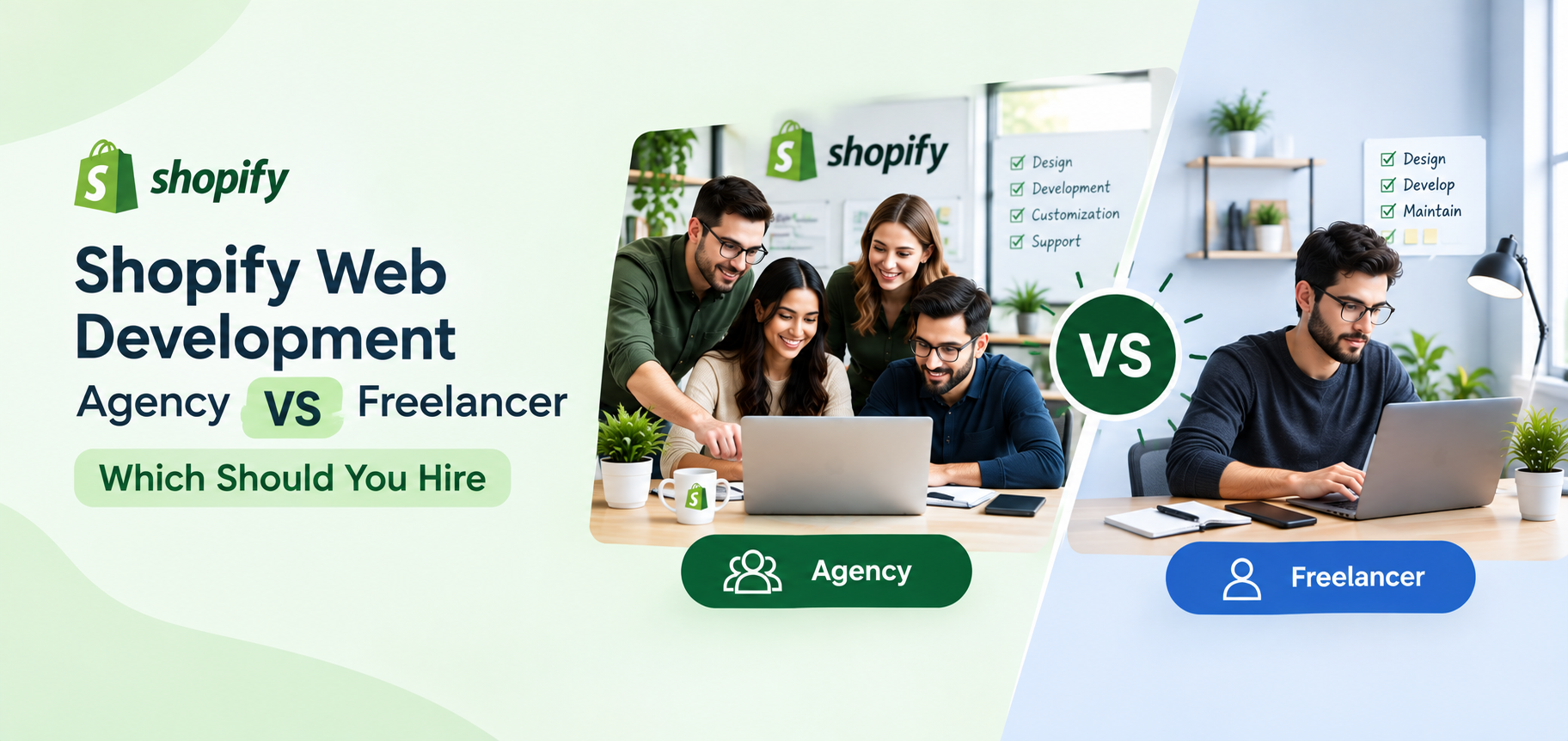
Every store owner reaches the same fork in the road. You need a Shopify build done right, and now you face the agency versus freelancer question. Pick the wrong option, and you lose time, budget, and search rankings before your store even opens. A qualifiedShopify development companybrings structure and backup that a single freelancer often cannot match, but freelancers still make sense in certain situations. This article breaks down both paths so you can choose the one that fits your business stage, budget, and growth plans.
Not sure which route fits your project?
Book a free Shopify consultation and get a clear recommendation before you spend a dollar.
What Is a Shopify Development Company, and What Do They Offer?
A Shopify development company runs on a team structure rather than a single person doing everything. Project managers coordinate timelines, developers handle the backend, designers shape the storefront, and QA staff catch bugs before launch. This division of labor means your project keeps moving even when one team member is out sick or on vacation.
Beyond raw coding, most agencies offer app integration, payment gateway setup, speed optimization, and ongoing maintenance plans. Many also fold in SEO and content strategy, so your store launches with a foundation built for organic traffic rather than just good looks.
What Is a Shopify Freelancer, and When Does It Make Sense
A freelancer is a solo developer who takes on your project directly, without a team layer between you and the work. They often charge less than agencies and can move fast on small, well-defined tasks like fixing a broken theme or adding a single app integration.
Freelancers make the most sense for stores with simple needs: a basic theme install, a small design tweak, or a short-term project with a tight deadline. Once your requirements grow to include custom development, SEO strategy, or multi-channel integration, a solo freelancer starts to show real limits.
Shopify Expert Agency vs Freelancer: Core Differences
A Shopify expert agency and a freelancer differ most in accountability. Agencies carry contracts, service level agreements, and a team that can step in if your main point of contact leaves the project. Freelancers rely on personal reputation and availability, which works fine until it doesn’t.
Turnaround time also splits the two groups. Agencies can run several workstreams at once through their team, while freelancers juggle one project at a time. If you need design, development, and SEO moving in parallel, an agency structure gets you there faster than a solo contractor working sequentially through each task.
Comparison Table 1—Shopify Development Agency vs Freelancer
Factor
Agency
Freelancer
Cost
Higher upfront, predictable long-term
Lower upfront, can rise with scope changes
Reliability
Backup staff available
Single point of contact
Scalability
Built for growth and complex builds
Limited to smaller projects
SEO capability
Often included or bundled
Rarely a core skill
Support after launch
Ongoing plans available
Depends on individual availability
Hire Shopify Expert: What Skills Should They Actually Have?
When you hire Shopify expert talent, whether solo or through a team, check for real fluency in Liquid, Shopify’s templating language. This skill separates developers who can customize a theme from those who just install one out of the box. Ask for examples of custom sections, metafields, and app connections they have built.
Portfolio review matters more than a slick sales pitch. Look for stores that load fast, work well on mobile, and show variety across industries. A portfolio full of near-identical templates is a red flag, no matter how polished each one looks.
Shopify design experts can make a storefront look sharp, but visual polish does not guarantee sales. A homepage built purely around aesthetics can bury calls to action, slow load times with oversized images, or confuse the checkout flow.
Strong design pairs visual choices with conversion strategy: clear product hierarchy, fast page speed, and checkout paths with minimal friction. Pure designers who lack technical grounding often hand off a beautiful theme that still needs a developer to fix performance issues underneath.
Shopify SEO Expert: A Role Freelancers Often Lack
A Shopify SEO expertrole requires skills that go beyond writing code or picking colors: keyword research, technical audits, and content strategy tied to search intent. Many freelancers focus purely on build work and treat SEO as an afterthought, if they touch it at all.
A qualified SEO expert should deliver a keyword strategy mapped to your product categories, technical fixes for crawl errors and page speed, and a content plan that targets buyer intent. Without this piece, a beautifully built store can sit invisible on page two of search results.
Hiring Shopify SEO Experts as Part of a Development Package
Hiring Shopify SEO experts alongside your development team, rather than as a separate hire, keeps your technical build and your search strategy aligned from day one. When the same team handles site structure and keyword mapping, you avoid the back and forth of two vendors blaming each other for ranking issues.
Bundled packages also tend to cost less than hiring development and SEO as two separate contracts. WillShall Consulting has built this bundled approach into its Shopify service model, pairing store builds with SEO strategy so clients launch with both pieces working together instead of patched on later.
Shopify Expert Developer: Technical Depth Businesses Should Expect
A qualified Shopify expert developer should handle backend logic beyond basic theme edits: custom app development, API connections to inventory or shipping systems, and troubleshooting checkout errors that generic templates cannot solve.
This depth matters most once your store grows past the basics. Subscription models, multi-warehouse inventory, and third-party ERP connections all demand backend skills that most theme installers simply do not have. Ask candidates directly about API work they have completed, not just themes they have styled.
When You Need Shopify Plus Experts Instead of a Standard Developer
Shopify Plus experts become necessary once your store crosses certain revenue and traffic thresholds, typically when order volume or catalog size outgrows what standard Shopify plans handle smoothly. High traffic spikes during sales events are another signal that a standard build may struggle to keep up.
Plus-level features include custom checkout scripting, wholesale channels, and advanced automation through Shopify Flow. These tools require specialized knowledge that goes well past a standard Shopify build, and most freelancers have never touched them.
Shopify Plus Development Experts: Agency vs Freelancer Capability
Shopify Plus development experts working within an agency structure typically outperform solo freelancers at this tier because Plus projects demand several specialties at once: backend architecture, checkout customization, and integration with enterprise tools like ERPs or CRMs.
Most freelancers simply cannot support this level of complexity alone. A single missed integration or a checkout script error during a peak sales period can cost thousands in lost revenue, and a solo contractor juggling other clients may not respond fast enough to fix it.
Common Risks of Hiring a Freelancer for Complex Shopify Projects
A freelancer represents a single point of failure. If they get sick, take another contract, or simply go quiet, your project stalls with no backup in place. This risk grows sharply once a project involves custom development or a tight launch date.
Common risks include:
Limited availability during critical launch windows or sales events
No backup developer if the freelancer becomes unreachable
Gaps in specialized skills like SEO or Plus-level features
Slower turnaround when multiple workstreams need to run at once
Expert insights from
Srishti Sharma Web Developer
“Growing stores need more than a single skilled developer. They need a team that can absorb a sudden spike in traffic or a checkout bug without missing a beat, and that redundancy is exactly what solo freelancers struggle to provide.”
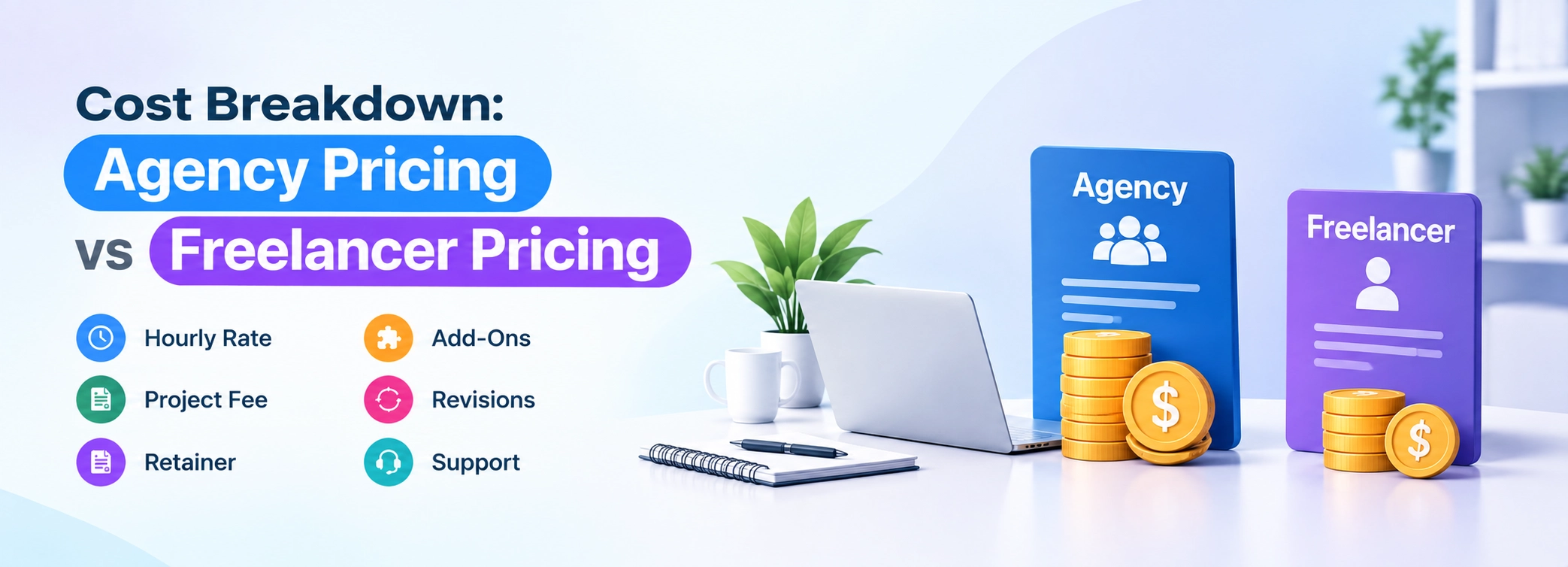
Cost Breakdown: Agency Pricing vs. Freelancer Pricing
Agency pricing usually runs higher upfront because you are paying for a full team, project management, and long-term support. Freelancer pricing looks cheaper on paper, but costs can climb fast once scope changes or revision rounds pile up.
Hidden costs often catch business owners off guard: app subscription fees, post-launch bug fixes not covered in the original quote, and the cost of hiring a second developer when a freelancer disappears mid-project. A Shopify development company typically bakes these variables into a clearer, more predictable contract from the start.
Want a real number instead of a guess?
Request a free store audit and a custom quote comparison for your project.
Shopify Agency in New York: What to Expect From Local Providers
A Shopify agency in New York often charges premium rates that reflect the local cost of doing business, so budget for higher hourly and project rates compared to other regions. Turnaround expectations also tend to run faster given the competitive local market.
NY businesses should prioritize agencies with proven experience in fast-paced retail and fashion niches, since these sectors dominate the local e-commerce scene. Ask for case studies from similar industries before signing a contract.
Shopify Experts in Houston: Agency and Freelancer Availability
Shopify experts Houston businesses hire from tend to offer a wider price range than coastal markets, with both agency and freelance talent available at competitive rates. The regional market supports a healthy mix of both options depending on project size.
Local versus remote hiring comes down to communication preference. Some Houston businesses prefer providers in a similar time zone for faster back-and-forth, while others find that remote agencies with strong project management tools work just as well without the geographic limitation.
Los Angeles Shopify Agency Options for Growing Brands
A Los Angeles Shopify agency often brings deep experience in consumer brands, beauty, and lifestyle products, industries that dominate the LA ecommerce landscape. This specialty knowledge can shortcut a lot of trial and error for brands in those categories.
Growing brands in LA should look for agencies that understand influencer-driven traffic spikes and can build sites that handle sudden surges from a viral post or a major campaign launch without crashing.
Shopify Website Design in Chicago: Agency vs. Freelancer Trends
Shopify website design Chicagobusinesses tend to sit at a more moderate price point than coastal cities, offering solid value for both agency and freelance work. Midwest pricing generally lands lower than New York or LA for comparable project scope.
Local businesses should ask providers directly about experience with regional logistics and shipping integrations, since many Chicago-based retailers serve a broad Midwest customer base with specific fulfillment needs.
Comparison Table 2 — Shopify Hiring Costs by Location
City
Average Project Cost
Typical Timeline
SEO Inclusion Rate
Support Availability
New York
Higher
4 to 8 weeks
Moderate
High
Houston
Moderate
4 to 10 weeks
Moderate
Moderate to high
Los Angeles
Higher
4 to 8 weeks
Moderate to high
High
Chicago
Moderate
4 to 10 weeks
Moderate
Moderate to high
Questions to Ask Before Hiring an Agency or Freelancer
Before you sign anything, get clear answers on ownership and support terms. These details shape your experience long after launch, not just during the build phase.
Ask these questions upfront:
Who owns the design files and source code after the project ends?
What does post-launch support include, and for how long?
What happens if the main developer becomes unavailable mid-project?
Are revisions included or billed separately once the project starts?
Red Flags to Watch for With Both Agencies and Freelancers
Vague pricing is one of the clearest warning signs, whether you are talking to an agency or a freelancer. A provider who cannot give you a detailed quote broken down by task likely has not thought through your project carefully.
Other red flags include a thin or generic portfolio, slow or inconsistent communication during the sales process, and reluctance to provide references from past clients. Trust your instincts here. If getting straight answers feels like pulling teeth before you have even signed a contract, the actual project will likely feel the same.
How to Decide Which Option Fits Your Business Stage
Startups with a tight budget and simple product catalog often do fine with a skilled freelancer for the initial build. As soon as your needs expand to include SEO strategy, custom integrations, or Plus-level features, and the calculation shifts toward an agency structure.
Budget and complexity move together here. A small budget paired with a complex project rarely ends well, no matter which option you pick, so match your provider choice to both your current stage and where you expect to be in the next twelve months.
Conclusion
Choosing between an agency and a freelancer comes down to your project complexity, budget, and how much risk you can absorb if something goes wrong mid-build. A skilled Shopify development company offers redundancy, bundled SEO, and support structures that most solo freelancers cannot match once a project grows past the basics. WillShall Consulting has worked with retailers across multiple stages of growth, from simple theme builds to full Plus migrations, pairing development with SEO strategy so stores launch ready to rank and convert. Whichever path fits your business today, make the decision based on where your store needs to be a year from now, not just what feels cheapest this week.
Ready to move forward?
Book a consultation or request a project quote and get a clear plan for your Shopify build.
I bring a wealth of knowledge and experience to WillShall Consulting with two decades of expertise in Website Design, Development, and Digital Marketing, My journey has been marked by a passion for creating innovative web solutions that not only meet but exceed client expectations. As an avid analyst, I dedicate myself to understanding each customer’s unique needs, ensuring that our web solutions are not just functional but exceptional.
Frequently Asked Questions About Shopify Development Company
It depends on project complexity. Simple builds often work fine with a freelancer, while stores needing SEO, custom integrations, or Plus features tend to do better with an agency team.
Agencies usually charge more upfront but offer predictable pricing and broader support. Freelancers cost less initially, but expenses can climb once scope changes mid-project.
A single freelancer rarely has every skill a Plus migration demands, from checkout scripting to enterprise integrations. Most Plus projects benefit from a team with specialized experience.
Not typically. Most freelancers focus on build work and treat SEO as a separate add-on, if they offer it at all, which can leave a new store invisible in search results.
Your project stalls until you find a replacement, and a new developer needs time to understand the existing code before continuing. This risk is one of the biggest downsides of solo hiring.
If your project involves multiple workstreams like design, development, and SEO running at once, or if you are approaching Plus-level traffic and revenue, an agency structure will likely serve you better.
Not necessarily. Local providers offer easier face-to-face communication, but many remote agencies deliver the same or better results through strong project management and clear communication tools.
Ask about file and code ownership, post-launch support terms, backup staffing in case your main contact leaves, and whether SEO is included or billed separately.
I bring a wealth of knowledge and experience to WillShall Consulting with two decades of expertise in Website Design, Development, and Digital Marketing, My journey has been marked by a passion for creating innovative web solutions that not only meet but exceed client expectations. As an avid analyst, I dedicate myself to understanding each customer's unique needs, ensuring that our web solutions are not just functional but exceptional.





 Upwork
 Fiverr
 People Per
Hour
People Per
Hour
 By Manoj Kandwal
|
14-Sep-2026
By Manoj Kandwal
|
14-Sep-2026