


 Upwork
 Fiverr
 People Per
Hour
People Per
Hour
Are Your Shopify Experts Developers Building for AI Search and Shopping
 By Manoj Kandwal
|
18-Aug-2026
By Manoj Kandwal
|
18-Aug-2026
A store can look sharp and rank well on Google, yet show up nowhere when a shopper asks ChatGPT or Perplexity for a product recommendation. That gap is the real issue right now. Most Shopify builds still target traditional search boxes, while AI-driven shopping quietly grows into a major discovery channel. This article breaks down how to know whether your Shopify Experts Developers are actually building for that shift or leaving your store invisible inside it.
Get a free AI search and shopping readiness audit and see exactly where your store stands.
How AI Is Changing the Way Customers Discover and Buy Products
More shoppers now turn to AI tools for product research before they ever open a search engine tab. Instead of typing three keywords, people ask full questions such as “What is the best running shoe for flat feet under 100 dollars?” and expect a real, specific answer, not just a list of blue links to sort through on their own.
This conversational shift means AI assistants often shape a purchase decision long before a customer clicks anything on a retailer’s site. A product that never surfaces in those conversations loses its shot at the sale, no matter how strong the site itself looks or how well it once ranked on a traditional results page.
5 Signs Your Shopify Store Isn’t Built for AI Search and Shopping
A quick gut check can reveal a lot about where a store actually stands.
- No structured product data built for AI extraction
- Zero visibility when you check AI tools directly for your own products
- Product descriptions written only for humans, never for machine readability
- No plan for AI shopping assistants or comparison tools
- A developer who has never once brought up AI search in conversation
Any one of these on its own is worth a second look. Two or more together signal a store that is falling behind fast.
Why Traditional Shopify Development Alone No Longer Covers Full Visibility
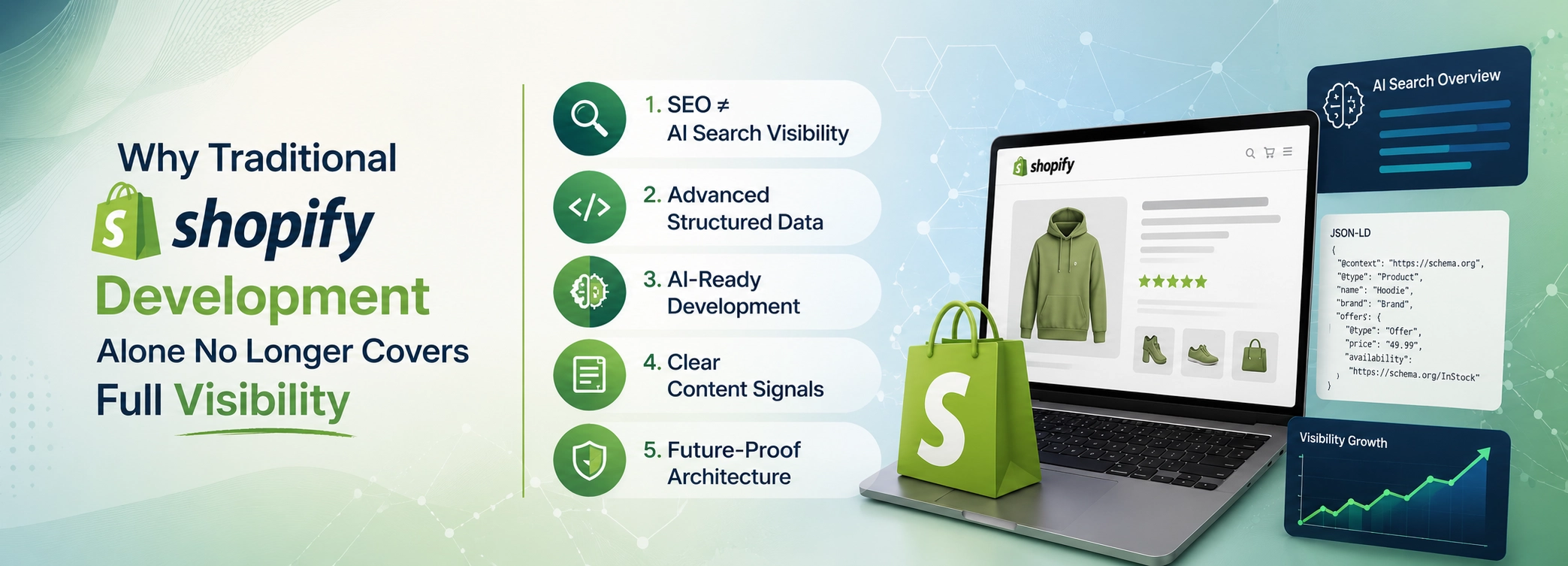
Standard SEO practices do not automatically carry over into AI search visibility. The two overlap in places, sharing a foundation in clean site structure and accurate content, but they are not the same discipline anymore, and treating them as identical leaves gaps.
Structured data requirements now go well beyond a typical theme setup or a basic meta tag checklist. Development decisions need to account for search engines and AI models at the same time, which takes a different kind of planning than a standard build most agencies still default to.
How Competitors May Already Be Gaining Ground in AI Search Results
Early adopting stores already appear inside AI shopping recommendations, and that lead compounds over time as AI systems learn to trust and repeat sources that show consistent, structured information. Brands that establish AI trust signals now build an advantage that gets harder and harder to close as more platforms adopt similar behavior.
he flip side carries real risk. A store that AI tools never surface loses consideration entirely, even against weaker competitors who simply moved first and got their product data in order before the shift became obvious to everyone else.
What Shopify Experts Developers Should Be Building Into Every Store Now
A modern build needs structured data that supports AI shopping assistants from day one, not bolted on after launch. Clean, extractable product content matters just as much as the visual design customers see. WillShall Consulting approached this balance by treating structured data as part of the initial build plan for Shopify client projects, rather than a fix applied after a store goes live.
Technical architecture also needs to avoid blocking AI crawlers by accident. Developers who understand this balance protect a store from a slow, invisible decline in AI-generated recommendations.
Why You Should Hire Shopify Developer Talent With AI Search Awareness
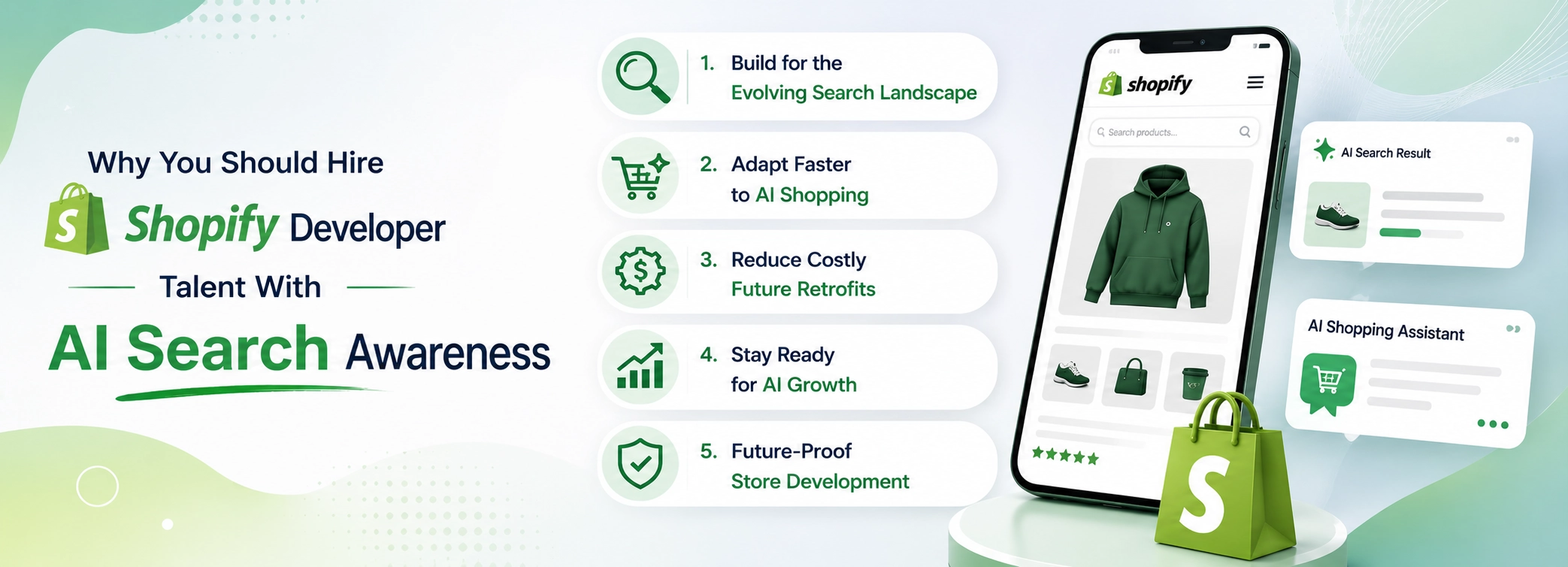
Choosing development talent without AI search awareness means building for a landscape that has already started to shift under everyone’s feet. That gap shows up later as lost visibility nobody can explain.
Teams with this awareness adapt faster as AI shopping tools keep expanding. That speed saves money too, since fewer costly retrofits pile up down the line.
What a Shopify Specialist Should Know About AI Shopping Beyond Basic SEO
A skilledShopify specialist understands how AI tools evaluate and surface products, not just how Google ranks a page. That distinction changes how a build gets planned from the first wireframe.
Real awareness of platforms like AI Overviews, ChatGPT, and Perplexity shopping features separates a generalist from someone who actually tracks where the industry is heading. Knowledge of current structured data standards ties the whole approach together.
How a Shopify Expert Developer Builds Product Pages AI Tools Can Actually Read
A capable Shopify expert developer writes clear, structured product specifications instead of vague marketing copy that machines cannot parse well. Consistent formatting across every product description keeps AI extraction accurate at scale, even across a catalog with hundreds or thousands of listings that would otherwise drift into inconsistency over time.
Overly stylized content might look great to a human eye, yet AI models often struggle to pull real meaning from it when key facts sit buried inside clever phrasing. The best builds strike a balance instead of chasing style at the expense of clarity, keeping the copy readable for people while staying structured enough for machines to extract accurately.
Traditional Shopify Development vs. AI Search and Shopping-Ready Development
| Factor | Traditional Development | AI Search and Shopping-Ready Development |
|---|---|---|
| Structured data | Minimal or theme default | Purpose-built for AI extraction |
| Content formatting | Style first, marketing tone | Clear, consistent, machine-readable |
| Technical crawlability | Focused on search engines only | Open to both search engines and AI tools |
| Visibility | Google and traditional search only | Search engines and AI shopping surfaces |
| Long-term adaptability | Static once launched | Built to adjust as platforms evolve |
How Hire Shopify Expert Teams Approach AI-Ready Product Data
Teams that clients hire Shopify expertsupport start by auditing existing product data for AI readability before touching a single line of code. That audit exposes gaps a store owner rarely sees on their own, from missing schema fields to inconsistent naming conventions across product categories.
From there, the team implements schema markup relevant to shopping features and tests how products actually appear when queried through AI tools directly. Real testing, not guesswork, separates a strong process from a checkbox exercise, since a change that looks correct in code does not always translate into actual visibility once an AI tool processes it.
Why a Shopify Consultant Should Guide Strategy, Not Just Execute Requests
A good Shopify consultant flags AI visibility gaps proactively instead of waiting for a client to ask the right question. That kind of initiative often catches problems months before they cost real revenue.
Part of the job also means educating store owners on why this shift matters in plain terms. A strong consultant builds a roadmap that accounts for current behavior and whatever comes next, rather than freezing strategy at today’s standards.
What Expert Shopify Developers Do Differently When AI Shopping Is a Priority
Expert Shopify developers prioritize structured, consistent data architecture from the very first sprint instead of retrofitting it later. That early discipline saves weeks of cleanup work down the road.
They also test product visibility across multiple AI platforms rather than assuming one test covers everything. Strong human-facing design still matters, so the best developers balance both goals instead of sacrificing one for the other.
How Reviews and Customer Trust Signals Factor Into AI Shopping Visibility
AI tools frequently pull from review data to shape their recommendations, which makes review content far more valuable than it used to be. A product with thin or missing reviews often loses ground to a competitor with a fuller record, even at a similar price point, since AI systems tend to favor products backed by verifiable, detailed feedback.
Product pages need visible, well-structured review sections that both customers and AI tools can read cleanly without digging through pop-ups or buried tabs. Developers who build proper review integration support strong user experience and machine extraction at the same time, which pays off in both conversion rate and AI visibility.
6 Technical Elements That Support AI Search and Shopping Visibility
- Structured product schema markup
- Clean, consistent product titles and descriptions
- Accurate and detailed product specifications
- Fast-loading, crawlable product pages
- Clear pricing and availability data
- Review and rating data formatted for easy extraction
Ready for a custom Shopify AI readiness strategy built around your catalog?
Book a consultation today.
What Sets a True Shopify Partner Apart When It Comes to AI Readiness
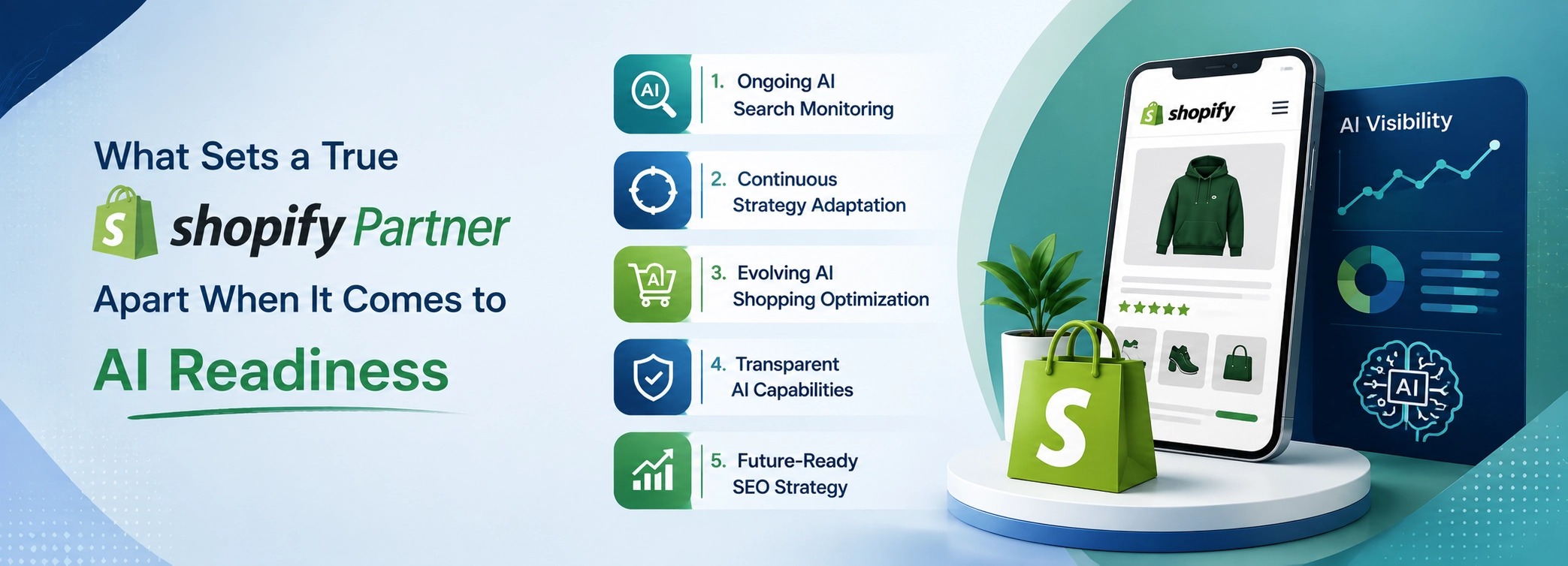
A genuine Shopify partner treats AI visibility as ongoing monitoring, not a one-time setup that gets checked off a list and forgotten. Standards shift constantly, and a partner worth keeping shifts alongside them instead of leaving a store frozen at whatever the rules looked like on launch day.
Willingness to adapt strategy as AI shopping tools evolve matters just as much as the initial build quality, since a strong launch can still fall behind within a year if nobody revisits it. Transparency about what is currently possible versus what is still emerging also separates a trustworthy partner from one selling hype, since AI shopping technology moves faster than most marketing claims can honestly keep up with.
How to Evaluate Whether Your Current Developer Understands This Shift
The right Shopify experts and developersrarely need to be pushed on this topic since it already shapes how they plan a build. Ask directly about their approach to AI search and shopping and pay attention to how confidently they answer, since hesitation or vague generalities usually mean the topic never came up on their end before this conversation. A vague response is a signal worth taking seriously, not brushing off as a minor gap.
Review whether recent work includes any structured data improvements at all, and ask for concrete examples rather than general assurances. Also check whether they have brought this topic to you unprompted at any point, since that kind of initiative says more about their awareness than any polished pitch deck ever could.
5 Questions to Ask Before You Hire a Shopify Developer for AI Readiness
- How do you approach structured data for AI search visibility
- Can you show examples of products appearing in AI shopping results
- How do you test AI search visibility after changes
- What is your process for staying current with AI shopping trends
- How do you balance AI optimization with overall site design
Why Ongoing Monitoring Matters More Than a One-Time AI Optimization Pass
AI shopping tools and standards keep evolving, sometimes month to month rather than year to year, which is a very different pace than most Shopify teams are used to planning around. A single optimization pass gets stale fast in that kind of environment, even if it looked thorough at the time it was completed.
Regular checks matter as platforms update their requirements without much warning, often rolling out changes that only become visible once traffic patterns shift unexpectedly. Treating AI readiness as an ongoing part of store maintenance, not a single project with a defined end date, keeps a store from quietly slipping backward while everyone assumes the work is already done.
How Shopify Experts in Houston Are Approaching AI Search and Shopping Readiness
Shopify experts in Houston businesses tend to work with a focus on practical, ROI-focused recommendations rather than sweeping overhauls. Smaller and mid-sized budgets demand that kind of restraint.
Straightforward guidance on prioritizing AI readiness within existing budgets helps owners avoid wasted spend. Awareness of AI shopping keeps growing across Houston-based e-commerce businesses, and teams that move early tend to see the clearest gains.
What a Shopify Agency New York Businesses Trust Prioritizes for AI Visibility
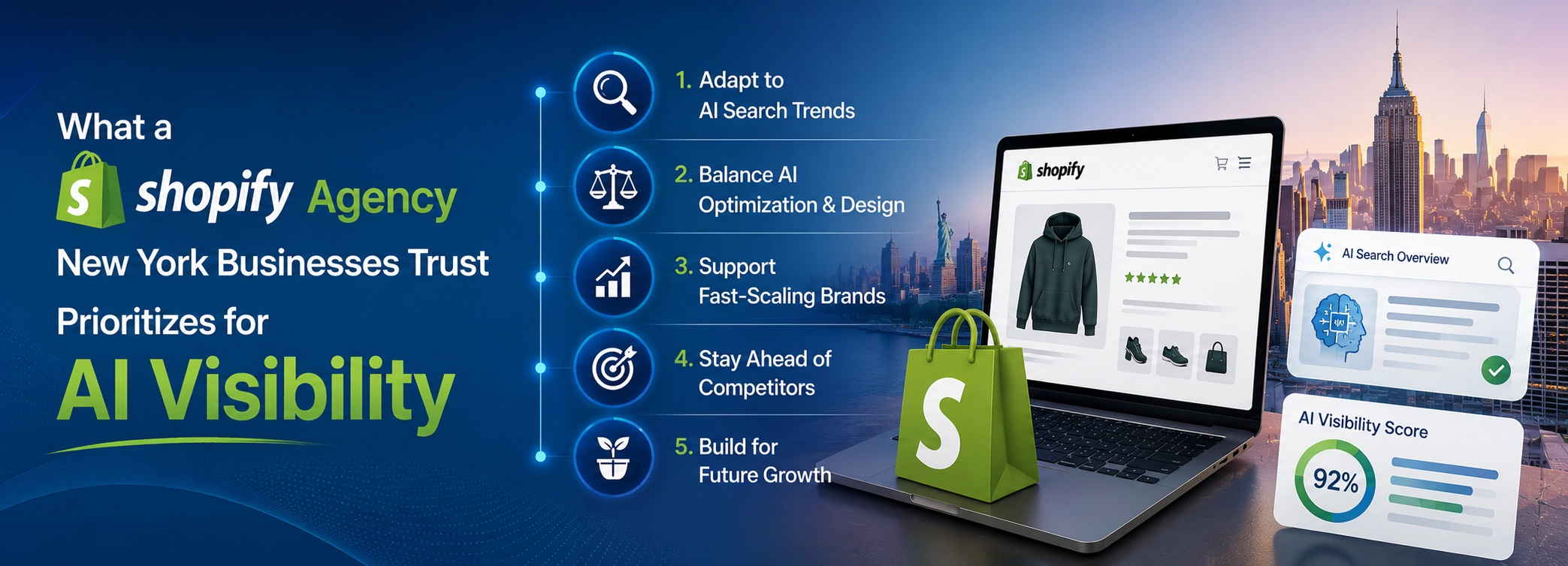
A strong Shopify agency in New York brands rely on adapting fast to emerging AI search trends, since the local market rarely sits still. Speed alone is not enough, though.
Balancing AI optimization with the high design standards this market expects takes real skill. Experience serving fast-scaling brands that cannot afford to fall behind gives a team a sharper edge than a generalist shop.
How a Los Angeles Shopify Agency Balances AI Optimization With Brand Storytelling
A capable los angeles shopify agency makes sure structured data never compromises strong visual and brand-driven design, since both need to work together. Neither goal should win at the other’s expense.
Experience with social commerce and AI shopping overlap gives such a team an edge in a market built on visual identity. A design-forward approach that still supports machine readability is the real differentiator here.
Development Partner With AI Readiness vs. Development Partner Without It
| Factor | Partner With AI Readiness | Partner Without AI Readiness |
|---|---|---|
| Visibility across AI platforms | Actively tested and tracked | Untested, likely absent |
| Structured data quality | Purpose-built and current | Default or outdated |
| Adaptability to search changes | Fast, planned response | Slow or reactive |
| Long-term competitive position | Strengthens over time | Weakens as others move first |
| Risk of falling behind | Low and monitored | High and growing |
What Realistic Progress Looks Like After Prioritizing AI Search and Shopping Readiness
Store owners who work with capable Shopify expert developers tend to see this pattern play out consistently. Early gains usually show up first in structured data quality and general technical readiness. Those foundations take a few weeks to settle before results become obvious.
From there, a store starts to appear gradually in AI-generated shopping recommendations rather than all at once. That advantage compounds over stores, still ignoring the shift, widening the gap month after month.
What Store Owners Can Track to Measure AI Search Progress Over Time
Most owners never check how their products actually appear inside AI tools, which makes it easy to assume everything is fine until sales quietly slip. A simple monthly habit of asking AI assistants direct product questions reveals more than any traditional analytics dashboard on this specific point.
Tracking mentions across a few AI platforms over several months shows whether structured data changes are actually working. A store that sees gradual, consistent appearances in AI-generated answers is on the right track, while one that sees no movement after real changes likely needs a deeper technical review.
Closing Thoughts
AI search and shopping already shape how customers discover products, and that shift is not slowing down or reversing course anytime soon, so Shopify development needs to reflect it now rather than later. The right Shopify Experts Developers, including the team at WillShall Consulting, build with traditional search and AI visibility in mind from the very first line of code, not as an afterthought bolted on once traffic starts to slip and the damage is already done.
Request a free Shopify AI readiness consultation or a custom quote and find out where your store stands today.
I bring a wealth of knowledge and experience to WillShall Consulting with two decades of expertise in Website Design, Development, and Digital Marketing, My journey has been marked by a passion for creating innovative web solutions that not only meet but exceed client expectations. As an avid analyst, I dedicate myself to understanding each customer’s unique needs, ensuring that our web solutions are not just functional but exceptional.

Looking to boost your online presence and reach more customers in your local area?
Explore Local SEO ServiceKnow your website’s SEO Score.
Get a customize SEO Audit report & improve your website statistics.