A pretty storefront does not bring buyers to your door. Most Shopify owners pour budget into design and apps, then wonder why traffic stays flat. A strong Shopify SEO expertcloses that gap by treating content and backlinks as core growth drivers, not afterthoughts. This guide shows what that work looks like, how to hire the right person, and how content marketing and link building work together to grow your store.
Want to know where your store stands?
Request a free Shopify SEO audit and get a clear list of fixes and growth opportunities.
Strong Shopify SEO services go far past title tags and meta descriptions. An expert audits your site structure, fixes crawl issues, maps keywords to products and collections, plans blog content, and builds links that lift your key pages. Every task ties back to one goal: more qualified shoppers reach your store.
Shopify has its own quirks. Collection URLs create duplicate paths to the same product. Themes load heavy scripts. Apps add code that slows pages. A general SEO worker often misses these traps, while a platform-focused expert spots them in the first audit and fixes them at the source.
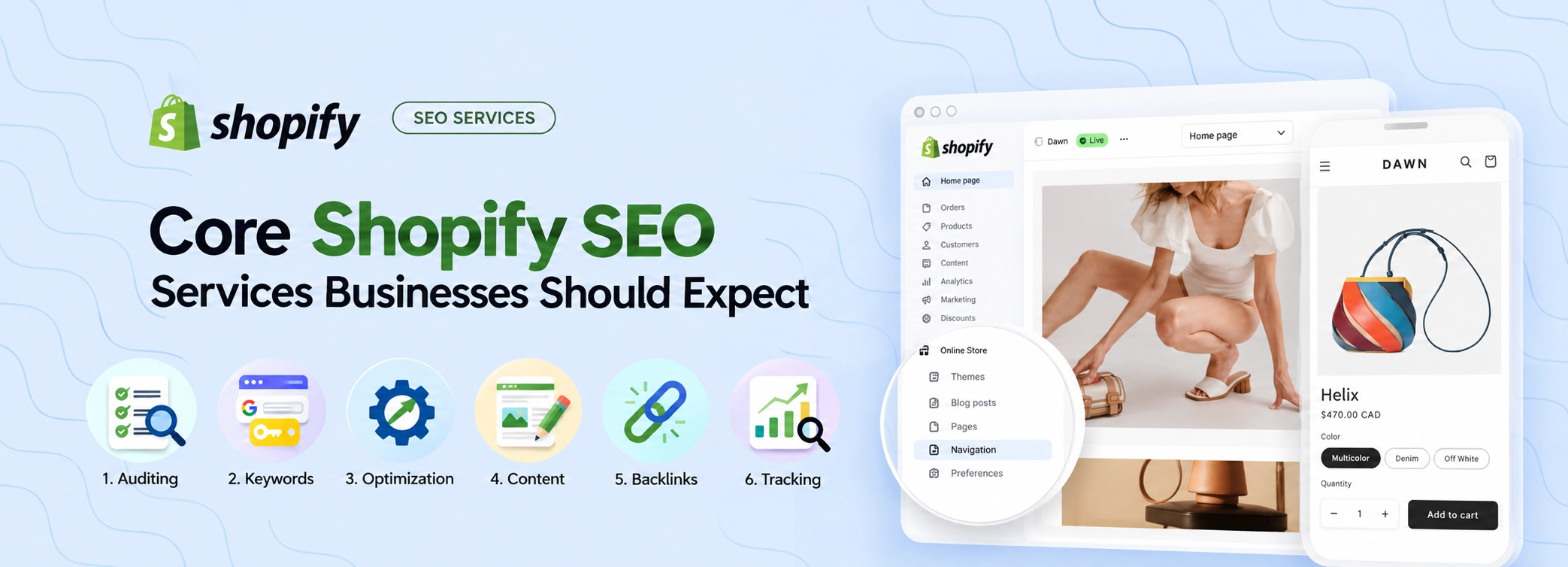
Core Shopify SEO Services Businesses Should Expect
Start with a full technical audit. It covers crawl errors, indexing, redirects, structured data, and mobile usability. Next comes product page work: unique descriptions, clean titles, image alt text, and review markup. Site speed gets its own review, since slow pages lose both rankings and sales.
Ongoing reporting keeps the work honest. You should expect:
Monthly reports on traffic, rankings, and sales from organic search
Quarterly strategy updates based on real data
Clear notes on every change the team makes to your store
A named contact who answers questions fast
Common Technical Problems That Hold Stores Back
Many stores carry hidden technical debt. Duplicate collection URLs split ranking signals across several addresses. Thin tag pages add clutter that search engines ignore. Broken links from old products send visitors to dead ends, and each dead end costs you trust and sales.
Fixes are usually simple once someone finds them. Canonical tags point search engines to the main version of each page. Clean redirects keep old links alive and working. A short monthly check catches new issues before they grow into traffic losses.
How a Shopify SEO Specialist Approaches Content Marketing
Content works best when it feeds your product and collection pages. A Shopify SEO specialist plans blog posts that answer buyer questions, then links each post to the product that solves the problem. This gives shoppers a path from reading to buying and tells search engines which pages matter most.
Intent drives every topic choice. A guide to choosing running shoes for flat feet beats a post about general fitness, because the reader already wants to buy. Keywords still matter, but they follow the shopper’s real question, not the other way around.
Pro Tip: Product descriptions written only for search engines often read poorly to shoppers, so the strongest SEO pros write for conversion first and let keyword placement follow naturally.
Comparison Table 1: General SEO Agency vs. Shopify Specialist
Not every SEO provider understands e-commerce stores. This table shows where a platform-focused partner pulls ahead of a general agency.
Factor
General SEO Agency
Shopify Specialist
Platform-specific knowledge
Broad skills with little Shopify detail
Deep knowledge of themes, apps, and URL structure
Content strategy depth
Blog posts with weak product links
Content tied to products, collections, and buyer intent
Backlink approach
Bulk outreach across any niche
Targeted outreach in your product category
Typical turnaround time
Slower start while the team learns the platform
Start faster with a proven Shopify checklist
The gap shows up fastest in speed. A Shopify specialist skips the learning curve and starts fixing real issues in week one.
How to Hire Shopify Expert Talent With Proven SEO Results
Start with proof. Ask to see rankings, traffic charts, and revenue lifts from stores similar to yours. Screenshots of dashboards mean little without context, so ask what the starting point was and how long the gains took.
Then dig into the work itself. Ask which blog posts earned traffic, which links moved a key page, and what went wrong on past projects. Honest answers about misses tell you more than polished success stories.
What to Look for When You Hire Shopify SEO Expert Support
Look for experience with Shopify themes, apps, and the Liquid code that powers them. Someone who knows how a review app or a page builder affects load time will protect your speed score. Ask which apps they trust and which ones they avoid.
Communication matters just as much. You should get plain reports, a named contact, and clear answers within a business day. If a provider hides behind jargon on the sales call, expect the same in the monthly report.
Did You Know?Shopify’s default product URLs and duplicate collection pages can quietly hurt rankings if left unoptimized, which is why platform-specific SEO knowledge matters more than general SEO experience.
Shopify SEO Consultant vs. Full-Service Shopify SEO Company
A Shopify SEO consultant gives guidance. You get an audit, a roadmap, and coaching for your team, but your team does the work. This model fits stores with in-house writers and a developer who can ship fixes fast. It costs less each month, though results depend on your team’s follow-through.
A full-service Shopify SEO company handles execution from audit to outreach. It costs more, yet it frees your staff to focus on products and customers. Pick the consultant route if you have the people. Pick the full-service route if you lack time or skills.
How to Prepare Your Store Before You Start
Good prep saves weeks. Before you hire Shopify expert help, gather access to Google Search Console, Google Analytics, and your Shopify admin. Share your top sellers, margins, and goals so the team can focus on the pages that earn the most profit.
List your past SEO work too, including any agencies you used and links you bought. Honest history helps the new team avoid old mistakes and clean up risky links before they cause harm.
What Sets the Best Shopify SEO Agency Apart From Generalists
The best Shopify SEO agency shows case studies where content and links moved together. Look for stores that doubled organic traffic after a blog plan and an outreach campaign ran side by side. Numbers should come with dates, niches, and the work that caused them.
Technical depth also separates real pros from generalists. Ask how they handle duplicate collection URLs, variant pages, pagination, and app bloat. A confident answer with specific fixes signals real Shopify experience.
Top Shopify SEO Providers Worth Considering
Picking a partner gets easier when you compare real options side by side. Here are five providers that help e-commerce brands grow through content and links.
WillShall Consulting
Overall rating: 4.9/5
Core Services: Shopify development, Shopify SEO, content marketing, and link building
Best for: Shopify store owners who want one team to handle development, content, and growth
Redefining Web
Overall rating: 4.8/5
Cover Services: Long-form SEO content, digital marketing, and service page writing
Ignite Visibility
Overall rating: 4.7/5
Cover Services: SEO, paid media, social media, and e-commerce marketing
Disruptive Advertising
Overall rating: 4.6/5
Cover Services: Paid media, SEO, and conversion rate optimization for e-commerce
Seer Interactive
Overall rating: 4.6/5
Cover Services: SEO, analytics, content strategy, and paid search
How Product and Collection Pages Drive Organic Revenue
Product and collection pages pull in the shoppers closest to buying. A collection page for waterproof hiking boots can rank for dozens of related searches if it has a clear title, helpful intro text, and strong internal links. Blog posts support these pages, but the money pages carry the sales.
Give each page one clear job. Write a unique description that answers real buyer questions, add sharp photos with descriptive alt text, and show reviews near the buy button. Small upgrades like these lift both rankings and conversion rates.
Why Content Marketing Drives Long-Term Shopify Store Growth
Blog content brings in shoppers before they know your brand. A Shopify SEO expert plans posts around the questions buyers ask before they purchase, such as comparisons, how-to guides, and gift lists. Each post pulls in search traffic and passes authority to your product pages.
Evergreen posts keep working for years, so they form your base. Seasonal campaigns add short bursts around holidays and sales. Aim for about two evergreen pieces for every seasonal one, then adjust based on what your data shows.
How a Shopify Expert Developer Supports Content-Driven SEO
Strategy fails without clean implementation. A Shopify expert developeradds schema markup for products and reviews, builds internal links between posts and collections, and keeps pages fast. These fixes help search engines read your content and help shoppers move through your store.
WillShall Consulting shows how this teamwork pays off. With more than 1,000 Shopify stores delivered and 700+ clients served since 2012, its developers and content writers plan schema, internal links, and page layouts together from the first sprint.
Expert insights from
Ragini Dhingra Sr. SEO executive
“Content and technical SEO work best when one plan covers both. If you add them in separate phases, you redo half the work.”
Search intent tells you why someone types a query. Some shoppers want to learn, some want to compare, and some want to buy right now. Each group needs a different page, so one article rarely serves all three.
Match the page to the intent. Use guides for learners, comparison posts for researchers, and product pages for buyers. When the format fits the intent, visitors stay longer and take action more often.
Building a Shopify Content Calendar Around SEO Goals
A calendar turns ideas into a steady publishing rhythm. Mark product launches, sale dates, and peak search periods first. Then slot posts four to six weeks ahead of each event, since search engines need time to index and rank new pages.
Balance matters here. Fill gaps between big moments with evergreen guides that answer common questions. Review the calendar every quarter and drop topics that fail to draw traffic.
Ready to plan your next six months of content?
Book a free content and SEO strategy session with our team.
Search does not work alone. Email lists and social posts push new articles to readers on day one, and early traffic gives your content a better start. Shared posts also reach writers who may link to you later.
Send each new guide to your list, and share it on the channels your buyers use. Track which posts draw clicks, then use that data to guide your next topics.
Why Backlink Building Matters More for Ecommerce Than People Realize
Links act as votes of trust. When respected sites point to your collection pages, search engines treat your store as a stronger result. When you hire Shopify SEO expert support, you learn that product pages rarely earn links on their own, so the work starts with link-worthy content.
Many plans skip this step. Link building takes patience, and results arrive slowly, so providers and store owners push it aside. That choice leaves a gap that competitors fill. Stores that earn links steadily pull ahead over time.
Why Site Speed and Mobile Design Affect Rankings
Most Shopify shoppers browse on phones. If your pages load slowly on a mobile connection, visitors leave and search engines notice. Large images, heavy apps, and bloated themes are the usual causes.
Compress images, remove apps you no longer use, and test your key pages with free speed tools every quarter. Faster pages rank better and convert better, so every second you save pays twice.
How a Shopify SEO Company Approaches Backlink Strategy
A smart team ties outreach to your product categories. If you sell outdoor gear, it targets hiking blogs, gear review sites, and travel writers. Relevance beats volume, because one link from a niche site outweighs dozens from random directories.
Quality sources come first. Skip bulk directory submissions and paid link farms, which risk penalties. Aim for editorial links, guest posts on respected sites, and mentions in roundup articles.
Pro Tip: Reaching out to niche bloggers who already review products in your category tends to earn more relevant, lasting backlinks than broad outreach campaigns.
Comparison Table 2: Shopify SEO Package Tiers
Packages vary widely, so compare scope before you sign. Use this table as a baseline.
Feature
Basic SEO Package
Mid-Tier Package With Content
Full Package With Backlink Building
Content volume
None or minimal
2 to 4 articles per month
4 to 8 articles per month
Outreach scope
None
Light outreach for top posts
Ongoing outreach across product categories
Reporting frequency
Quarterly
Monthly
Monthly with a strategy call
Best for
Small stores
Growing stores
Competitive niches
Most growing stores start in the middle tier, then upgrade when content begins to earn traffic.
How to Update Old Content for Fresh Rankings
Old posts still hold value. A guide from two years ago may sit on page two of search results, and a few smart edits can push it to page one. Updates cost far less than writing a new article from scratch.
Refresh stats, add new product links, fix broken links, and expand thin sections. Change the date only when the edits are real. Check your top ten posts every six months and update the ones that slip.
Combining Content Marketing and Backlink Building for Faster Results
Strong content makes outreach easier. A well-researched guide or original data gives bloggers a reason to link, so your pitch feels like a favor, not a request.
The reverse also holds. Links lift new posts into search results faster, which brings more readers and more shares. Plan both together so each post has a link target from day one.
Link-Building Tactics That Work for Online Stores
Several tactics earn strong links for stores. Digital PR pitches a fresh angle to journalists. Product seeding sends samples to reviewers who then link to your page. Original research gives writers data they want to cite, and resource pages list helpful brands in your field.
Pick two or three tactics and run them well instead of trying everything at once. Track which pitches earn replies, then double down on the winners. Patience matters, since a good campaign takes weeks to show results.
Questions to Ask Before You Hire Shopify SEO Expert Support
Ask how the provider builds links, which sites they target, and how they pick topics. A clear method proves they have a repeatable process. If the answer stays vague, move on.
Ask about reporting too. You need monthly updates on traffic, rankings, and new links, plus honest timelines. Most stores need four to six months to see steady gains.
Did You Know?Stores that publish consistent, helpful content tend to earn backlinks naturally over time, reducing how much outreach is needed to maintain a healthy link profile.
How to Set a Realistic SEO Budget
Budget shapes results. A store that spends too little on content and links rarely gains ground in a crowded niche. A store that spends without a plan wastes money on tasks that do not move sales.
Start by setting aside a fixed monthly amount for six months. Split it across technical work, content, and outreach based on your biggest gap. Review the split each quarter and shift funds toward the tactics that earn traffic and sales.
Why Internal Linking Matters for Large Catalogs
Stores with hundreds of products need a clear link map. Internal links pass authority from strong pages to weaker ones and show search engines how your catalog fits together. Without them, deep product pages sit isolated and rarely rank.
Link from blog posts to collections, from collections to top products, and from products to related items. Use plain anchor text that describes the target page. Review the map each quarter as your catalog grows.
Red Flags That Signal a Weak Shopify SEO Provider
Watch for warning signs early. Any provider that promises a number one ranking lies, because no one controls Google. Vague reports, hidden methods, and no content plan also point to trouble.
Guaranteed rankings or traffic numbers
Reports with no real data behind them
No role in your content plan or blog strategy
Bulk link packages sold by price alone
Long contracts with no exit clause
What the First Ninety Days Should Look Like
The first month focuses on discovery. The team audits your store, reviews analytics, studies competitors, and sets targets. You should receive a written plan with priorities and clear owners for each task.
Months two and three move into action. Technical fixes ship, the first articles go live, and outreach begins. Expect a progress report at day thirty, sixty, and ninety so you can see what changed.
How Reviews and User Content Support SEO
Customer reviews add fresh, unique text to product pages without extra writing work. They also include the exact words shoppers use, which helps your pages match real searches. Review markup can show star ratings in search results and raise click rates.
Ask buyers for reviews through a follow-up email a week after delivery. Answer questions on product pages, and add the best ones to your FAQ section. Real voices build trust with both shoppers and search engines.
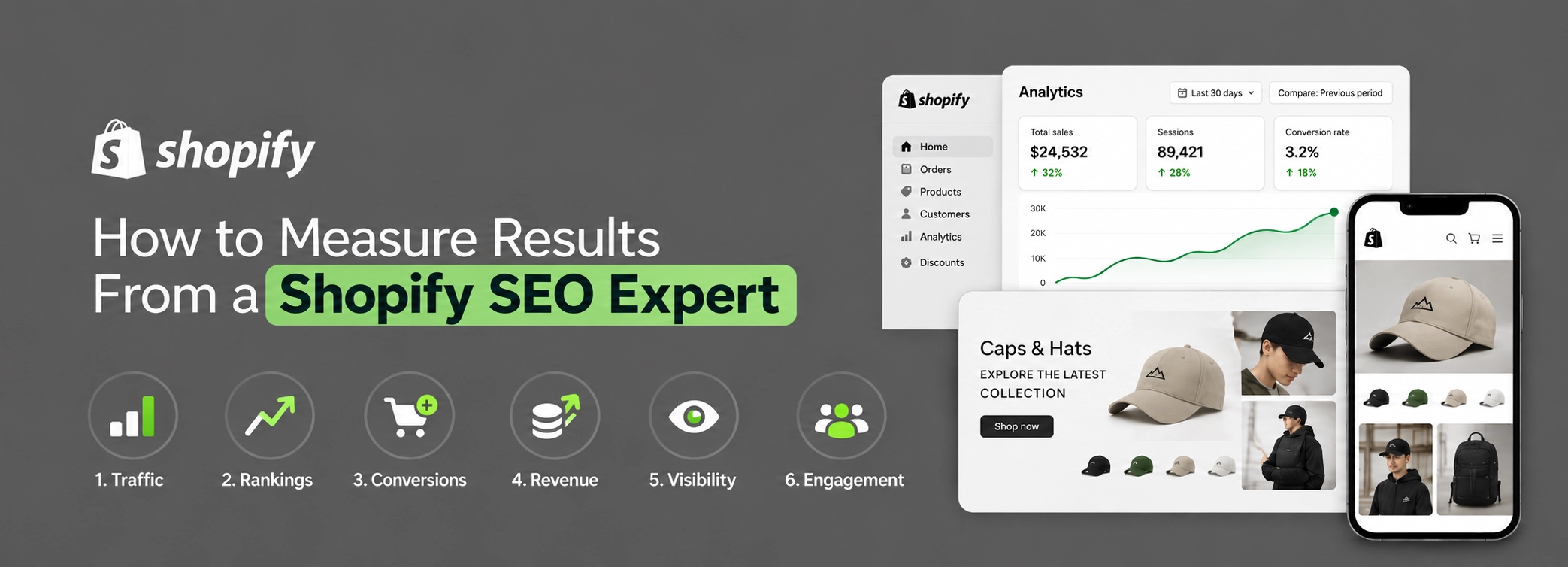
How to Measure Results From a Shopify SEO Expert
Track three numbers together: organic traffic, keyword rankings, and referring domains. Traffic shows demand, rankings show visibility, and referring domains show authority. If one rises while the others stall, something is off.
Set realistic timelines. Content usually shows results in three to six months, and strong backlink gains take six to twelve. Also track revenue from organic visits in Shopify analytics, since sales are the real test.
Common Mistakes Store Owners Make With SEO
Many owners chase quick wins. They buy cheap links, copy supplier descriptions, or stuff keywords into every title. Each shortcut may work for a week, then cost months of lost rankings when search engines catch on.
Others quit too early. SEO takes time, and owners who stop after two months never see the payoff. Set a six-month window, track progress monthly, and judge the results against that plan.
Building a Long-Term Shopify SEO Strategy
SEO works like compound interest. Each new post and each new link adds to what came before, so steady effort beats a big push followed by silence. Treat content publishing and outreach as a monthly habit.
One-time projects rarely sustain growth. Search trends shift, competitors publish, and algorithms change. A long-run plan with quarterly reviews keeps your store ahead of those shifts.
Tools That Make Shopify SEO Easier
A few tools cover most needs. Google Search Console shows which searches bring clicks and which pages have errors. Google Analytics tracks visitors and sales. A site crawler finds broken links and duplicate pages in minutes.
Keyword research tools and link databases fill the gaps. Use them to find topics, check competitors, and track new links. Tools support the work, but human judgment still decides which ideas deserve your time.
Conclusion
The right Shopify SEO expert goes beyond audits and title tags. That person plans content around buyers, earns links from relevant sites, and ties both to a clear report. Content and backlinks work best as one plan, not two projects. WillShall Consulting has supported this approach for Shopify merchants since 2012, with a team of 35+ professionals who connect strategy, development, and growth.
Ready to grow your store?
Book a consultation or request a Shopify SEO strategy review with our team today.
With a Bachelor’s in Commerce and 15 years of experience in Ecommerce SEO and Shopify Development, I bring extensive expertise to the digital field. As Managing Partner at WillShall Consulting, I lead a team delivering exceptional Digital Marketing, Web Development, and Web Designing services. My passion for innovation and commitment to excellence help businesses thrive in the digital age.
Frequently Asked Questions About Shopify SEO Experts
A general consultant knows how to search broadly. A Shopify expert also knows themes, apps, URL structures, and collection quirks that affect rankings. That platform depth means faster fixes and fewer mistakes.
Costs vary by scope. Basic plans often start near $500 per month, mid-tier plans with content run $1,500 to $3,000, and full plans with link building cost more. Ask for a written scope before you sign.
Most stores see early movement in three to four months. Strong gains from content and links usually take six to twelve months, depending on competition and your starting point.
Pick a specialist if you need guidance and have a team to act on it. Pick a full service company if you want one partner to handle audits, content, and outreach.
Yes. Links signal trust to search engines, and e-commerce pages rarely earn them alone. Stores with strong, relevant links tend to rank higher for competitive product terms.
A solid package covers a technical audit, product and collection page work, content planning, link building, and monthly reports with clear metrics.
It helps, especially for long tail searches. Yet content without technical health or links often stalls in competitive niches. The best results come from all three working together.
Ask about past Shopify results, how they build links, who writes the content, how often they report, and what happens if results lag.
With a Bachelor's in Commerce and 15 years of experience in Ecommerce SEO and Shopify Development, I bring extensive expertise to the digital field. As Managing Partner at WillShall Consulting, I lead a team delivering exceptional Digital Marketing, Web Development, and Web Designing services. My passion for innovation and commitment to excellence help businesses thrive in the digital age.





 Upwork
 Fiverr
 People Per
Hour
People Per
Hour
 By Sachin Sharma
|
05-Oct-2026
By Sachin Sharma
|
05-Oct-2026