

 Upwork
 Fiverr
 People Per
Hour
People Per
Hour
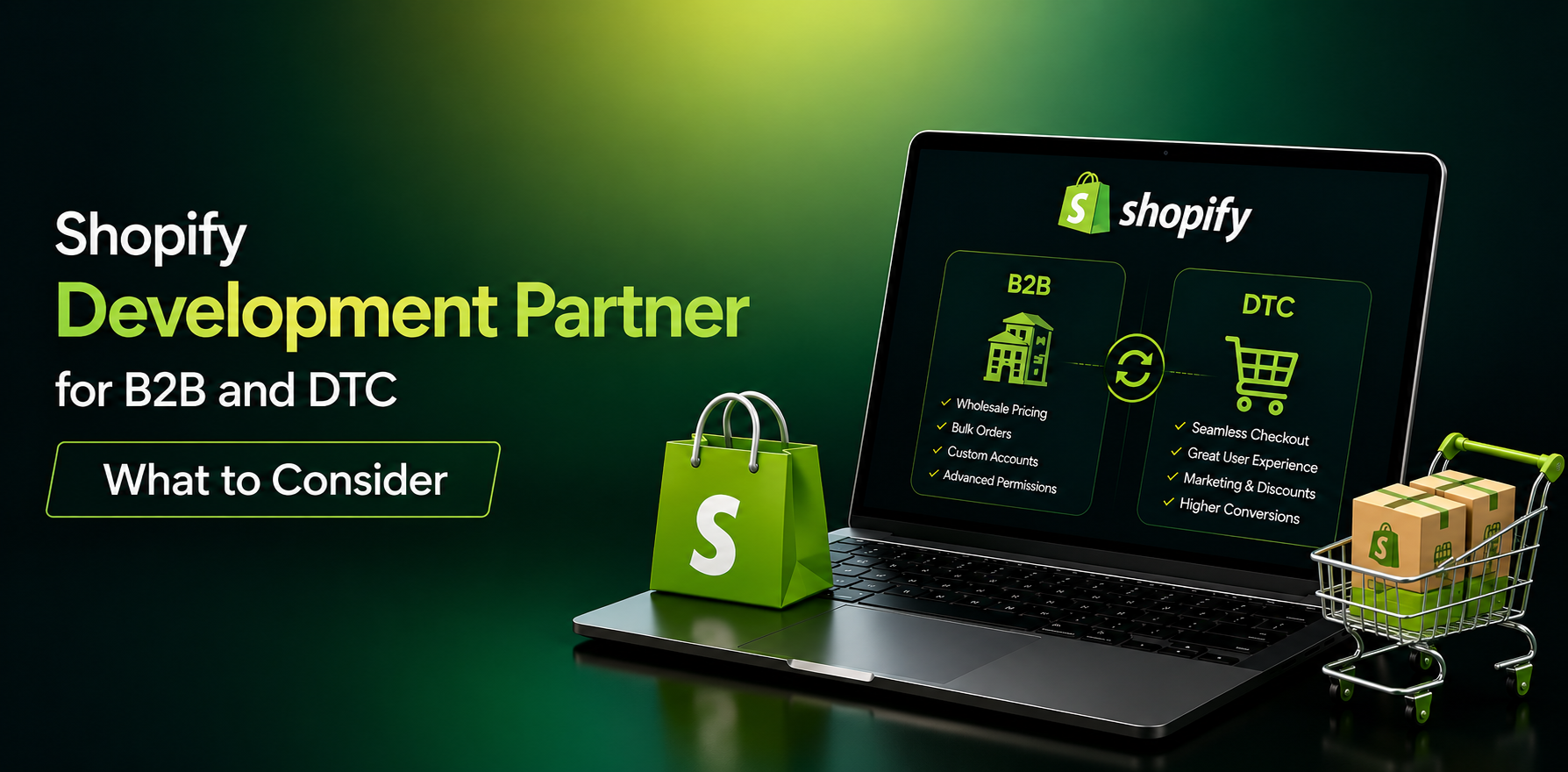
Shopify Development Partner for B2B and DTC: What to Consider
 By Manoj Kandwal
|
14-Aug-2026
By Manoj Kandwal
|
14-Aug-2026
Most businesses pick a Shopify Development Partner and assume the work will look the same no matter what they sell. It does not. B2B and DTC stores run on different logic, different buyer behavior, and different technical needs, so a team that builds great DTC sites can still fumble a wholesale build, and the reverse happens just as often. This piece walks through what actually matters before you sign a contract, whether you sell to businesses, consumers, or both at once.
Get a free Shopify strategy consultation and find out what your store actually needs before you spend a dollar.
How B2B and DTC Shopify Stores Fundamentally Differ
B2B buyers order in bulk, negotiate pricing based on their account, and take weeks or months to close a deal. Someone on the other end usually has to approve the purchase before it happens. DTC buyers work on a shorter fuse. They see a product, feel something, and want to pay for it within seconds, not days.
These two buyer types need different tools. A theme built for scroll-stopping visuals rarely handles tiered pricing well. A platform built for account management and purchase orders often feels stiff and slow to a shopper who just wants to check out. Pick the wrong tool for your buyer, and you fight the platform every day.
5 Signs Your Shopify Development Partner Isn’t Built for Your Business Model
- They have never touched net terms, purchase orders, or bulk pricing tiers before
- They apply flashy DTC-style design to a B2B store that just needs to work
- They know nothing about how your actual customers research and buy
- Every recommendation sounds generic, like it came from a template
- Their portfolio shows only one type of store, never both
Why Choosing the Wrong Development Partner Costs More for B2B and DTC Alike
The damage rarely shows up on day one. It creeps in months later, once a wholesale buyer cannot find their negotiated rate or a shopper quits halfway through a five-step checkout. Fixing these problems after launch almost always costs more than building them right the first time. Rebuilds eat the budget fast.
Small friction points bleed sales quietly. B2B stores lose repeat orders when reordering takes ten clicks instead of two. DTC stores lose impulse buyers the second checkout feels like a chore. Add up the hours spent explaining basic concepts to a team that should already know them, and the true price of a bad hire becomes obvious pretty quickly.
What a Shopify Development Company Should Understand About B2B Needs
A Shopify development company worth hiring builds custom pricing tiers and account-based access as a starting point, not a bolt-on. Wholesale buyers expect to log in and see their own rate immediately. They should not have to call anyone or wait for a quote email.
Bulk ordering and quick reorder tools matter just as much. B2B customers buy the same products over and over, so a store that makes reordering fast keeps them coming back. Solid integration with ERP or inventory systems, the kind most B2B companies already run on, also separates a team that gets it from one that is guessing.
What a Shopify Development Company Should Understand About DTC Needs
DTC shoppers want checkout in under a minute. Every extra form field or unnecessary click gives them one more reason to close the tab. A team that understands this trims the process down to exactly what matters and nothing else.
Visual storytelling matters here too, since DTC brands sell a feeling as much as a product. Marketing tools built for consumers, from email capture pop-ups to loyalty programs, round out what a serious Shopify development company should already know how to build without a long explanation from you first.
Why You Should Hire a Shopify Expert with Experience in Your Specific Model
When you hire Shopify expert support that already knows your model, the first conversation moves faster and gets you further. A team that has already solved B2B or DTC problems before gives sharper answers, not guesses dressed up as strategy.
That experience saves you from expensive missteps too. A partner who has read your type of sales process before builds a stronger foundation, one that still works when your business doubles in size instead of falling apart and forcing a rebuild a year later.
What to Ask Before You Hire Shopify Developer Support for a B2B or DTC Build
Before you hire Shopify developer support, ask to see real projects that match your business model closely. General Shopify experience is not the same thing, and a vague answer here tells you a lot. Ask how they think through your specific customer journey, too. If the answer sounds like it could apply to any business, keep looking.
Ask about the apps and integrations your model actually needs. B2B builds often need ERP connections and quoting tools. DTC builds often need marketing automation and subscription apps. How they answer this one question usually tells you whether they have done this work before or are learning on your budget.
B2B Shopify Development Needs vs DTC Shopify Development Needs
| Factor | B2B Shopify Needs | DTC Shopify Needs |
|---|---|---|
| Checkout complexity | Multiple steps often need approval | One page, minimal steps |
| Pricing structure | Tiered, account-based, negotiated | Fixed, promo codes, discounts |
| Design priorities | Clear function, easy reorders | Visual identity, brand story |
| Integration needs | ERP, inventory systems, quote tools | Email marketing, loyalty apps |
| Sales cycle | Weeks or months, several decision makers | Minutes or days, one buyer |
What Sets a True Shopify Expert Agency Apart for Complex Business Models
A real Shopify expert agency can prove it handles both B2B and DTC work, not just claim it on a homepage. Plenty of agencies say they do both. Few can actually show projects across both models with numbers behind them.
Flexibility matters too, especially if you need a hybrid setup that serves wholesale and retail customers from one platform. This kind of build needs technical skill that goes well past a standard theme with a new logo slapped on it. Custom logic is often the only way to make a hybrid store work right.
How to Evaluate a Shopify Development Company’s Portfolio for Your Model
Look for B2B examples if you sell wholesale or in bulk. A portfolio full of pretty product pages with no sign of account pricing or bulk order tools probably has not solved your problem before, no matter how nice the sites look.
Look for DTC examples if your business runs on brand and conversion. If your model needs both, ask directly about hybrid projects. A team that hesitates or cannot name a specific example has probably never built one.
6 Questions That Reveal Whether an Agency Understands B2B and DTC Differences
- How do you handle bulk pricing and account access for B2B customers?
- How do you balance brand storytelling with conversion for DTC customers?
- Have you built a hybrid store that serves both models before?
- What apps do you usually recommend for each model?
- How do you manage different customer journeys on the same platform?
- Can you show real results from a project like mine?
Why a Shopify SEO Expert Should Understand B2B and DTC Search Behavior Differently
A shopify seo expert who treats every client the same misses something big. Search intent shifts sharply between the two models. B2B search tends to run long and detailed, since buyers compare vendors and type specific questions as they research.
DTC search moves faster and often signals someone ready to buy right now. A blog post written for a B2B buyer still in the research stage will not convert a DTC shopper who wants to check out in the next five minutes. Keyword strategy has to match the buyer, not just the product.
What Shopify SEO Services Should Include for a B2B Focused Store
Strong shopify seo services for B2B stores build content around the questions buyers ask while they research, not just product keywords stuffed into a page. Technical SEO also needs to support big catalogs and gated account areas without hiding pages from search engines by accident.
Longer content that supports a real decision tends to perform well here, since B2B buyers read several articles before they ever pick up the phone. This content should answer objections directly and compare options honestly, which builds trust long before a sales call ever happens.
What Shopify SEO Services Should Include for a DTC-Focused Store
For DTC brands, shopify seo services should put product pages first, built for search intent that leads straight to a purchase. Someone searching for a specific product wants that product page, not a blog post about it.
Structured data plays a bigger role every year, since it feeds shopping results and now AI-powered search too. Content built around brand discovery and repeat purchases, like style guides or simple how-to-use tips, rounds out a solid DTC SEO plan without overcomplicating the site.
Why You Should Hire a Shopify SEO Expert Who Coordinates With Your Development Partner
When SEO and development teams work apart, problems show up fast. This is exactly why it helps to hire a shopify seo expert who talks to your development team regularly instead of working alone in a separate silo. A gap between the technical build and the search strategy often shows up as slow load times, broken redirects, or missing page titles that nobody caught.
Real coordination between development, design, and SEO keeps new pages optimized the moment they go live. This avoids the common trap where a brand-new site launches, looks great, and loses months of search rankings simply because nobody thought about SEO until after the fact.
SEO Priorities for B2B Shopify Stores vs DTC Shopify Stores
| Factor | B2B SEO Priorities | DTC SEO Priorities |
|---|---|---|
| Content focus | Research guides, comparisons | Product pages, brand story |
| Keyword intent | Informational, long and specific | Ready to buy, direct |
| Technical SEO priorities | Catalog structure, account pages | Site speed, structured data |
| Conversion path | Several touchpoints over time | A short, direct path to purchase |
Why Market-Specific Experience Still Matters When Choosing a Development Partner
Local knowledge shapes how well a team reads your buyers. A partner who already understands regional B2B buying habits or local DTC shopping trends can spot problems before they happen instead of after. Shared time zones make communication smoother too, especially during a tight launch window.
Knowing the local competitive landscape adds another layer of value most people overlook. A team that already knows the top players in your market can position your store more sharply from day one, instead of learning your industry from scratch on your dime.
How a Shopify Agency New York Businesses Trust Approaches B2B and DTC Projects
A Shopify agency in New York businesses trust usually has real experience with fast-growth brands across both models. New York moves quickly, and agencies here tend to balance heavy B2B requirements with the polish DTC brands expect without missing a beat on either side.
Speed matters a lot in this kind of market. Businesses competing in New York often need a partner who can turn changes around fast, since a slow response can hand ground to a competitor who moves quicker.
What a Los Angeles Shopify Agency Brings to DTC-Focused Development
A Los Angeles Shopify agency often brings sharp visual storytelling and brand-first design, a natural fit for DTC brands built around identity and lifestyle. Many LA-based teams also bring hands-on experience with social commerce, a channel that drives real sales for consumer brands based on the coast.
This design-forward style suits brands that want their Shopify store to feel like an extension of their social feed. For DTC businesses where visual impact drives sales, this kind of regional strength can tangibly shift performance.
How Shopify Developer Manchester and Shopify Developer London Teams Support UK B2B and DTC Businesses
A Shopify developer Manchester team, much like a Shopify developer London team, understands UK-specific B2B compliance rules and payment norms that differ from what US teams deal with. This local knowledge helps businesses avoid costly mistakes around tax handling and invoicing.
These teams also read UK shopping behavior well, from preferred payment methods to seasonal buying patterns that differ from the US market. For businesses based in or selling into the UK, a team in Manchester or London usually means smoother collaboration and fewer surprises during the build.
5 Questions to Ask Before You Choose a Shopify Development Partner
- Do you have real experience with my specific business model?
- How do you handle SEO during development, not just after launch?
- What support do I get after the site goes live?
- Can you show results from a comparable B2B or DTC project?
- How do you handle growth if my business scales or shifts models?
Closing Thoughts
Picking the right Shopify Development Partner starts with a simple fact: B2B and DTC are not the same project wearing different colors. They need different thinking from day one. The right partner brings real, model-specific experience instead of a one-size-fits-all playbook, and that difference shows up everywhere, from checkout flow to long-term search rankings. WillShall Consulting has built both B2B and DTC Shopify stores and helped businesses match their platform strategy to how their customers actually shop and buy.
Request a free Shopify development consultation or custom quote and find the right approach for your business.
I bring a wealth of knowledge and experience to WillShall Consulting with two decades of expertise in Website Design, Development, and Digital Marketing, My journey has been marked by a passion for creating innovative web solutions that not only meet but exceed client expectations. As an avid analyst, I dedicate myself to understanding each customer’s unique needs, ensuring that our web solutions are not just functional but exceptional.
Frequently Asked Questions About Shopify Development Partner

Looking to boost your online presence and reach more customers in your local area?
Explore Local SEO ServiceKnow your website’s SEO Score.
Get a customize SEO Audit report & improve your website statistics.