
 Upwork
 Fiverr
 People Per
Hour
People Per
Hour
Hiring a Shopify SEO Company? See Our Client Success Stories
 By Sachin Sharma
|
17-Jun-2026
By Sachin Sharma
|
17-Jun-2026
Paid ads get expensive fast. Most Shopify store owners hit a wall where their cost per click climbs, their organic traffic stays flat, and their revenue refuses to budge, no matter how much they tweak their product pages or run another promotion. A Shopify SEO company helps break that cycle by building organic visibility that does not disappear the moment the budget stops. That is exactly where this client found themselves.
They had good products. They had a real customer base. But their Shopify store was invisible in search, and the ad budget kept growing with nothing sustainable to show for it.
After working with specialists, they turned that around completely. Organic traffic grew. Product pages started ranking. Revenue came from search, not just from paid campaigns that stopped the moment the budget paused. This is a breakdown of what happened, how it happened, and what other e-commerce brands can take from it.
Meet the Client: Strong Products, Weak Organic Reach
The client ran a mid-sized Shopify store selling physical products in a competitive niche. Strong catalogue. Decent conversion rate. A team that cared about the business. But the store had never received any structured SEO attention. The entire marketing budget was pointed at Google Ads and paid social, and the return on that spend was declining month on month.
Key facts about the business before the work began:
- Dozens of SKUs are spread across multiple collections
- Google Ads is consuming a large slice of the monthly budget
- No in-house SEO expertise
- A Shopify store with zero technical SEO work ever completed
The goals were simple. More buyers from organic search. Better rankings for product and collection pages. Revenue growth that did not require scaling ad spend at the same rate.
The Warning Signs That Led Them to Hire a Shopify SEO Company
The problems did not appear overnight. They built up over several months before the client decided enough was enough.
- Declining organic visibility:
Pages that once sat on page two or three of Google had slipped further. Newer competitors entered the market and took the rankings the client had quietly held without ever optimising for them.
- Increasing ad costs:
Cost per click rose steadily over twelve months. The return on ad spend fell. The business paid more and earned less per pound spent.
- Low product page rankings:
Core product pages did not rank for any meaningful commercial search terms. Almost all traffic came through branded queries, which meant the store was invisible to new buyers who had never heard of it.
- Revenue plateau:
Monthly revenue levelled off completely. There was no organic growth engine. The business had no channel that compounded over time.
These four warning signs together confirmed one thing. The store needed proper Shopify SEO services from people who understood both search and e-commerce.
The Business Goals They Wanted to Achieve
Before any strategy work started, the client set clear, measurable goals. These shaped every decision throughout the campaign.
| Goal | Target Outcome |
|---|---|
| More qualified traffic | Buyers with intent, not browsers |
| Better keyword rankings | Page one positions for commercial terms |
| Increased sales | Measurable revenue growth from organic search |
| Lower acquisition costs | Less reliance on paid traffic over time |
Having these benchmarks from the start meant progress could be tracked at every stage, not just at the end.
Why They Chose Professional Shopify SEO Services Instead of More Paid Ads
The maths made the decision simple. Every pound spent on paid ads stopped working the moment the campaign paused. No compounding effect. No long-term asset. Just rented traffic that disappeared with the budget.
Shopify SEO services offered something completely different. Work done in month one still produced value in month six. Rankings earned through proper optimisation continued to drive traffic without ongoing cost per click. The client wanted to build something that belonged to them rather than rent attention indefinitely.
The long-term efficiency argument was strong. A well-optimised store attracts buyers at any hour, any day, without requiring constant budget input to stay visible.
The Initial Shopify SEO Audit Findings
The audit came first. What the team found explained exactly why the store underperformed.
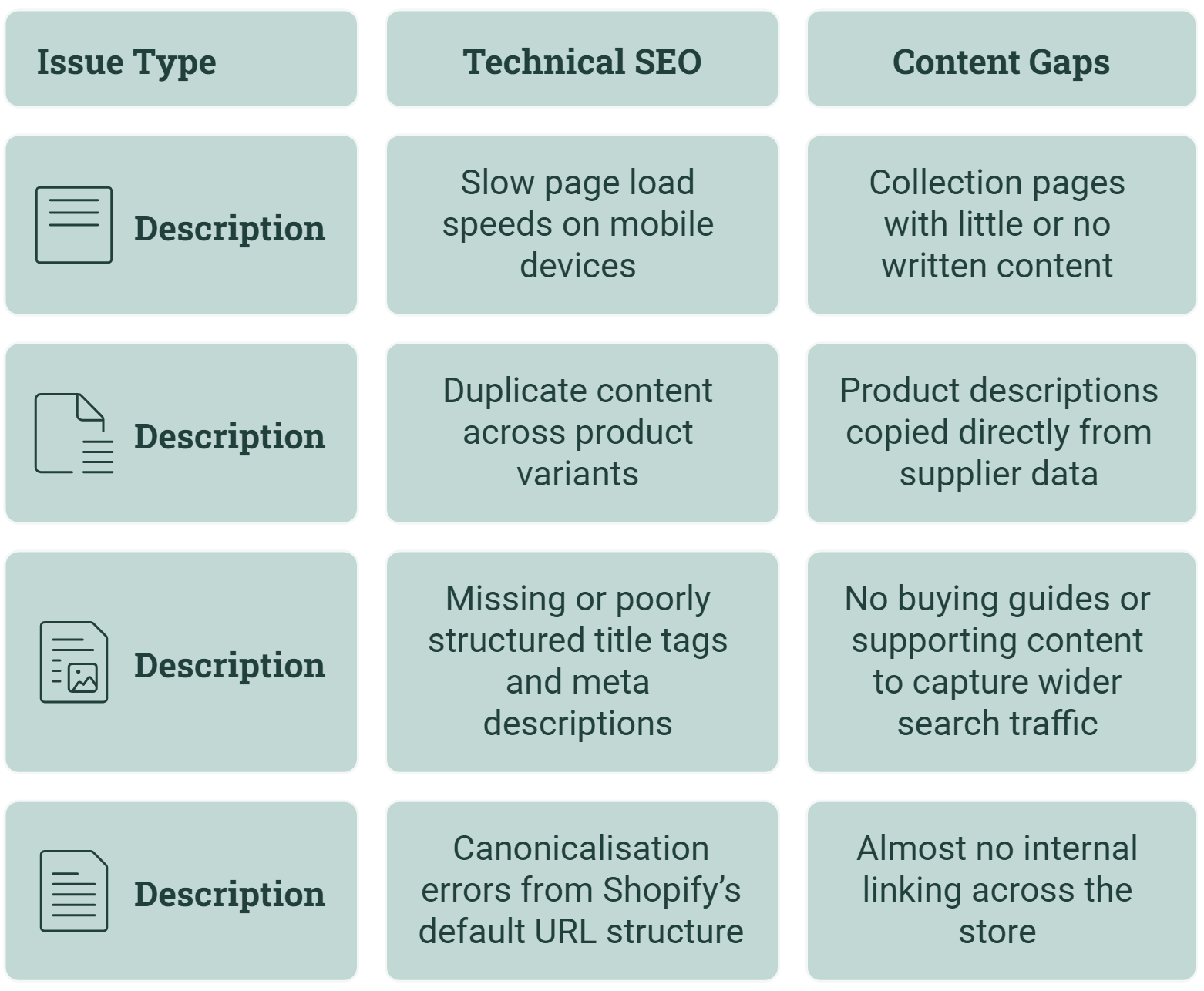
None of these problems was permanent. All of them were fixable. But together they explained why the store struggled to rank for anything valuable.
The Hidden SEO Problems Costing Thousands in Potential Revenue
Beneath the obvious audit findings sat deeper structural issues that cost the business far more than most owners realise.
Duplicate content
created real damage. Shopify generates multiple URLs for the same product when it appears across different collections. Without proper canonical tags, Google splits the page authority across several URLs instead of concentrating it on one strong version. Rankings suffered as a result.
Weak collection pages
ranked for nothing. These pages represent enormous organic traffic opportunities because buyers often search for product categories before they search for specific products. The client’s collection pages had no content and no optimisation.
Missing schema markup
kept products out of rich results. Competitors with properly structured data received more visual space in the search results. That extra space drives higher click-through rates, which meant competitors captured more clicks even when rankings were similar.
Poor site architecture
buried products several clicks from the homepage with no logical internal linking path for either users or search engines to follow.
Creating a Custom Shopify SEO Strategy
The audit findings shaped a strategy built specifically for this store. No templates. No one-size-fits-all approach.
The strategy covered four priorities:
- Technical foundation: Resolve all crawl, speed, and duplicate content issues first
- On-page optimisation: Rewrite titles, meta descriptions, headings, and product content
- Content roadmap: Build supporting pages and buying guides to capture mid-funnel traffic
- Authority building: Develop a sustainable process for earning relevant backlinks
Each stage is built on the one before it. Technical work first, because strong content on a broken site still struggles to rank.
How a Shopify SEO Consultant Identified High-Intent Keywords
Keyword research produced the most important strategic input of the entire campaign. A Shopify SEO consultant analysed the search landscape for this specific niche and mapped out three tiers of opportunity.
-
Transactional keywords with strong commercial intent. Terms buyers use when they are ready to purchase. Product name plus location, plus “buy”, plus category terms with clear purchase signals.
-
Product-focused search terms that matched specific items in the catalogue. These fed directly into product and collection page optimisation.
-
Commercial investigation terms for shoppers who compare options before buying. These became the basis for buying guides and comparison content that captured buyers earlier in their decision process.
This keyword map guided every content decision and every on-page change throughout the campaign.
Rebuilding the Store Architecture for Better Rankings
A logical, clean site structure is one of the most important ranking factors for any e-commerce store. The existing architecture made it difficult for Google to understand which pages mattered most.
Structural changes included:
- Restructuring the main navigation around commercial keyword priorities
- Creating clear category hierarchies so collection pages sat above product pages in crawl depth
- Building a deliberate internal linking system that passed authority from strong pages to weaker ones
- Consolidating thin or duplicate pages into stronger, more comprehensive versions
These changes produced measurable crawl improvements within the first two months.
Optimising Product Pages for Search and Sales
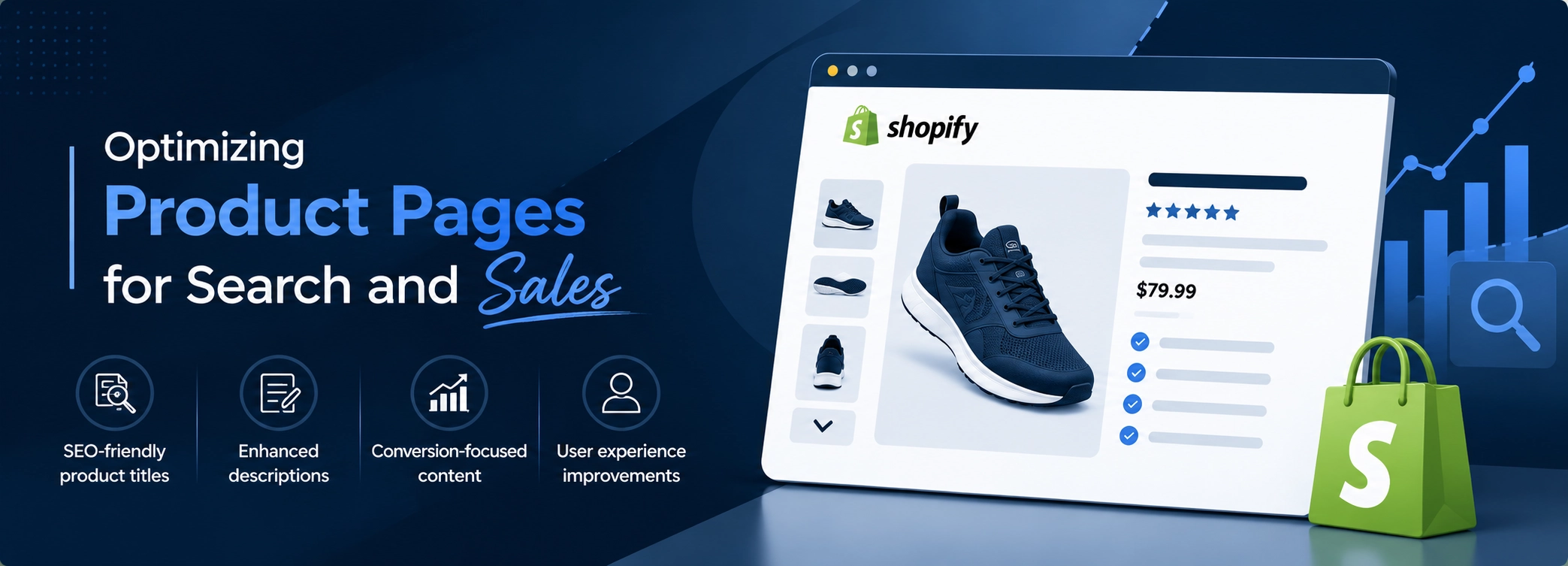
Product pages are where conversions happen. They are also the most direct ranking opportunity for high-intent commercial search terms.
The optimisation process covered:
- Rewriting product titles to include primary keywords naturally
- Replacing supplier descriptions with original, detailed content that answered buyer questions
- Adding structured data for product name, price, availability, and reviews
- Improving image alt text and file naming for image search visibility
- Streamlining page layout to reduce friction at the point of purchase
How Shopify SEO Experts Improved Collection Page Performance
Collection pages had been completely overlooked before the campaign. Shopify SEO experts treated them as a top priority because category-level searches generate the highest traffic volumes in most e-commerce niches.
Each collection page received:
- A unique, keyword-optimised heading and introduction paragraph
- Buyer-focused content that addressed common pre-purchase questions
- Strategic keyword placement within headings and body text
- Internal links to related collections and top-performing products
The ranking gains on collection pages produced some of the strongest traffic increases across the entire campaign.
The Technical SEO Fixes That Produced Quick Wins
Some technical changes delivered results faster than expected.
-
Site speed improvements came from compressing images, removing unused apps, and reducing render-blocking resources. Page load times dropped on both desktop and mobile.
-
Mobile optimisation involved fixing layout problems that caused poor Core Web Vitals scores. Since Google uses mobile-first indexing, these fixes had a direct and immediate impact on rankings.
-
Crawl efficiency improved once canonical tags went live and duplicate URLs were resolved. Google discovered and indexed new pages faster than before.
-
Structured data implementation for products, breadcrumbs, and site links made the store eligible for enhanced search result appearances that competitors already used to their advantage.
Building Content That Attracts Buyers, Not Just Visitors
Traffic without intent is noise. The content strategy focused entirely on attracting people who were ready to buy, not just browse. Buying guides answered the questions shoppers ask before making a purchase decision. Comparison content helped buyers understand which product suited their specific needs. Educational articles built authority and captured searches from people earlier in the buying cycle.
Every piece of content connected back to a product or collection page through internal links, so that informational traffic had a direct path to conversion rather than a dead end.
Book a Shopify SEO Strategy Call
Learn the exact changes that could increase your rankings, traffic, and e-commerce sales.
How SEO Services for Shopify Increased Product Visibility
SEO services for Shopify produced clear, measurable visibility gains across the product catalogue. Pages that had never appeared in the top fifty results started ranking on page one for commercial search terms. Impressions in Google Search Console increased month on month with no plateau in sight.
Better rankings brought better click-through rates. Better click-through rates brought more qualified visitors. Those visitors converted at a higher rate than paid traffic because they arrived with specific buying intent already formed.
Month-by-Month Growth Timeline
| Month | Focus | Outcome |
|---|---|---|
| Month 1 | Audit and technical fixes | Crawl issues resolved, speed improved |
| Month 2 | On-page optimisation | Product and collection pages updated |
| Month 3 | Content expansion | Buying guides and category content live |
| Month 4 | Authority building | Backlink work starts |
| Month 5 | Traffic acceleration | Organic sessions increase significantly |
| Month 6 | Revenue growth | An organic channel becomes a consistent revenue source |
The SEO Metrics That Changed Everything
| Metric | Before SEO | After SEO |
|---|---|---|
| Organic Traffic | Low | Significant Growth |
| Keyword Rankings | Limited Visibility | Multiple Page One Rankings |
| Conversion Rate | Average | Improved |
| Revenue | Stagnant | Increased |
| Ad Dependence | High | Reduced |
How Organic Traffic Became a Consistent Revenue Channel
Six months in, organic traffic had become one of the strongest revenue channels the business had. No dependence on paid ads to generate sales. No daily budget decisions. No campaigns to pause and restart.
Visitors from organic search converted at a higher rate than visitors from paid channels. They arrived with intent. The SEO work placed the right pages in front of the right buyers at the moment they were ready to act. That consistency is what separates organic SEO from every paid channel. The results do not disappear when the budget stops.
The Impact on Customer Acquisition Costs
The financial shift was significant. Before SEO, customer acquisition through paid channels drove most of the marketing spend. Every sale had a direct cost attached to it.
After six months, organic search delivered customers at a fraction of that cost. The initial investment in SEO produced returns that improved over time, unlike paid advertising, where efficiency typically declines as competition increases.
The business could now allocate its paid budget to new customer acquisition rather than using it to sustain existing demand from people who would have found them through search anyway.
In-House SEO vs a Shopify SEO Agency: The Real Difference
The client had attempted basic SEO before engaging a Shopify SEO agency. The results were limited. Not from a lack of effort, but because Shopify SEO carries specific technical requirements that take genuine expertise to handle correctly.
The agency brought three things the in-house team could not replicate quickly:
- Deep familiarity with Shopify’s URL structure, canonical tag behaviour, and duplicate content risks
- Access to tools and data sets that shaped every strategic decision
- A tested process that eliminated trial-and-error delays
Time has a real cost in e-commerce. Every month spent on ineffective tactics is a month of organic growth that cannot be recovered.
Why Hiring a Shopify SEO Specialist Accelerated Growth
A Shopify SEO specialist shortens the timeline to results. Specialists bring pattern recognition from working across multiple e-commerce accounts. They know which fixes produce the fastest impact. They know which content formats perform best in specific niches. They know which technical issues tend to have outsized effects on crawl budget and rankings.
That expertise meant this campaign moved faster than a generalist approach would have allowed. The client did not spend three months discovering problems that an experienced specialist identifies in the first audit.
Common e-commerce SEO Mistakes This Client Avoided
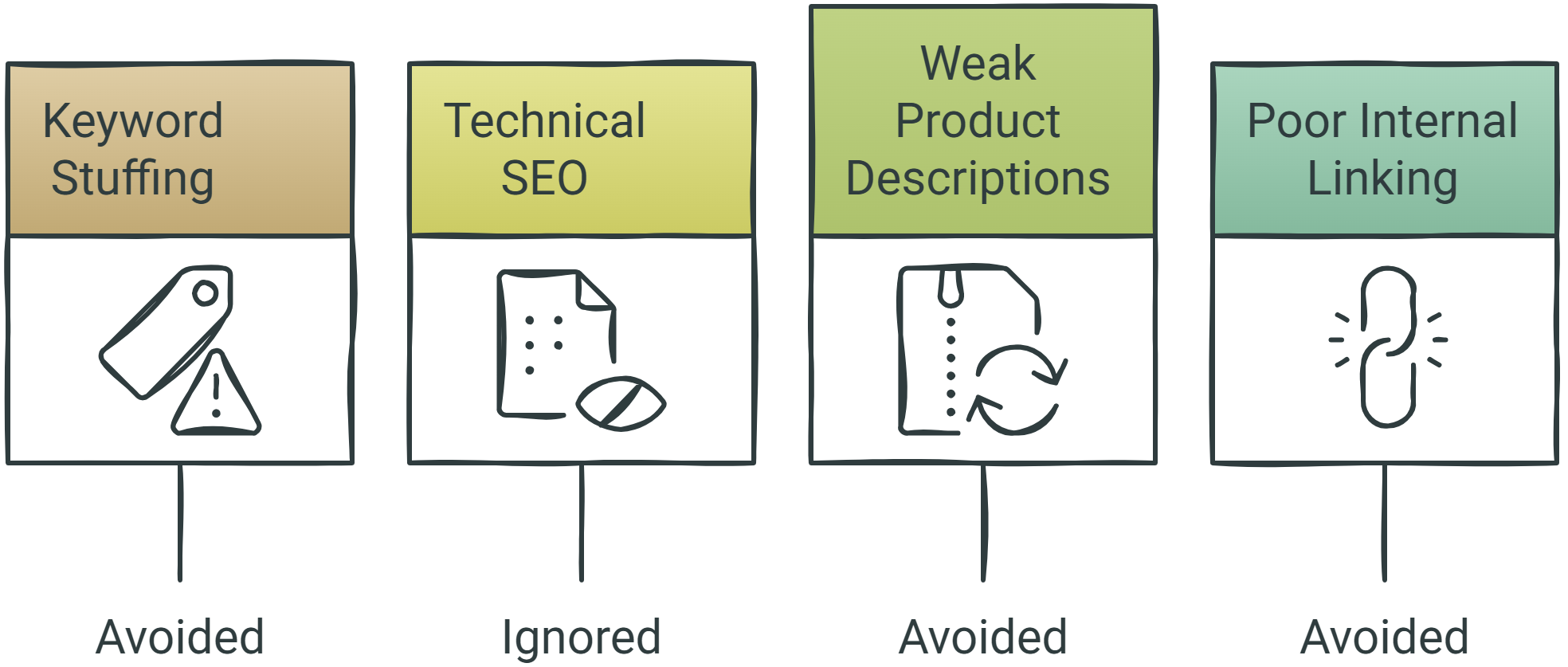
Working with specialists meant the client avoided several costly errors:
-
Keyword stuffing on product pages, which harms rankings rather than helping them
-
Ignoring technical SEO in favour of content alone, which limits how much any content can achieve
-
Weak product descriptions copied from suppliers, which Google treats as duplicate content
-
Poor internal linking that leaves strong pages isolated without passing authority to related content
The Biggest Lessons From This Shopify SEO Success Story
Three things stand out from this campaign.
-
Strategic planning matters more than tactics: A clear plan with defined goals produced better results than any individual optimisation ever could on its own.
-
SEO compounds over time: The strongest results came in months four, five, and six, not month one. Early work built the foundation. Later work was built on top of it.
-
Data-driven decisions win: Every change is connected back to audit findings, keyword data, and performance metrics. Guesswork had no place in the process.
What Businesses Should Look for Before They Hire a Shopify SEO Expert
Before you hire a Shopify SEO expert, these factors matter most:
-
Proven case studies showing real e-commerce results, not just traffic charts
-
Shopify-specific expertise rather than generic agency SEO experience
-
Transparent reporting with clear metrics tied to business outcomes
-
E-commerce experience that covers product pages, collection pages, and Shopify’s technical constraints
Any agency worth working with explains its process clearly and sets out what success looks like before the work starts.
How an Expert Shopify Developer Supported SEO Success
Technical SEO recommendations require development support to go live correctly. An expert Shopify developer worked alongside the SEO team throughout the campaign to ensure that structural changes, schema implementation, and performance fixes all went live without errors. That collaboration meant recommendations did not stall. Changes went live fast. The SEO impact appeared sooner as a result.
A Shopify expert developer also resolved performance issues that required custom code, problems that the SEO audit had identified but that no plugin or standard setting could fix. That level of technical execution required development expertise working directly with the SEO strategy, not separately from it.
Shopify SEO Trends That Will Influence Future Growth
The SEO landscape keeps shifting. Staying ahead of these changes protects long-term performance.
-
AI-powered search: changes how Google surfaces results. Stores with well-structured content and clear topical authority appear more often in AI-generated answers.
-
Entity SEO: rewards brands that build a coherent, consistent presence across their website and across the web. Structured data and authoritative content both play a major role here.
-
E-commerce schema evolution: means product schema, review schema, and availability data become more important for visibility in rich results each year.
-
User experience signals: continue to grow in influence. Core Web Vitals, mobile usability, and page engagement metrics all factor into how Google ranks e-commerce pages now and will continue to do so.
Why More E-commerce Brands Are Hiring Shopify SEO Companies in 2026
Competition in e-commerce search has intensified. More brands fight for the same keywords. Google continues to raise the bar for what qualifies as a high-quality page.
At the same time, paid advertising costs have risen across every major platform. Brands that rely entirely on paid traffic face shrinking margins and a growing dependence on ad spend just to maintain existing revenue levels.
SEO experts’ Shopify teams help brands build what paid channels cannot provide: owned organic visibility that grows in value over time and does not disappear when the budget runs out.
The ROI Breakdown: Was Hiring a Shopify SEO Company Worth It
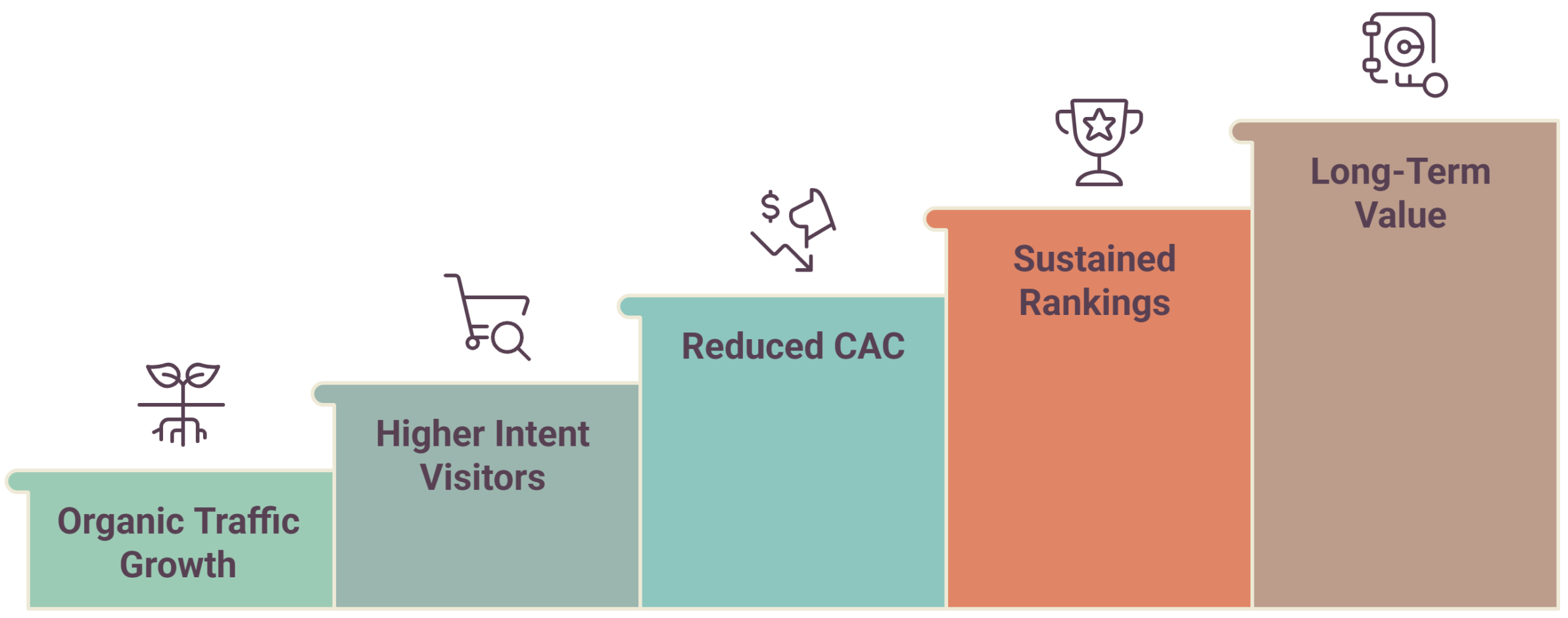
For this client, the answer was straightforward. The investment in professional SEO produced returns that exceeded the cost within six months, and those returns continued to grow after the initial campaign work finished.
Key ROI factors:
-
Organic traffic growth reduced dependence on paid acquisition
-
Higher-intent visitors converted at better rates than paid traffic
-
Customer acquisition cost fell as organic volume increased
-
Rankings earned during the campaign continued to produce traffic without any additional cost
The long-term business value of strong organic rankings is one of the most significant assets an e-commerce brand can build. Paid traffic rents attention. Organic rankings own it.
Why Businesses Choose WillShall Consulting as Their Shopify SEO Partner
- Shopify SEO expertise with proven e-commerce growth strategies
- Comprehensive Shopify SEO services and technical optimisation
- Experienced Shopify SEO consultants and Shopify SEO experts
- Support from a trusted Shopify Development Agency Houston businesses rely on
- Focus on increasing rankings, traffic, conversions, and revenue
- Customised SEO strategies tailored to specific business goals
- Transparent reporting with measurable results at every stage
- Long-term partnership approach for sustainable, compounding growth
Conclusion: Could Your Shopify Store Be the Next Success Story
The journey this client took, from stalled growth and rising ad costs to consistent organic revenue, is one that other e-commerce brands can replicate. The process is structured. The outcomes are measurable. The results compound in ways that paid advertising simply cannot match.
The right Shopify SEO company does not just improve your rankings. It builds a long-term asset that delivers value month after month without requiring you to outbid competitors for every click.
WillShall Consulting has helped e-commerce brands at exactly this stage, turning underperforming Shopify stores into organic growth engines through technical expertise, strategic content, and close collaboration between SEO specialists and dedicated development teams. If your store faces the same challenges this client faced, the same path forward is available to you.
Speak With a Shopify SEO Expert
Get a customised growth plan designed to increase organic traffic, improve rankings, and drive more e-commerce revenue.
With a Bachelor’s in Commerce and 15 years of experience in Ecommerce SEO and Shopify Development, I bring extensive expertise to the digital field. As Managing Partner at WillShall Consulting, I lead a team delivering exceptional Digital Marketing, Web Development, and Web Designing services. My passion for innovation and commitment to excellence help businesses thrive in the digital age.
Frequently Asked Questions about Shopify SEO Company

Looking to boost your online presence and reach more customers in your local area?
Explore Local SEO ServiceKnow your website’s SEO Score.
Get a customize SEO Audit report & improve your website statistics.