You built the store. You added the products. You hit publish. And then… nothing. No traffic. No sales. Just silence. Most new Shopify store owners go through this exact moment. The store looks great, but Google has no idea it exists. Competitors are showing up on page one while your store sits buried on page four, collecting digital dust.
That is the point where real SEO help stops being optional. Not a cheap package. Not generic advice. You need someone who actually understands Shopify and knows how to build organic growth from the ground up.
Choosing the right Shopify SEO agency is one of the most important decisions you will make for your store. Get it right, and traffic builds month after month without paying for every click. Get it wrong, and you burn money with nothing to show for it. This guide covers exactly what to look for, what to ask, and what to avoid before you hire anyone.
Want More Organic Sales From Your Shopify Store?
Work with Shopify SEO professionals who focus on traffic, rankings, and conversion growth.
A Shopify SEO expert handles a lot more than adding keywords to product titles. They dig into your store’s technical foundation, spot what is broken or missing, and fix it in a way that actually gets Google’s attention.
Here is what a real expert works on:
Technical SEO audits that check site structure, crawlability, and how Google indexes your pages
Keyword research that finds what real buyers actually type into Google before they purchase
Product and collection page optimization with titles, descriptions, and headers that rank
Internal linking that guides both shoppers and search engines through your store naturally
Site speed fixes that cut load times and directly push up rankings and sales
XML sitemap setup and submission straight to Google Search Console
Here is something most new store owners do not know. Shopify and general SEO are not the same thing. Shopify generates duplicate URLs every time a product shows up in more than one collection. It uses a fixed URL structure that you cannot always change. Themes often load slowly because of bloated code and too many apps. A general SEO agency usually misses all of this. A Shopify-focused expert has already solved these problems dozens of times.
Quick-Start Checklist for New Shopify Stores:
Connect Google Search Console and submit your sitemap
Set canonical tags on all product URLs to prevent duplicate content
Write unique meta titles and descriptions for every product and collection page
Run a Core Web Vitals test using Google PageSpeed Insights
Check that your theme loads under 3 seconds on mobile
Do these five things before anything else. They form the base of every strong Shopify SEO strategy.
Why Every New Store Needs a Shopify SEO Expert
New store owners make the same SEO mistakes over and over. They launch without setting up Google Search Console. They use manufacturer product descriptions that appear on dozens of other websites. They ignore collection pages completely. They built a beautiful store that Google cannot understand.
These mistakes are not obvious to someone without SEO experience. That is exactly why Shopify-specific SEO experience matters so much at the start.
Common mistakes new stores make include:
Duplicate product content copied from supplier websites
No keyword research before naming products or collections
Missing alt text on product images
Weak or empty collection page descriptions
No blog or content strategy to build topical authority
An expert catches these early. Fixing them before launch costs far less than rebuilding a broken SEO foundation six months later.
How Shopify SEO Services Help Increase Sales and Revenue
Shopify SEO services do one core thing really well. They bring buyers from Google to your store without you paying for every click.
Paid ads stop the moment you stop paying. Organic traffic from SEO keeps coming. A product page that ranks on page one for “best leather wallet for men” sends buyers to your store every single day without an ad budget.
Here is how good SEO services translate into real revenue:
Targeted keyword rankings bring people who already want to buy
Optimized product pages convert better because they answer buyer questions
Blog content builds trust and drives shoppers deeper into the store
Stores that invest in SEO early typically see their organic traffic grow 40 to 60 percent within the first 12 months. Those traffic compounds. Unlike paid ads, it does not disappear when the budget runs out.
When Is the Right Time to Hire Shopify Expert Support
The best time is before launch. Most people wait until they are frustrated. Six months of low traffic, a few failed ad campaigns, and then they finally look for SEO help. By that point, bad URL structures and missing metadata have already set a weak foundation.
When you hire Shopify expert support early, you avoid the rebuild cost. Here is a simple action plan:
Before Launch:
Set up Google Search Console, sort out canonical tags, write page titles and meta descriptions that actually target the right keywords, and submit your XML sitemap before the first visitor lands.
Months 1 to 3:Dig into a full technical audit, map keywords to every product and collection page, and clean up anything stopping Google from crawling and indexing the store properly.
Months 3 to 6:Start putting out blog content built around what your buyers search for. Lock in early backlinks through supplier pages, guest posts, and PR mentions.
Month 6 and Beyond:Check keyword rankings every week, go back and improve pages that are not performing, and push harder on the content and link-building work that is already showing results.
Stores that follow this plan get to results faster and waste far less money fixing problems that were avoidable from the start.
How a Shopify Expert Developer Improves SEO Performance
A Shopify expert developer does more than build new features. The right developer knows that every code decision either helps or hurts SEO performance.
Google measures Core Web Vitals as part of how it ranks pages. Most Shopify themes fail these benchmarks right out of the box. A developer who actually understands SEO will:
Compress and resize product images without losing visual quality
Defer render-blocking JavaScript so pages stop making visitors wait
Strip out unused app scripts that drag down every single page
Set up lazy loading so images below the fold do not slow the initial load
Fix mobile layout problems that tank user experience scores
None of these changes is cosmetic. A one-second delay in load time cuts conversions by 7 percent. Faster stores climb rankings and close more sales. It really is that direct.
Why Businesses Choose Shopify Experts Houston for eCommerce Growth
Shopify Experts Houston works with brands that want straight communication, real accountability, and a team that actually knows their market. For businesses going after Texas customers or growing from a Houston base, having local expertise on your side makes a genuine difference.
Geography matters, but it is not everything. What really counts is finding an agency that treats your store as if it were their only client. That means direct access to the team working on your account, regular strategy calls instead of just monthly PDF reports, and someone who picks up the phone when something goes wrong.
Local or remote, the standard should be the same. Real communication. Real results. No excuses.
Important Questions to Ask Before Hiring Shopify Experts
Before signing any agreement, ask these specific questions. The answers will tell you a lot about whether the agency actually knows Shopify.
Can you show me Shopify-specific case studies?
WordPress results do not count here. General eCommerce examples do not count either. Push for actual Shopify store examples that show real traffic growth and revenue numbers. If they hesitate or pivot to other platforms, that tells you everything.
What SEO tools do you use?
Any agency doing serious Shopify SEO work has a proper tool stack. If they cannot name the tools they use daily, that is a problem. Be cautious of anyone who relies entirely on free tools. Professional SEO work needs professional tools behind it.
How do you handle Shopify’s duplicate URL problem?
This question alone filters out a lot of agencies fast. Shopify generates duplicate URLs when products appear under multiple collections. A real Shopify SEO expert knows this immediately and explains exactly how they fix it. If they look confused or give a vague answer, they have never actually worked deep inside the platform.
What does your monthly reporting include?
You should never have to chase your agency for updates. Every month, you need to see keyword ranking changes, organic traffic trends, technical audit progress, and conversion data. If their reporting is just a one-page PDF with three numbers on it, that is not reporting. That is noise.
How do you measure success beyond rankings?
Rankings matter. Revenue matters more. Good Shopify Experts track both.
Essential Skills Every Shopify SEO Consultant Should Have
AShopify SEO consultantbrings a specific set of skills that go beyond general SEO knowledge. Before you hire one, make sure they can show all of the following:
Technical SEO skills, like knowing about site design, crawl functions, and schema markup
Not just search rate but also customer purpose was looked at in the keyword study.
Shopify platform knowledge, such as how to organize themes, control apps, and handle URLs
Knowledge of how to make product pages, group pages, and blog posts more search engine-friendly
SEO that focuses on conversions and links ranks to real sales
An expert who only talks about ranks and never talks about conversion rates is only showing you half of the picture. Rankings bring visitors. Optimized pages turn visitors into customers.
How an SEO Shopify Expert Optimizes Product and Collection Pages
Product and collection pages are where money is made. A good SEO Shopify expert looks at these pages through two lenses at the same time. Will this rank? Will this convert? Both questions matter equally.
For product pages:
Write original descriptions that work in target keywords naturally and actually answer what buyers want to know before they purchase
Add structured data markup, so Google pulls your products into rich snippets with prices and reviews right in the search results
Give every image a descriptive alt text so Google understands what it is looking at
Use header tags the right way so Google immediately understands what each page is about
For collection pages:
Put keyword-rich intro content above the product grid, so Google has real text to read and rank
Build category structures around how shoppers actually search, not how you organize products internally
Clean up the filter and sort URL parameters that silently create duplicate content in the background
Push internal links from blog posts to relevant collections so authority flows where it matters most
Page Optimization Action List:
Rewrite every product description copied straight from a supplier
Add at least 150 words of original content to every collection page
Go through every product image and add descriptive alt text
Set up schema markup covering product price, availability, and reviews
Build at least three internal links from existing blog posts to your top collection pages
These pages bring in the most organic traffic when someone puts real work into them. New stores that ignore the collection page’s SEO are essentially handing those sales to competitors.
Why You Should Hire a Shopify SEO Expert Instead of a General SEO Agency
The biggest reason to hire a Shopify SEO expertover a general agency comes down to one thing. Platform knowledge. Shopify works differently from WordPress, Wix, or anything else out there. General agencies apply the same playbook to every website and wonder why Shopify results do not match.
They set up redirects incorrectly. They recommend URL structures that Shopify does not support. They miss pagination issues on collection pages. They install SEO apps that conflict with each other and slow the store down.
A Shopify-focused expert has already solved these problems for other clients. They know which apps help and which ones hurt. They understand how Shopify renders JavaScript and what that means for Google’s ability to crawl the store.
Faster fixes. Fewer mistakes. Better results.
Shopify SEO Agency vs Freelancer vs In-House SEO Team
Factor
Shopify SEO Agency
Freelancer
In-House SEO Team
Shopify Expertise
High
Medium
Depends on hire
Technical SEO Support
Full support
Limited
Requires separate hires
SEO Tools Access
Premium tools included
Basic tools
Extra investment needed
Scalability
Scales easily
Limited
Expensive to scale
Reporting
Detailed monthly reports
Basic updates
Internal setup needed
Long-Term SEO Growth
Strong consistent strategy
Often inconsistent
It depends on expertise
For most new stores, a Shopify SEO agencymakes the most sense. You get a full team covering strategy, technical SEO, content, and development without hiring multiple people separately.
Common SEO Mistakes That Hurt New Shopify Stores
These mistakes appear in almost every new store audit:
Duplicate content:
Products listed under multiple collections create duplicate URLs that confuse Google
Empty collection pages:
No descriptive content means Google has nothing to rank
Missing canonical tags:
Without them, Google picks which version of a page to index and often picks the wrong one
No internal linking plan:
Products and collections sit isolated with no link structure connecting them
Ignored image optimization:
Large uncompressed images slow the store and hurt rankings
Every one of these is fixable. But fixing them early costs far less than fixing them after six months of weak rankings.
How to Identify a Reliable Shopify SEO Agency
Look for these signs before committing to any agency:
They share real Shopify case studies with traffic and revenue numbers
They explain their process clearly without hiding behind jargon
They use only white-hat SEO methods and can explain why
They build a custom strategy for your store instead of a generic package
They provide monthly reports you can actually understand
They talk about conversions and revenue alongside rankings
Avoid any agency that promises guaranteed rankings, offers vague deliverables, or cannot explain how Shopify handles duplicate content. These are signs that they have never worked seriously with the platform.
Understanding Technical SEO for Shopify Websites
Technical SEO is the foundation on which everything else builds. Without it, great content and strong backlinks cannot reach their full potential.
Key technical areas for Shopify stores:
XML Sitemap:
Make sure Shopify has generated your sitemap and submitted it to Google Search Console
Canonical Tags:
Every product URL needs a canonical tag pointing to the preferred version
Crawlability:
Check your robots.txt file to make sure Google can access all important pages
Core Web Vitals:
Run monthly tests using Google PageSpeed Insights and fix issues as they appear
Indexing:
Use Google Search Console to confirm your key pages are indexed and showing in search
Skipping technical SEO is like building a store with no signage. Customers cannot find it even when they are looking.
Real-Time Shopify SEO Stats Every Store Owner Should Know
SEO Metric
Latest Stats
Why It Matters
Mobile shopping traffic
Over 63% comes from mobile users
Mobile SEO is not optional
Organic search traffic
Around 53% of website traffic comes from search
SEO drives long-term growth
Page speed impact
A 1-second delay can reduce conversions by 7%
Faster stores sell more
Google ranking clicks
The top 3 results get the most clicks
Better rankings bring more traffic
User experience impact
Better UX improves engagement signals
Helps both rankings and sales
These numbers show why SEO is not a nice-to-have. It is the primary traffic channel for most successful eCommerce stores.
Why Content Marketing Helps Shopify SEO Growth
Blog content does more than fill space on your website. It targets long-tail keywords that product pages cannot rank for. It answers buyer questions before they reach the product page. It builds topical authority that makes Google trust your store more.
A store selling running shoes can publish content about choosing the right running shoe for flat feet, training plans for beginners, or how to break in new shoes. Each post targets a different search query. Each post brings a different type of buyer to the store.
Content marketing takes three to six months to show results. Start early. Publish consistently. Focus on the questions your target customers actually type into Google.
How User Experience Impacts Shopify SEO Rankings
Google tracks how users behave on your store. High bounce rates signal a poor experience. Long session times and multiple page views signal a good one. These behavioral signals influence rankings.
A store with fast load times, clear navigation, easy checkout, and well-organized product categories keeps visitors engaged longer. That engagement tells Google the store deserves to rank.
Focus on these UX improvements for better SEO results:
Make navigation simple with clear category labels
Keep checkout steps under three clicks from the product page to confirmation
Use readable font sizes and strong product images on mobile
Add filters to collection pages so shoppers find products faster
Better UX and better SEO point in the same direction. Improve the shopping experience, and rankings follow.
Best SEO Tools Used by Professional Shopify SEO Experts
Professional SEO needs professional tools. Here is what real experts use:
Traffic Analytics: Tracks visits, behavior, and conversions
Search Performance Tool: Shows rankings, errors, and indexing from Google directly
Keyword and Backlink Tool: Research, competitor analysis, and link tracking
Site Audit Tool: Full audits and keyword monitoring in one place
Technical Crawl Tool: Finds every technical issue hiding across your store
Speed Testing Tool: Core Web Vitals checks and performance fixes
No tools. No results. It is that simple.
Warning Signs You Are Hiring the Wrong Shopify SEO Agency
Watch for these before signing anything:
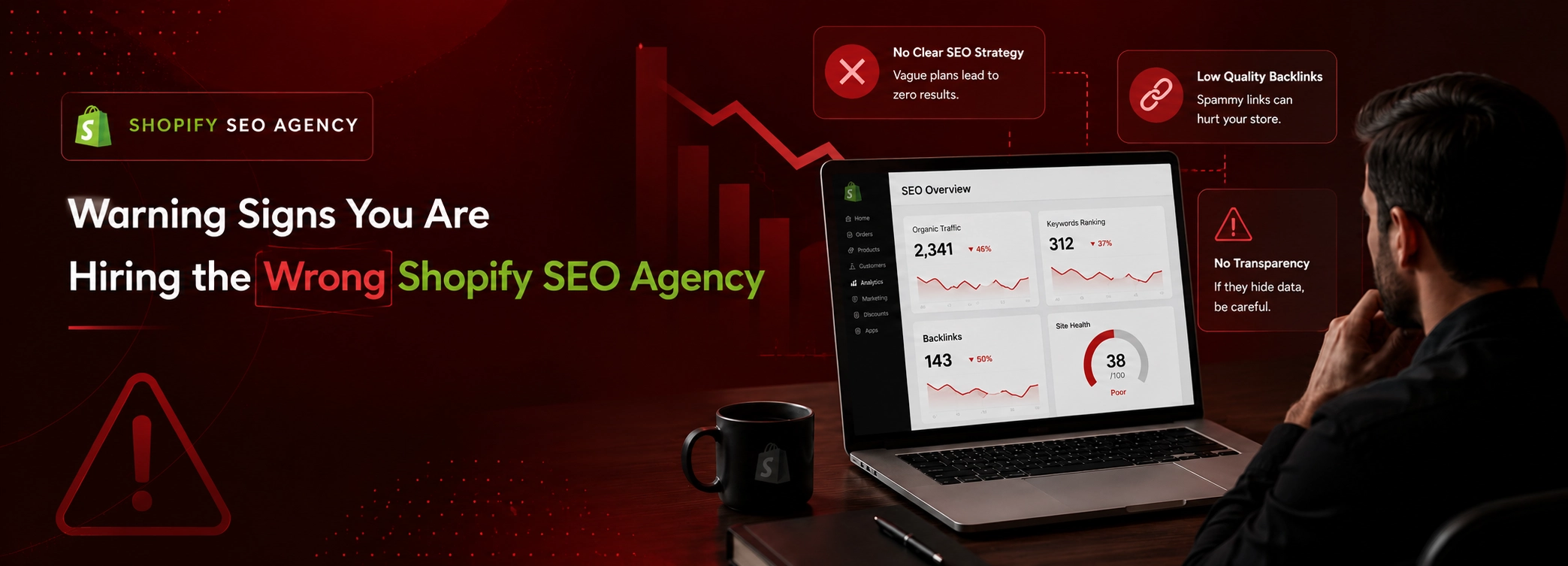
Guaranteed rankings: No one can guarantee Google rankings. Anyone who claims otherwise is either uninformed or dishonest
Suspiciously cheap packages: Real SEO work takes time and expertise. A $99 monthly package is not SEO
No reporting: If they cannot show you monthly data, they have nothing good to report
No Shopify experience: Ask directly. If they cannot name Shopify-specific technical issues they have solved, they lack the expertise.
One more sign to watch for: agencies that focus entirely on rankings and never mention revenue or conversions. Rankings without conversions do not pay the bills.
How Long Does Shopify SEO Take to Deliver Results
SEO takes time. Here is what to expect:
Days 1 to 30:
Technical setup, keyword mapping, and on-page fixes. No ranking changes yet. This is all groundwork.
Days 30 to 90:
Google starts crawling your optimized pages. A few long-tail keywords show up on page two or three. Traffic begins a slow climb.
Months 3 to 6:
Rankings start moving for your target keywords. Organic traffic grows. Blog content picks up impressions.
Month 6 and Beyond:
Growth starts compounding. Ranked pages bring steady traffic. Content builds authority. Backlinks strengthen your domain.
Stick with SEO for 12 months, and the results will cost far less than paid ads to maintain.
Budget Planning for Shopify SEO Services
Shopify SEO pricing varies depending on what your store needs. Here is a basic breakdown:
One-Time SEO Audit:
Ranges from $500 to $2,000, depending on store size
Monthly SEO Campaigns:
Most quality agencies charge between $800 and $3,000 per month
Project-Based Work:
Collection and product page optimization usually runs $1,000 to $5,000
A $200 monthly SEO package delivers nothing worth paying for. Real SEO takes real work, and that has a real cost. Treat it as a long-term investment, not a monthly expense to minimize.
How Shopify SEO Services Help Small Stores Compete With Big Brands
Big brands dominate broad keywords. A new store cannot outrank Amazon for “running shoes.” But it can rank for “minimalist trail running shoes for wide feet.” That long-tail keyword has lower competition and higher buyer intent.
Small stores win by going narrow and deep. They target specific niches, build content around detailed buyer questions, and create product pages that answer searches big brands ignore. Over time, they build authority in their niche that broad-market competitors cannot replicate easily.
This is the strategy good Shopify SEO services use for smaller stores. Niche focus. Strong content. Better user experience. Patient execution.
Why Store Speed Matters for Shopify SEO Success
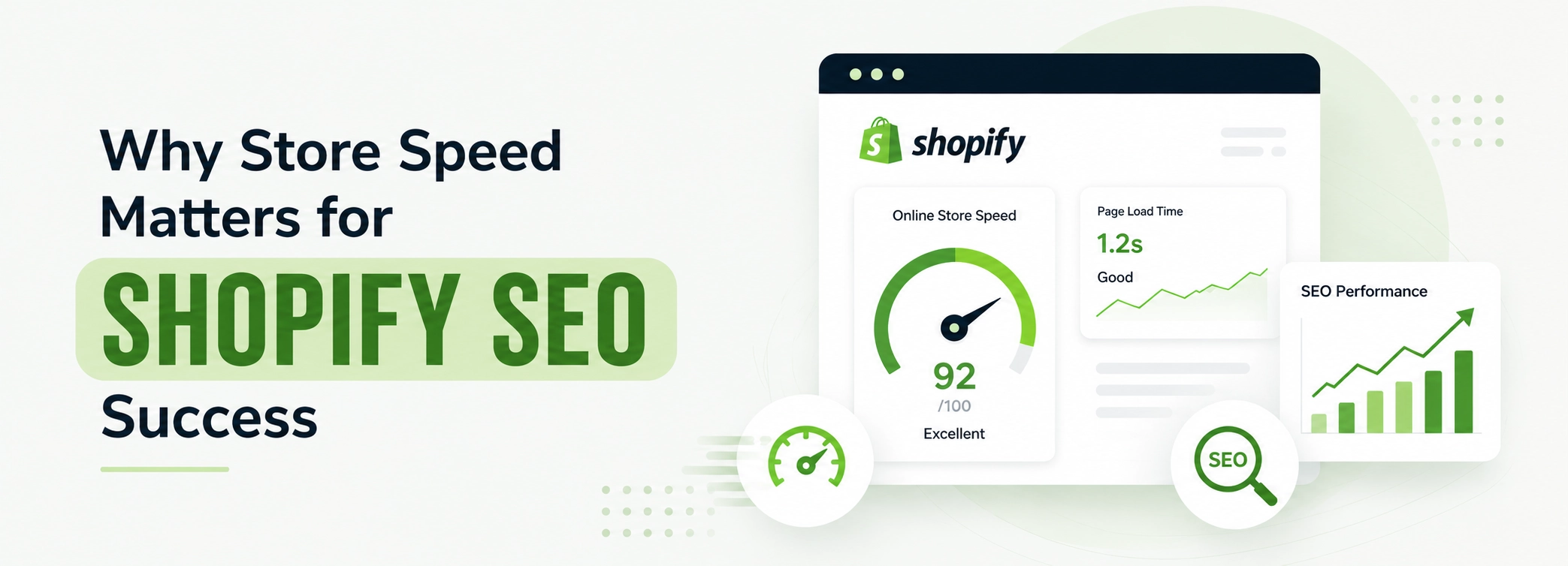
A slow store loses on two fronts. Google ranks slower stores lower. Shoppers abandon slow stores faster. Both hurt revenue. The data is straightforward. A one-second delay reduces conversions by 7 percent. A three-second load time on mobile causes over half of visitors to leave before the page fully loads.
Speed improvements that make the biggest difference:
Compress product images using tools like TinyIMG or Crush.pics
Reduce the number of installed Shopify apps, especially those running scripts on every page
Use a lightweight theme built for performance rather than visual complexity
Enable browser caching for returning visitors
Use a content delivery network for faster image delivery globally
Speed is not a technical bonus. It is a core part of your SEO strategy.
How Shopify Experts Build Long-Term Organic Growth Strategies
Long-term SEO growth does not happen by accident. It requires a roadmap, consistent execution, and regular adjustments based on real data.
A strong long-term strategy covers the following:
SEO roadmap:
A 12-month plan covering technical fixes, content publishing schedule, and link-building targets
Content calendar:
Blog posts and buying guides planned around seasonal search trends and product launches
Backlink strategy:
Earning links through supplier pages, industry publications, and PR outreach
Monthly monitoring:
Tracking keyword rankings, traffic trends, and conversion rates to catch problems early
Stores that treat SEO as a one-time project plateau quickly. Stores that treat it as an ongoing system keep growing.
Mistakes to Avoid When You Hire a Shopify SEO Expert
Choosing based only on price:
The cheapest option almost always costs more in the long run through poor results and damage that needs fixing.
Skipping the technical audit:
No technical audit means no clear picture of what is actually broken. You cannot fix what you have not found.
Focusing only on rankings:
Ranking number one means nothing if nobody searches that keyword. Chase keywords that bring real buyers to your store, not just numbers on a ranking report.
Not asking for clear reports:
A good agency shows you the work. If your SEO team cannot explain what they did last month and what it changed, that is a problem worth fixing fast.
Why Willshall Consulting Is the Right Shopify SEO Partner
Shopify SEO Strategies Built for Real Growth
SEO plans made for your store and your goals
Technical SEO and content work done by one team
SEO work that focuses on sales, not just rankings
Complete Shopify SEO Support Under One Team
Product and collection pages optimized to rank and sell
Technical audits that find and fix real problems
Monthly reports that show exactly what is working
Trusted SEO Support for Growing eCommerce Brands
Shopify SEO experience across many store types
Strategies that grow as your store grows
Clear communication from start to finish
Expert insights from
– Sushant
SEO Expert
“The best Shopify SEO strategies focus on both rankings and customer experience. Stores that combine technical SEO, fast performance, and quality content usually achieve stronger long-term growth.”
Choosing the right Shopify SEO agency shapes everything that comes after. Traffic, rankings, revenue, and long-term store growth all connect back to the quality of SEO work done in the early stages. New stores that invest in proper SEO from the start build organic traffic that keeps delivering results long after the initial work.
Willshall Consultinghas helped eCommerce brands build exactly this kind of sustainable growth through technical SEO, content strategy, and Shopify-specific optimization that general agencies cannot match. Stop looking for the cheapest option. Start looking for the right one.
Looking for Trusted Shopify SEO Services?
Connect with Willshall Consulting today and build a Shopify store that ranks higher, loads faster, and converts better.
With a Bachelor’s in Commerce and 15 years of experience in Ecommerce SEO and Shopify Development, I bring extensive expertise to the digital field. As Managing Partner at WillShall Consulting, I lead a team delivering exceptional Digital Marketing, Web Development, and Web Designing services. My passion for innovation and commitment to excellence help businesses thrive in the digital age.
FAQs For Choosing Right Shopify SEO Agency for a New Online Store
They dig into your store, fix what is broken, optimize every page that matters, and build an SEO strategy that keeps bringing buyers from Google month after month.
Because they catch platform-specific problems general agencies walk right past, like duplicate URLs, slow themes, and app conflicts that quietly kill your rankings.
Yes. Early SEO setup costs far less than repairing a broken foundation six months after launch when traffic still has not arrived.
Before you launch. Fixing SEO problems before they exist costs a fraction of what it costs to fix them six months later.
They make your store faster, cleaner, and more crawlable. The kind of improvements that show up directly in your rankings and conversion rate.
Houston-based brands get a team they can actually reach, one that understands the local market and treats their store like a real priority.
They audit your store, build the strategy, and tell you exactly what needs fixing. The execution is usually on you or another team.
General agencies apply the same playbook to every platform and get it wrong with Shopify. A specialist fixes things faster, makes fewer mistakes, and gets better results.
With a Bachelor's in Commerce and 15 years of experience in Ecommerce SEO and Shopify Development, I bring extensive expertise to the digital field. As Managing Partner at WillShall Consulting, I lead a team delivering exceptional Digital Marketing, Web Development, and Web Designing services. My passion for innovation and commitment to excellence help businesses thrive in the digital age.





 Upwork
 Fiverr
 People Per
Hour
People Per
Hour
 By Sachin Sharma
|
18-May-2026
By Sachin Sharma
|
18-May-2026