


 Upwork
 Fiverr
 People Per
Hour
People Per
Hour
The Next Generation of Shopify Web Design Agency for New York Businesses
 By Manoj Kandwal
|
10-Jul-2026
By Manoj Kandwal
|
10-Jul-2026
New York’s e-commerce market moves faster than almost any other in the country, and stores built with old design habits are losing customers by the week. Many businesses in the city are still running Shopify storefronts that reflect strategies from three or four years ago, while shopper expectations have shifted toward speed, personalization, and a mobile-first experience. A modern Shopify web design agency in New York builds stores around where shoppers are headed, not where the market used to sit, and that shift in approach is what separates stores that grow from stores that stall.
Get a free Shopify store audit built for New York businesses
Find out what’s holding your store back before your competitors pull further ahead.
How New York’s Competitive Market Changes Shopify Design Priorities
New York shoppers compare prices, browse on their phones between subway stops, and abandon a slow-loading page within seconds. That behavior forces a different set of design priorities than a business might use in a smaller or less saturated market. Fast-scaling competitor brands enter the space constantly, and a store that looked sharp last year can feel dated next to a newer entrant with tighter design and quicker load times.
Visual differentiation matters more here than almost anywhere else. A generic theme with stock product photography blends into a crowded feed, while a store with a distinct layout and strong photography holds attention longer. Businesses that treat design as a one-time task instead of an ongoing priority tend to fall behind competitors who keep refining their storefront.
5 Signs Your Shopify Store Isn’t Built for Today’s New York Shopper
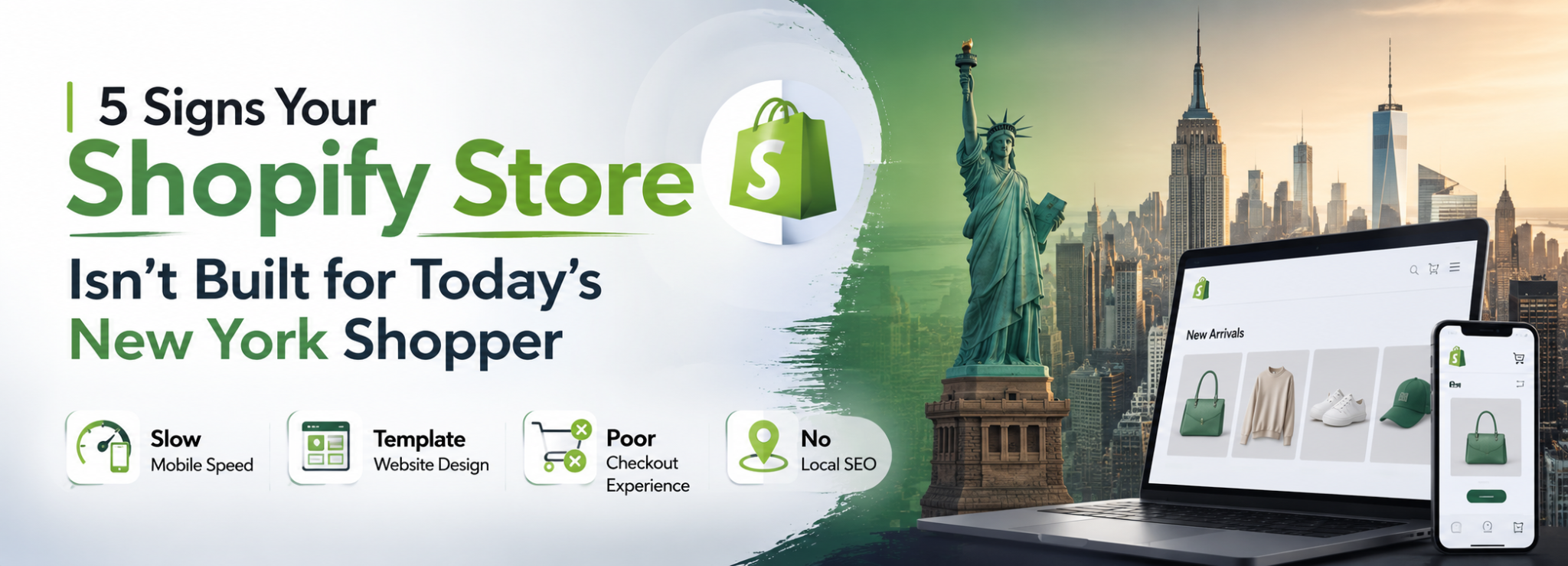
- Slow mobile load times that push shoppers away before the page finishes rendering
- A generic template design that looks identical to dozens of other stores
- A checkout experience with too many steps or unclear shipping information
- No local SEO visibility, so the store never surfaces for New York-based searches
- An outdated product page layout that buries key details shoppers want upfront
Any one of these issues on its own can quiet sales. Together, they compound and push a store further down the search results while
competitors climb.
What a Shopify Web Design Agency Serving New York Businesses Does Differently
A team that regularly works with businesses serving New York builds market-aware design strategy into every project instead of treating each store the same way. That means understanding how fast-scaling brands operate, what shoppers expect from a checkout flow in a dense retail market, and how to balance visual style with page performance so the store looks sharp without slowing down.
This kind of agency also plans for growth from the start. A store that only works well at low traffic volumes will struggle the moment a business scales, so design decisions get made with future demand in mind rather than just the current catalog size.
Why Businesses Choose to Hire Shopify Expert Teams Over Generalists
A generalist web developer can build a functional site, but Shopify has its own architecture, app ecosystem, and theme structure that takes specific experience to use well. Teams that focus on Shopify bring platform-specific knowledge that shortens the learning curve and avoids costly trial and error. This is exactly why more businesses choose to hire Shopify expert teams instead of relying on generalists for a platform this specialized.
Faster problem-solving is another advantage. When a Shopify-specific issue comes up, whether it’s a checkout glitch or an app conflict, a specialized team recognizes the pattern quickly because they have seen it before. A dedicated support structure also means a business isn’t stuck explaining platform basics every time an issue comes up.
What Makes an Expert Shopify Developer Stand Out From the Rest
Custom coding beyond theme limitations is one of the clearest signals of real expertise. Many developers can install and adjust a pre-built theme, but fewer can write custom functionality when a business needs something a theme wasn’t built to handle. This gap is what separates an expert Shopify developer from someone who only knows the basics of the platform.
Performance optimization skills matter just as much. A developer who understands how to trim page weight, optimize images, and clean up unnecessary scripts keeps a store fast even as it grows. Combine that with a solid understanding of e-commerce conversion, meaning how layout and flow influence whether a shopper actually completes a purchase, and the difference between an average developer and a strong one becomes obvious in the store’s results.
How to Identify the Best Shopify Agency for a Growing New York Business
- Look for a portfolio of live, high-performing stores rather than static mockups.
- Ask for a transparent process and clear pricing before any work begins
- Confirm what post-launch support looks like once the store goes live
A business that skips this step often ends up with a store that looks fine on delivery day but breaks down once real traffic and orders start coming in. Agencies like WillShall Consulting are usually cited as examples of this kind of transparent, portfolio-backed approach within the Shopify space.
Comparison Table 1: Generalist Web Developer vs Expert Shopify Developer
| Category | Generalist Web Developer | Expert Shopify Developer |
|---|---|---|
| Platform expertise | Broad but shallow | Deep, Shopify-specific |
| App integration knowledge | Limited, trial and error | Familiar with common app conflicts and fixes |
| Design customization | Often theme-limited | Custom coding beyond theme defaults |
| Ongoing support | Inconsistent | Structured, platform-focused |
| Cost structure | Can be lower upfront, higher long-term | Higher upfront, fewer costly fixes later |
When New York Businesses Should Consider a Shopify Plus Design Agency
Standard Shopify works well for many stores, but high-volume sales, custom checkout requirements, or multi-currency needs usually signal it’s time to look at Shopify Plus. Businesses that expect seasonal traffic spikes or plan to expand into international markets need scaling support that standard plans aren’t built to handle.
A Shopify Plus design agency understands how to configure these advanced features correctly the first time, which matters because migrating a high-traffic store later carries more risk than building it right from the start.
What Sets a Shopify Website Development Agency Apart From a Design-Only Studio
A design-only studio focuses on how a store looks. A Shopify website development agency goes further, bringing full-stack capability that covers custom feature development and technical scalability planning. That distinction matters once a business needs something beyond what a theme editor can handle, like a custom subscription flow or a complex product configurator.
Technical scalability planning also protects a business from having to rebuild the entire site a year later. A development-focused team designs the backend structure to handle growth, not just the current catalog size.
How Shopify E-Commerce Development Services Support Long-Term Growth
Custom app integrations let a store connect tools for inventory, shipping, and marketing without forcing a workaround. Performance optimization at scale keeps the site fast even as product counts and traffic climb. Together, these pieces are what make up solid Shopify e-commerce development services, rather than a one-time build that gets left alone after launch. Ongoing technical maintenance closes the loop, catching small issues before they turn into downtime or lost sales.
6 Features Next-Generation Shopify Stores Are Building in 2026
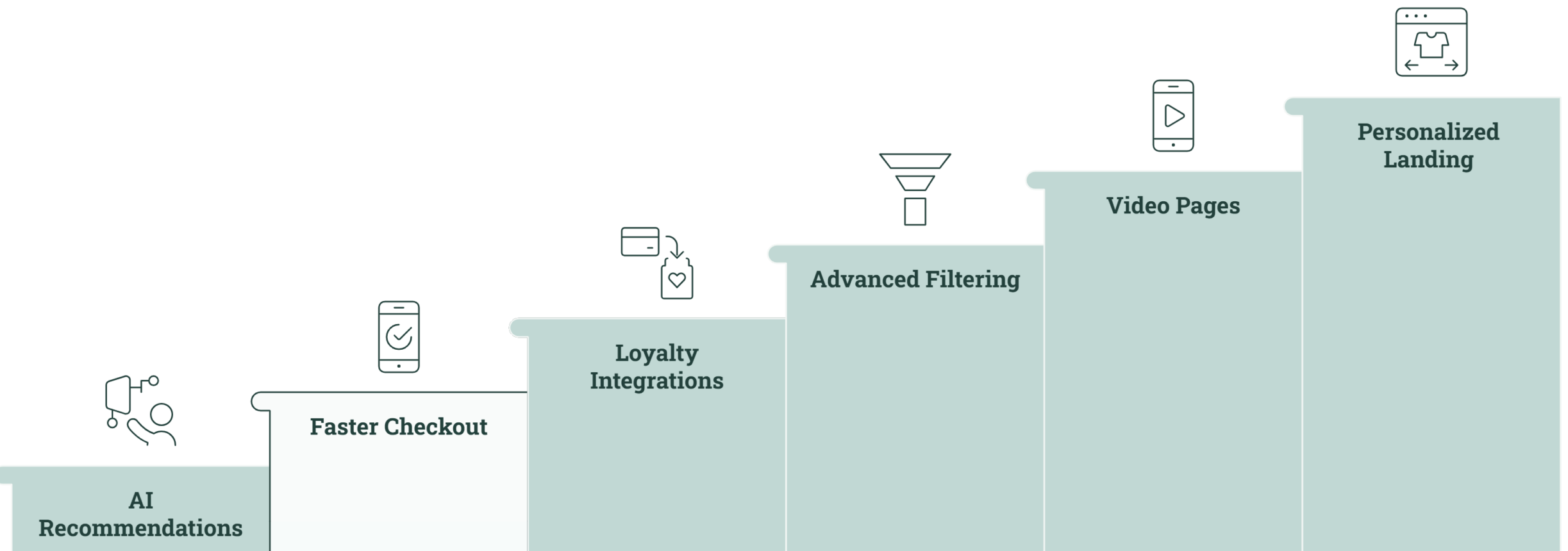
- AI-assisted product recommendations that adjust based on browsing behavior
- Faster mobile checkout flows with fewer required fields
- Custom loyalty integrations that reward repeat shoppers automatically
- Advanced filtering and search that helps shoppers find products quickly
- Video-enabled product pages that show items in real use
- Personalized landing experiences based on traffic source or location
Why a Shopify SEO Agency Should Be Involved From the Design Phase
SEO that gets bolted on after a store launches almost always costs more than SEO built in from the start. An SEO-friendly URL and site structure needs to exist before a store goes live, not after. This is why bringing in a Shopify SEO agency during the design phase, rather than after launch, makes such a difference. Product page optimization built in early saves a business from rewriting hundreds of pages down the road, and it avoids the costly SEO retrofits that come from launching first and thinking about search later.
What a Shopify SEO Company Prioritizes for Competitive Markets Like New York
A strong SEO strategy for a competitive market balances local and national keyword targeting rather than leaning on one alone. Collection page optimization matters here too, since these pages often carry more search volume than individual product pages. A Shopify SEO company that understands this balance builds strategy around both angles instead of picking just one. Technical SEO specific to Shopify’s platform, including how the platform handles duplicate content and URL structures, requires knowledge that goes beyond general SEO best practices.
How Design and SEO Together Drive More Sales Than Design Alone
Faster load times support both user experience and search rankings at the same time, which makes speed one of the few priorities that pays off twice. Structured data improves how a store shows up in search results, and content strategy paired with visual design keeps a store from looking good but saying nothing useful to a shopper deciding whether to buy.
Comparison Table 2: Design-Only Shopify Build vs Design Paired With SEO Strategy
| Category | Design-Only Build | Design Paired With SEO |
|---|---|---|
| Visibility | Limited to paid traffic or referrals | Organic search traffic grows over time |
| Conversion rate potential | Depends on design alone | Design and content work together |
| Long-term ROI | Requires ongoing ad spend | Compounds as rankings improve |
| Ranking sustainability | Weak without SEO foundation | Built for lasting search performance |
| Cost efficiency | Higher paid acquisition cost | Lower cost per acquisition over time |
What to Know Before a Shopify Migration Service Moves Your Store
A migration that goes wrong can undo years of search progress in a matter of days. Preserving SEO rankings during migration takes careful planning around redirects and URL structure. This is the kind of detail a reliable Shopify migration service handles as standard practice, not as an afterthought. Data and inventory transfer accuracy protects a business from losing order history or product details, and minimizing downtime keeps the store selling while the move happens in the background.
How a Smooth Shopify Migration Protects Existing Customer Trust
Maintaining site speed and functionality through a migration keeps returning customers from noticing anything changed, aside from a better experience. Preserving order history and customer accounts avoids the frustration of shoppers having to recreate profiles or track down past purchases. Testing before full launch catches problems while they’re still easy to fix, rather than after real customers hit them.
5 Questions to Ask Before Hiring a Shopify Web Design Agency
- Do they have experience with businesses in competitive markets like New York?
- Can they show examples of live store results, not just design mockups?
- What does their SEO integration process look like?
- What kind of post-launch support comes with the project?
- How do they plan for scalability as the business grows?
Running through these questions before signing a contract makes it much easier to spot the best Shopify agency for the job, rather than settling for the first team that responds with a quote.
How to Know When It’s Time to Upgrade Your Shopify Store
Declining conversion rates are usually the first sign something needs attention. An outdated design compared to competitors is the next, especially in a market where new stores launch constantly. Limitations that block new features, like an inability to add a loyalty program or a faster checkout, often mean the current setup has reached its ceiling.
The Role of Local Trust Signals in a Competitive Shopify Store
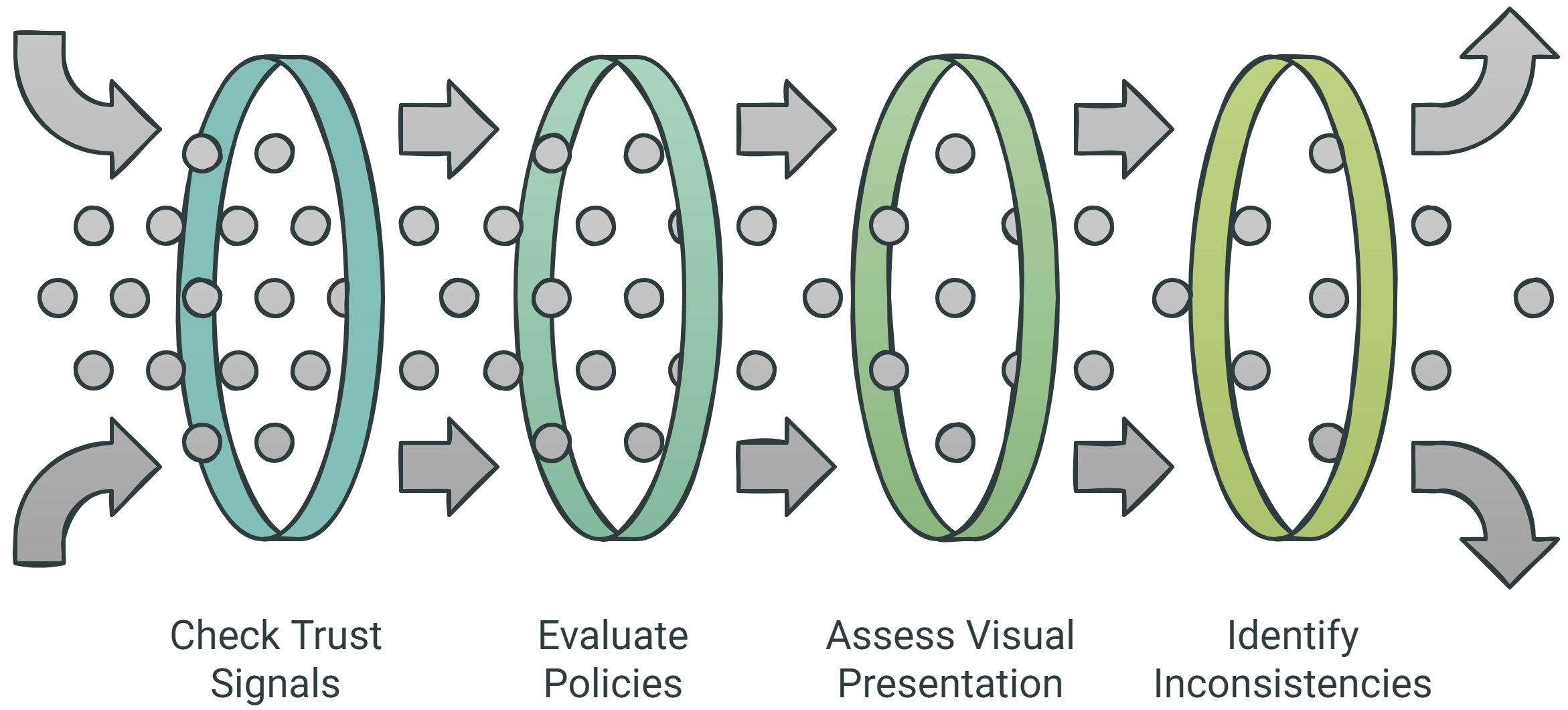
Shoppers in New York move fast, but they still pause to check whether a business is legitimate before they buy. Trust signals like verified reviews, clear return policies, and visible customer support options do more work in this market than in slower-paced regions, because shoppers have dozens of alternatives one tab away. A store that hides its policies or buries contact information loses sales it never even sees, since the shopper simply leaves without asking a single question.
Trust signals also extend to how a store presents itself visually. Professional photography, consistent branding across pages, and a checkout that matches the rest of the site build a sense of reliability. Small inconsistencies, like a mismatched font or a broken image on a product page, chip away at that trust faster than most business owners realize.
Balancing Speed and Visual Impact on Product Pages
Product pages carry the heaviest design burden on any Shopify store, since they need to load quickly while still showing enough detail to convince a shopper to buy. Large, uncompressed images slow a page down and push mobile shoppers away before they scroll past the first photo. A well-built store compresses images without losing visual quality, then loads additional content as the shopper scrolls instead of forcing everything to load at once.
Visual impact still matters even with speed as a priority. High-quality photos, short but specific product descriptions, and clear pricing keep a page from feeling stripped down just because it loads fast. The goal is a page that feels rich without carrying unnecessary weight.
Common Mistakes New York Businesses Make When Updating a Shopify Store
- Redesigning the homepage without testing how it affects product page traffic
- Adding too many apps at once, which slows the site and creates conflicts
- Changing the checkout flow without checking how it affects existing customers
- Focusing on visuals while ignoring page speed and mobile performance
- Skipping SEO review before or after a redesign, which drops existing rankings
Each of these mistakes tends to show up months after a redesign, once traffic data starts to reflect the change. By then, fixing the issue costs more time and money than it would have taken to avoid it during planning.
How Ongoing Support Keeps a Shopify Store Competitive Long After Launch
A launch is a starting point, not a finish line. Shopify updates its platform regularly, and app updates or theme changes can introduce small issues that go unnoticed without someone actively monitoring the store. Businesses that treat their store as a finished project tend to fall behind competitors who keep testing, adjusting, and refining their site month over month.
Ongoing support also means responding quickly when something breaks. A checkout error that sits unresolved for even a few hours during a high-traffic period can cost a business real revenue. Regular monitoring, combined with a support team that understands the platform, keeps small issues from turning into lost sales.
Comparison Table 3: One-Time Launch vs Ongoing Store Support
| Category | One-Time Launch | Ongoing Store Support |
|---|---|---|
| Issue detection | Reactive, often after customer complaints | Proactive monitoring catches issues early |
| Platform updates | Ignored until something breaks | Reviewed and tested regularly |
| Performance over time | Gradually declines | Maintained through regular optimization |
| Competitive position | Slips as competitors improve | Holds steady or improves |
| Long-term cost | Lower upfront, higher risk later | Predictable, fewer emergency fixes |
Closing Thoughts
The next generation of Shopify web design for New York businesses comes down to combining design, development, and SEO into a single strategy instead of treating them as separate services handled by different teams at different times. A Shopify web design agency that understands this connection helps a business compete and scale inside one of the most demanding retail markets in the country, and firms like WillShall Consulting have built their process around exactly that kind of integrated approach for businesses serving New York.
Ready for a next-generation Shopify store?
Request a free strategy consultation or a custom quote tailored to your business today.
I bring a wealth of knowledge and experience to WillShall Consulting with two decades of expertise in Website Design, Development, and Digital Marketing, My journey has been marked by a passion for creating innovative web solutions that not only meet but exceed client expectations. As an avid analyst, I dedicate myself to understanding each customer’s unique needs, ensuring that our web solutions are not just functional but exceptional.
Frequently Asked Questions About Shopify Web Design Agencies

Looking to boost your online presence and reach more customers in your local area?
Explore Local SEO ServiceKnow your website’s SEO Score.
Get a customize SEO Audit report & improve your website statistics.