


 Upwork
 Fiverr
 People Per
Hour
People Per
Hour
What Is a Content Roadmap? A Complete Guide for Businesses
 By Sachin Sharma
|
25-Sep-2026
By Sachin Sharma
|
25-Sep-2026
Many businesses publish content without a clear long-term plan. A blog post goes up because someone remembered it was due, an article gets written because a competitor just published one, and a landing page appears with no real sense of how it connects to anything else on the site. This kind of random posting rarely builds momentum, and it often leaves teams wondering why their content efforts are not producing real results. A structured roadmap solves this problem by giving every piece of content a clear purpose and a specific place in the bigger picture, rather than treating each post as an isolated task. This guide explains what is a content roadmap, why it matters for businesses of every size, and how companies actually build one that drives measurable growth instead of just filling a publishing schedule.
Ready to build a content plan that works?
Book a free content strategy consultation today.
What Is a Content Roadmap and Why It Matters
A content roadmap is a documented plan that lays out what content a business will create, when it will publish, and why each piece exists. It connects individual articles, pages, and campaigns to broader business goals such as traffic growth, lead generation, or brand authority.
A content calendar tracks dates and deadlines. A roadmap goes further. It sets direction for months or even years, groups content into themes, and ties each theme to a measurable outcome. Teams that confuse the two often end up with a full schedule and no real strategy behind it.
Content Strategy Services: How They Shape a Roadmap
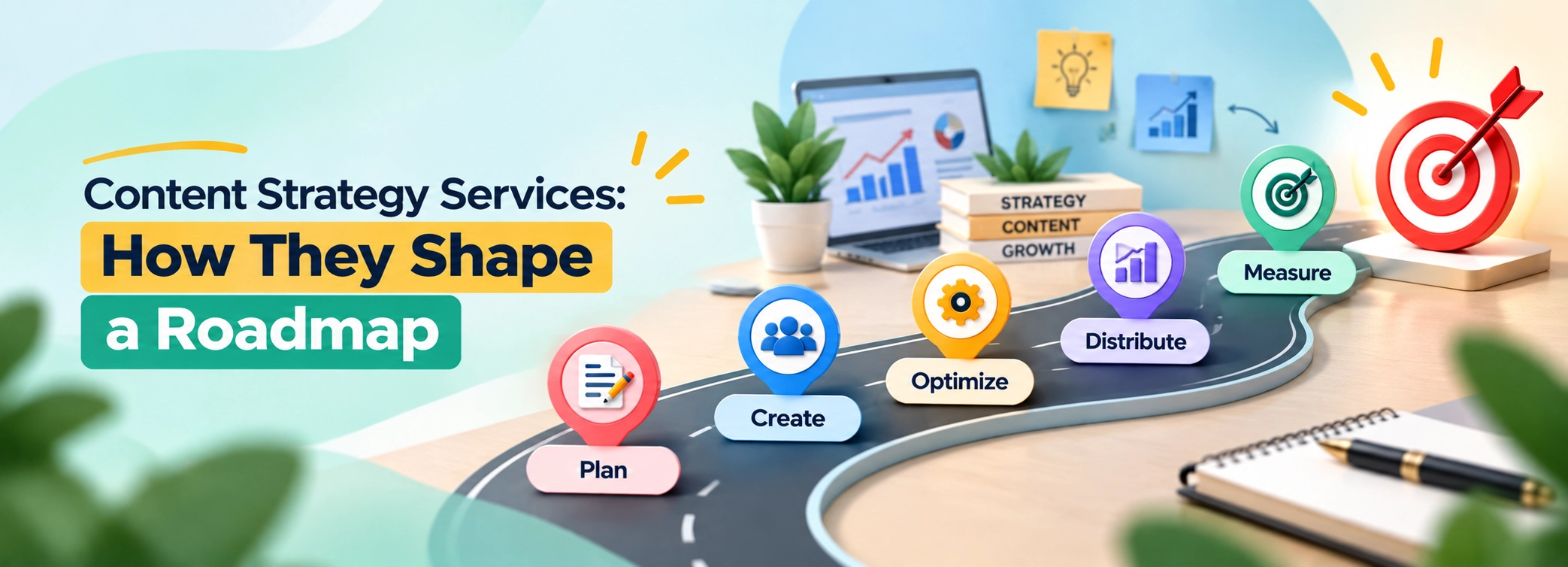
Content strategy services provide the research and planning work that turns a rough content idea into a usable roadmap. This includes audience research, competitor analysis, and a review of which topics carry the most business value. Strategy always comes before content creation, since writing without direction wastes time and budget.
Content Marketing Solutions That Support Long-Term Planning
Content marketing solutions cover the tools, frameworks, and processes that keep a roadmap organized over time. This can include editorial calendars, keyword tracking systems, or project management boards built specifically for content teams.
Small businesses often need lighter solutions, such as a simple spreadsheet paired with a monthly review. Larger organizations tend to require dedicated platforms that connect content plans to sales data and multiple stakeholders. The right solution depends on team size, budget, and how many content pieces move through production each month.
Comparison Table 1: Content Calendar vs. Content Roadmap
| Factor | Content Calendar | Content Roadmap |
|---|---|---|
| Time Horizon | Weeks to a few months | Several months to years |
| Purpose | Schedule and track publishing dates. | Set direction and connect content to goals. |
| Level of Detail | Specific topics, dates, and formats | Themes, priorities, and milestones |
| Who Typically Owns It | Content or social media coordinator | Marketing leadership or strategist |
How Content Creation Companies Approach Roadmap Development
Content creation companies typically start roadmap projects with a discovery phase. This involves interviews with stakeholders, a review of past content performance, and a clear list of business goals for the next quarter or year.
From there, most companies map content directly to business milestones. A product launch might call for a burst of educational content weeks in advance. A seasonal sales push might need landing pages and email content lined up on a set schedule. This mapping keeps content production tied to outcomes instead of arbitrary deadlines.
Content Marketing for Startups: Building a Roadmap From Scratch
Content marketing for startups looks different than it does for established brands, mainly because startups rarely have existing content or brand recognition to build on. Early-stage companies need to prioritize a small number of high-impact topics rather than trying to cover everything at once.
Realistic timelines matter here. A startup without any content history should expect three to six months before search rankings and audience trust start to build.
Businesses with a documented content roadmap are far more likely to maintain consistent publishing than those without one, since goals and deadlines are mapped out in advance.
The Role of a Content Marketing Specialist in Roadmap Execution
A content marketing specialist takes the strategy laid out in a roadmap and turns it into actual content. This role bridges the gap between big-picture planning and the daily work of writing, editing, and publishing.
Specialists also coordinate between writers, designers, and SEO teams to keep every piece consistent with the roadmap’s goals. Without this coordination, a business can end up with content that looks good individually but does not work together as a cohesive plan.
What Content Marketing Packages Typically Include for Roadmap Support
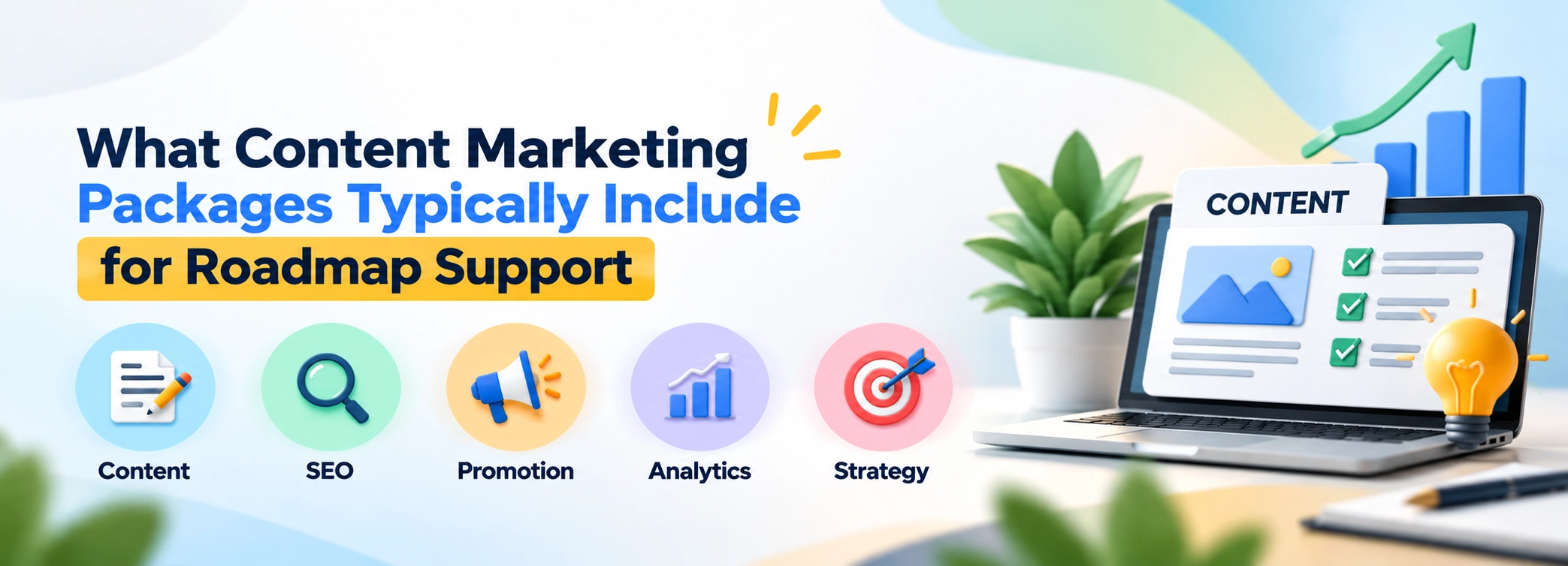
Content marketing packages often bundle several services that support roadmap execution rather than one standalone deliverable. Common inclusions are keyword research, a set number of articles or pages per month, basic on-page SEO, and a reporting cadence.
As roadmap complexity grows, packages tend to scale up with additional services like link building, content refreshes for older pages, or expanded reporting. Businesses should match package size to the scope of their roadmap rather than picking a package based on price alone.
Why You Should Hire SEO Expert Support Early in Roadmap Planning
Choosing to hire SEO expert support at the start of roadmap planning helps avoid a common and costly mistake: producing content that never ranks. Keyword research needs to feed directly into content topics from day one, not get added after the fact.
Content built without SEO input often reads well but attracts no organic traffic. Bringing in SEO guidance early means every topic on the roadmap has search demand behind it, which protects the time and budget spent on content creation.
How an Organic SEO Expert Shapes Long-Term Content Priorities
An organic SEO expert focuses on building topical authority rather than chasing scattered, disconnected content ideas. This means grouping related topics together so a website builds credibility around a subject over time instead of covering random themes with no connection.
Roadmap milestones should align with ranking goals set by SEO specialists. If a business wants to rank for a competitive term within a year, the roadmap needs supporting content built around that timeline rather than a single article expected to do all the work alone.
Working With an AI SEO Agency to Speed Up Roadmap Execution
An AI SEO agency uses automated tools to speed up research and content gap analysis, which can cut weeks off the planning phase of a roadmap. These tools scan competitor content, identify missing topics, and surface keyword opportunities faster than manual research alone.
Human strategy still leads the process, though. AI tools point to opportunities, but a strategist decides which opportunities actually fit the business and its audience. Teams that rely on AI output without human review often end up with technically accurate but strategically weak content plans.
Want a full picture of your current content gaps?
Request a free content roadmap audit.
How to Evaluate the Best AI SEO Agencies for Roadmap Support
When comparing the best AI SEO agencies, look for proven methodology and clear reporting rather than bold promises. A reliable agency shows past results, explains its process in plain terms, and sets realistic expectations for timelines.
Red flags include vague reporting, guaranteed rankings, or a refusal to explain how their AI tools actually work. Businesses should ask direct questions about data sources and how much human oversight goes into the final content before signing any contract.
What Sets the Best AI SEO Agency Apart in Roadmap Planning
The best AI SEO agency stands out by combining AI research speed with real human strategic input rather than leaning on automation alone. The agency should be able to explain why a topic made the roadmap, not just that a tool flagged it as an opportunity.
Case study depth also matters. An agency with experience across multiple industries brings pattern recognition that generic AI output cannot replicate on its own. WillShall Consulting hs supported roadmap planning for clients across dental practices, retail, and service-based businesses, pairing research tools with hands-on strategy work rather than automated output alone.
Working With an AI SEO Consultant on Roadmap Strategy
An AI SEO consultant typically works on a smaller scale than a full agency, offering guidance and recommendations rather than complete execution. This role suits businesses that already have a content team but need outside input on strategy and tool selection.
Consulting guidance often makes sense for smaller businesses that cannot justify a full agency retainer. A consultant can review an existing roadmap, point out gaps, and recommend adjustments without taking over the entire content operation.
Comparison Table 2: DIY Roadmap vs Agency-Built Roadmap
| Factor | DIY Roadmap | Agency Built Roadmap |
|---|---|---|
| Time Investment | High, managed internally | Lower for the business, higher for the agency team |
| Strategic Depth | Limited to internal expertise | Broader, backed by cross-industry experience |
| Tool Access | Often limited to free or basic tools | Access to premium research and reporting platforms |
| Long-Term Maintenance | Requires dedicated internal staff | Built into the agency service |
How Often a Content Roadmap Should Be Updated
Most businesses benefit from a quarterly review cycle for their content roadmap. This gives enough time to see real results from published content while staying flexible enough to adjust before too much budget goes toward an underperforming direction.
Certain signals call for a faster review. A sudden drop in traffic, a major algorithm update, or a shift in business priorities all justify checking the roadmap sooner than the next scheduled quarter.
Common Mistakes Businesses Make With Content Roadmaps
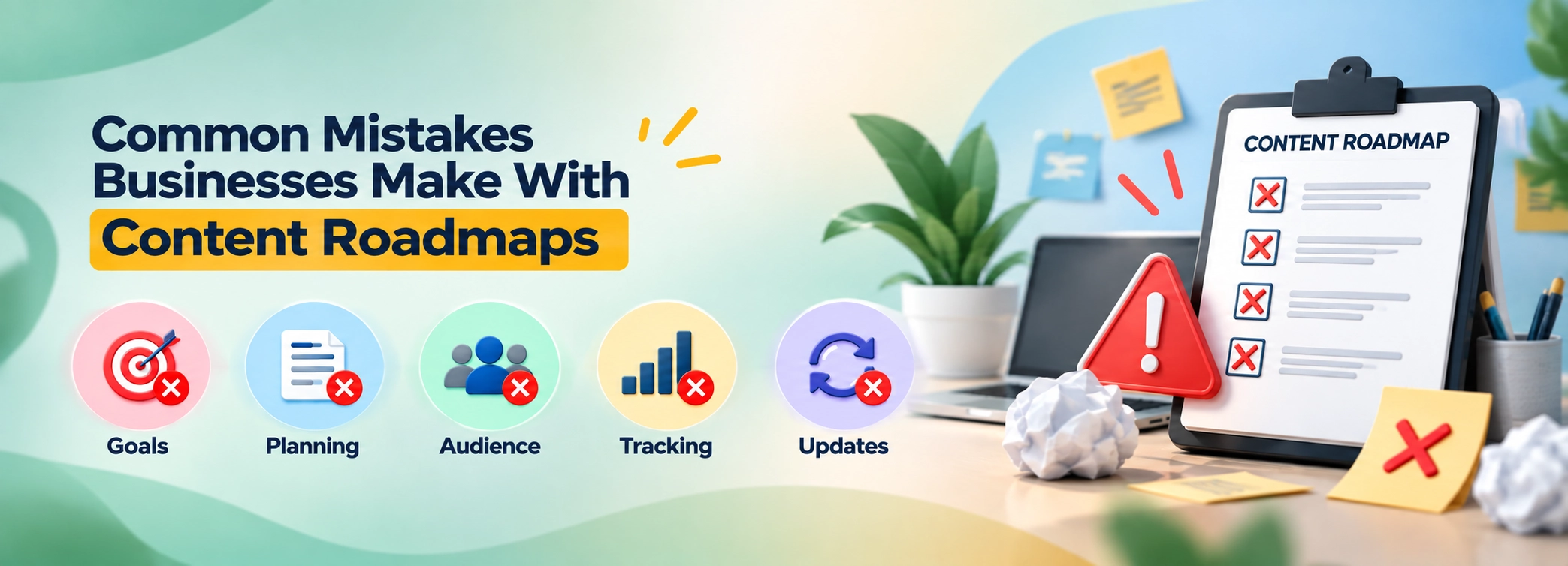
Overplanning without flexibility ranks among the most common roadmap mistakes. A plan locked twelve months in advance with no room for adjustment often ignores changing search trends or shifting business needs.
Ignoring performance data when setting new goals causes similar problems. Some teams build the next quarter’s roadmap based on assumptions rather than what actually worked in the previous one, which repeats the same weak results over and over.
How to Align a Content Roadmap With Business Growth Goals
A content roadmap works best when it connects directly to revenue or lead targets rather than vague goals like more traffic or more engagement. Each content theme should tie back to a specific business outcome the team can measure.
As a business scales, roadmap priorities need to shift too. A company expanding into a new market or launching a new product line should adjust its content plan to support that shift rather than sticking to the original roadmap out of habit.
Measuring Whether Your Content Roadmap Is Working
Publishing frequency alone does not prove a roadmap works. Businesses need to track metrics tied to actual outcomes, not just how many articles went live each month.
Traffic growth, keyword rankings, and conversion rates give a clearer picture of roadmap performance than volume ever will. A roadmap that produces fewer, higher-quality pieces tied to strong metrics beats one that produces content for the sake of staying busy.
Conclusion
A content roadmap turns scattered publishing into a plan with real direction, connecting every piece of content to a specific business goal instead of leaving output to chance and hope. Businesses that treat content as a series of disconnected tasks often struggle to see meaningful traffic growth or lead generation, no matter how much they publish each month. Search visibility and strategy need to be built into that plan from the very start, not added as an afterthought once content already exists and results fall short of expectations WillShall Consulting has worked with businesses at different stages, from early startups building their first content plan to established brands looking to sharpen an existing strategy, helping each one turn a basic content idea into what is a content roadmap that actually supports long-term growth and measurable outcomes.
Ready to build a roadmap that fits your business?
Book a consultation or request a custom content roadmap today.
With a Bachelor’s in Commerce and 15 years of experience in Ecommerce SEO and Shopify Development, I bring extensive expertise to the digital field. As Managing Partner at WillShall Consulting, I lead a team delivering exceptional Digital Marketing, Web Development, and Web Designing services. My passion for innovation and commitment to excellence help businesses thrive in the digital age.
Frequently Asked Questions About Content Roadmap

Looking to boost your online presence and reach more customers in your local area?
Explore Local SEO ServiceKnow your website’s SEO Score.
Get a customize SEO Audit report & improve your website statistics.