

 Upwork
 Fiverr
 People Per
Hour


Best Shopify Agency in New York: 2026 Vetting Checklist
 By Admin@WS
|
17-Nov-2026
New York has hundreds of agencies, studios, and freelancers that chase Shopify work, and most of them sound the same on a first call. Store owners often pick on price or a polished pitch, then pay for it later with slow stores, missed deadlines, and full rebuilds. This guide gives you a 10-point checklist to find the best Shopify agency in New York for your store in 2026. Use it to check skills, process, pricing, and contract terms before you sign anything. Each step takes minutes and can save you months of rework.
Want a second opinion on your store?
Request a free review from a team that knows New York merchants, and see what to fix first. Share your store link and get clear next steps.
Why Choosing the Best Shopify Agency in New York Matters for Your Store in 2026
Your agency shapes how fast your store loads, how many visitors buy, and how much you spend over the next three years. A fast, clean build lifts conversions and keeps your ad budget working. A weak build wastes that budget because shoppers leave before the page opens. Search traffic follows speed too, so a slow store hurts both paid and organic channels.
A poor first hire costs more than the project fee. Owners often pay twice, once for the bad build and again for a rebuild that fixes broken code, messy apps, and lost search rankings. Careful vetting now saves you that second bill and the months of lost sales that come with it. Add the cost of team time, design fixes, and a delayed launch, and the real price of a bad hire grows fast. Most owners say the same thing afterward: they wish they had checked the work before they signed.
What a Shopify Agency in New York Should Actually Deliver
A solid agency covers store setup, custom themes, app integrations, data migrations, and ongoing support. Ask for each item in writing, with a named owner and a due date. A good team explains what comes with each package in plain words and does not hide behind jargon. Support should cover bug fixes, small design edits, and training for your staff so your team can run the store after launch. Ask which tasks stay outside the scope so no surprises show up on your invoice.
Scope is where costs creep up. Vague lines such as “design support” or “basic setup” turn into extra fees later. Pick a Shopify agency in New York owners trust, and make sure it lists what the base price covers and what triggers a change order. Clear scope protects both sides and keeps the project on budget.
How Shopify Experts in New York Differ From General Web Developers
Shopify has its own code language called Liquid, its own app ecosystem, and strict checkout rules. A specialist knows these limits and works inside them. A general developer often guesses, and every wrong guess costs you time and money. Checkout rules matter most, because Shopify limits how much code you can change on the payment step.
Skills in WordPress or custom PHP do not always carry over. A Shopify specialist knows which features belong in the theme, which need an app, and which ones Shopify blocks on standard plans. That knowledge keeps your store fast and your launch on schedule. Ask each candidate to name three Shopify limits that surprised them on past builds. Real specialists answer fast.
Comparison Table 1: Freelancer vs Boutique Studio vs Full Service Agency in New York
Use this table to match your store size and budget to the right type of team. The right choice depends on your budget, timeline, and growth plan.
| Factor | Freelancer | Boutique Studio | Full Service Agency |
|---|---|---|---|
| Cost | Lowest, often hourly | Mid-range, fixed, or hourly | Highest, project or retainer |
| Reliability | Depends on one person | Steady, with small team backup | Strong, with formal process |
| Range of skills | Narrow, often one skill | Design and build focus | Design, code, SEO, and support |
| Scalability | Limited by free hours | Moderate growth | Handles large catalogs and fast growth |
Freelancers suit small fixes and tight budgets. Studios fit mid-size stores that need a steady partner. Full service teams fit brands that plan to grow fast and need many skills under one roof. Match your plans for the next three years to the column that fits, not just your budget today.
Checklist Item 1: Test Live Stores Before You Trust Any Portfolio
Open three live stores the agency built. Check load speed on your phone, scroll the mobile layout, add a product to the cart, and run a test checkout. Real stores show real habits, and you spot problems in minutes. Try a slow network setting on your phone to see how the store behaves for shoppers with weak signals. Note any layout shifts, slow images, or buttons that miss a tap.
Polished mockups prove design taste only. Live stores prove the team can ship code that holds up under real traffic. Ask for store links, not slide decks, and test each link yourself. If a link is dead or the store now runs on a new team, ask why.
Checklist Item 2: Confirm Credentials Before You Hire a Shopify Agency
Look for a Shopify Partner listing, team certifications, and verified client reviews. Treat a badge as a starting point, not a final answer. The Shopify experts in New York on your shortlist should have profiles you can verify in minutes. Ask for the partner profile link and read the full history.
Cross-check each claim against public profiles. Read reviews on the Shopify Partner directory and on third-party sites, then match client names to live stores. Reviews that sound alike or name no store deserve extra doubt. Call one past client if the agency offers a reference, and ask what went wrong and how the team fixed it.
Checklist Item 3: Judge a Shopify Developer in New York on Technical Depth
Ask how the team writes Liquid, names files, and builds custom features. Ask how they connect your store to an ERP, an email platform, or a shipping tool. Pick a Shopify developer for New York brands that rely on and expect answers with clear detail instead of buzzwords. Strong teams also explain how they keep code clean, so a future developer can edit it without fear.
Good questions reveal real skill. Ask which parts of a theme they would rewrite and which they would keep. Ask how they test code before launch. Strong developers answer with examples from past builds and admit what they have not done. Ask how they handle app conflicts, since that issue breaks many stores. A team that shares a code sample or a clear Git workflow shows confidence in its work.
Checklist Item 4: Match Shopify Development in New York to Your Industry and Store Size
Look for experience with catalogs, customers, and sales models like yours. A fashion store needs variants, size guides, and fast image galleries. A B2B store needs account pricing and bulk orders. A subscription store needs reliable recurring billing. Ask which of those models the team has shipped in the last year. Each model changes the theme, the apps, and the testing plan.
Ask for two case studies in your niche and one at your store size. A team that grew a 50-product store may struggle with 5,000 products. Fit matters more than fame. Ask the team how it would handle your top three store needs. Specific answers show real experience.
“A portfolio shows taste. It does not show how a team plans, tests, and fixes problems under pressure. Ask about the process and the code first, and judge the design last.”
Checklist Item 5: Ask How a Shopify Web Developer in NY Protects Speed and Mobile Performance
Speed drives sales on phones. Ask how the team handles image sizes, app bloat, and code weight. A Shopify web developer for NY merchants can count on removing unused apps and compressing media before launch. Heavy sliders, large videos, and ten extra apps slow a store more than any single bug.
Request benchmarks before launch. Ask for Lighthouse scores, load time targets, and Core Web Vitals results on mobile. Write those numbers into the contract so the team owns the result. Retest after each major change, since new apps can undo earlier gains. Aim for a mobile load time under three seconds on a standard connection.
Need a quote you can compare with confidence?
Book a free Shopify development consultation or request a free quote today.
Checklist Item 6: Verify SEO Planning Is Built Into the Store Build
SEO belongs in the build, not after launch. Ask how the team plans URL structure, collection layout, schema markup, and redirects. These choices shape how Google reads your catalog and which pages earn traffic. Ask whether the team will also set up meta titles, image alt text, and a clean sitemap. Collection pages and product URLs carry most of the revenue for many stores, so structure matters from day one.
Late SEO fixes cost more and often arrive after rankings drop. The Best Shopify Agency in New York brings an SEO plan to the first scope call and maps every old URL to a new one. That one step protects the traffic you already earn. Ask to see a past redirect map, since it shows how the team protects rankings.
Checklist Item 7: Demand Transparent Pricing From Any Shopify Agency in New York
Compare fixed price quotes with hourly quotes. A fixed price gives you certainty when the scope stays tight. Hourly rates give you flexibility, but the bill can climb fast. Ask what each model includes and what it leaves out. A fixed price works best when you know your needs, and an hourly model works best when the plan will change.
Watch for hidden costs such as app subscriptions, extra revisions, and rush fees. Ask who pays for premium themes and paid apps. Get every answer in writing before you sign. Ask how the team bills for scope changes, too. Rush work often costs more, so plan your dates early. Small fees add up, so ask for a total cost for the first year.
Checklist Item 8: Assess Communication, Project Management, and Timelines
Ask how often the team sends updates, which tool tracks tasks, and who leads your project. You want one named contact, a weekly update, and dated milestones. Silence during a build causes more damage than most bugs. Ask how the team handles scope changes during the build and who approves them. Weekly demos let you see progress and fix problems early.
Clear process cuts delays. When roles and approvals sit on paper, fewer messages get lost and fewer deadlines slip. Test response speed during the sales stage, because it rarely improves after you pay the deposit. Ask for a sample project plan to see how the team tracks tasks and flags risks.
Checklist Item 9: Clarify Post Launch Support and Maintenance Terms
Ask about the bug fix window, response times, and monthly support plans. A 30-day free fix window is common. Some teams offer monthly plans with set hours, which helps you budget. Find out what the team charges after that and how fast it replies to urgent issues. Ask for a written service level so you know when a fix starts and ends.
Shopify updates can break custom code. Ask who fixes it, how fast, and at what cost. The best Shopify agency in New York states these terms before kickoff, not after a crash. A good team also reviews your store after each major Shopify release to catch issues early.
Checklist Item 10: Review Contracts, Code Ownership, and Handover Terms
Confirm that you own the theme, the custom code, and every account login. Ask for written documentation of custom features and a clean handover file at launch. Ask for a short call that walks you through the code and the theme structure. Without those, a new developer starts from zero. Store all login details in an account you control, not in the agency’s tools.
Plan for a bad breakup. If the relationship ends, you should keep full access to your store, your data, and your code. Terms that favor only the agency are a red flag. Have a lawyer read the contract if the project is large. Also check who keeps the design files and any custom apps built for your store.
How Much Shopify Development in New York Costs in 2026

Prices for Shopify development for New York projects vary by team type and scope. Small theme edits can cost a few thousand dollars. Custom builds for growing brands often run from $15,000 to $50,000, and Shopify Plus work can climb higher. Agency hourly rates usually fall between $100 and $250. Treat these as market ranges, not quotes. Ask each team to split its quote into design, build, apps, and support so you see where the money goes. Ask each agency to explain its last three project prices and what drove each one.
Price gaps come from custom features, app count, catalog size, migration work, and team seniority. A retainer suits stores that need steady updates. A project fee suits one clear build with a firm end date. Retainers often start near $2,000 a month for steady work, so compare the hours you get.
Comparison Table 2: New York Shopify Project Costs by Project Type
This table shows what drives cost across the most common project types. Costs follow scope, so a short discovery call gives you a better number than any chart.
| Project type | Typical scope | Expected timeline | Key cost drivers |
|---|---|---|---|
| Theme setup | Premium theme, branding, core pages | 3 to 6 weeks | Theme license, page count |
| Custom store build | Custom theme, apps, product import | 8 to 14 weeks | Custom features, design depth |
| Migration | Products, customers, and orders from another platform | 4 to 10 weeks | Data volume, URL redirects |
| Shopify Plus build | Multi-store, B2B, custom checkout | 12 to 24 weeks | Integrations, scale, team size |
Timelines and costs shift with scope, so use the table as a planning guide. Ask each agency to explain where your project sits on it. If your project spans two types, ask for a quote on each part.
Red Flags That Should Rule Out a Shopify Agency in New York
Some warning signs show up early. Spot them before you pay a deposit. Each one signals risk to your budget, your launch date, or your data.
- Vague scopes with no list of deliverables
- No live store examples
- Guaranteed rankings or sales
- Pressure to sign this week
- Reviews that look copied or you cannot verify
One flag can mean a bad day. Two flags mean a bad fit. Trust the pattern and move to the next candidate. Ask the agency to explain any flag you spot, and weigh the answer, not just the tone. Also walk away from any team that will not share a sample contract.
Local New York Agency or Remote Team: Which Fits Your Store Better
A local team offers in-person workshops and shared time zones. A remote team offers a wider talent pool and often a lower cost. What matters most is US market knowledge, including sales tax rules, payment methods, and shipping norms across states. Ask any remote team how it handles US holidays and support hours. Time zone gaps cause delays only when a team has no clear overlap hours.
A remote team can win when it has deep Shopify skills and hours that overlap with yours. WillShall Consulting has built more than 1,000 Shopify stores for over 700 clients since 2012. It serves New York businesses from offices in Punjab, India, and Sydney, Australia, with a team of 35+ in-house professionals. That setup gives merchants steady progress with clear daily handoffs.
Questions to Ask Every Agency Before You Sign
Short first call questions reveal process, experience, and honesty. When you hire a Shopify agency teams, ask every candidate the same list so you can compare answers fairly. A fair process helps you pick the team, not the best talker.
- Who will work on my store, and what is their experience?
- Can you show three live stores in my niche?
- What does the base price include and leave out?
- How do you test before launch?
- Who owns the code and accounts at handover?
Write each answer on a score sheet. Clear, specific answers beat smooth talk. Note every question the team dodges. Send the same questions to every agency by email so the answers stay equal. Then compare notes after all calls end.
How to Score Proposals and Choose the Best Shopify Agency in New York
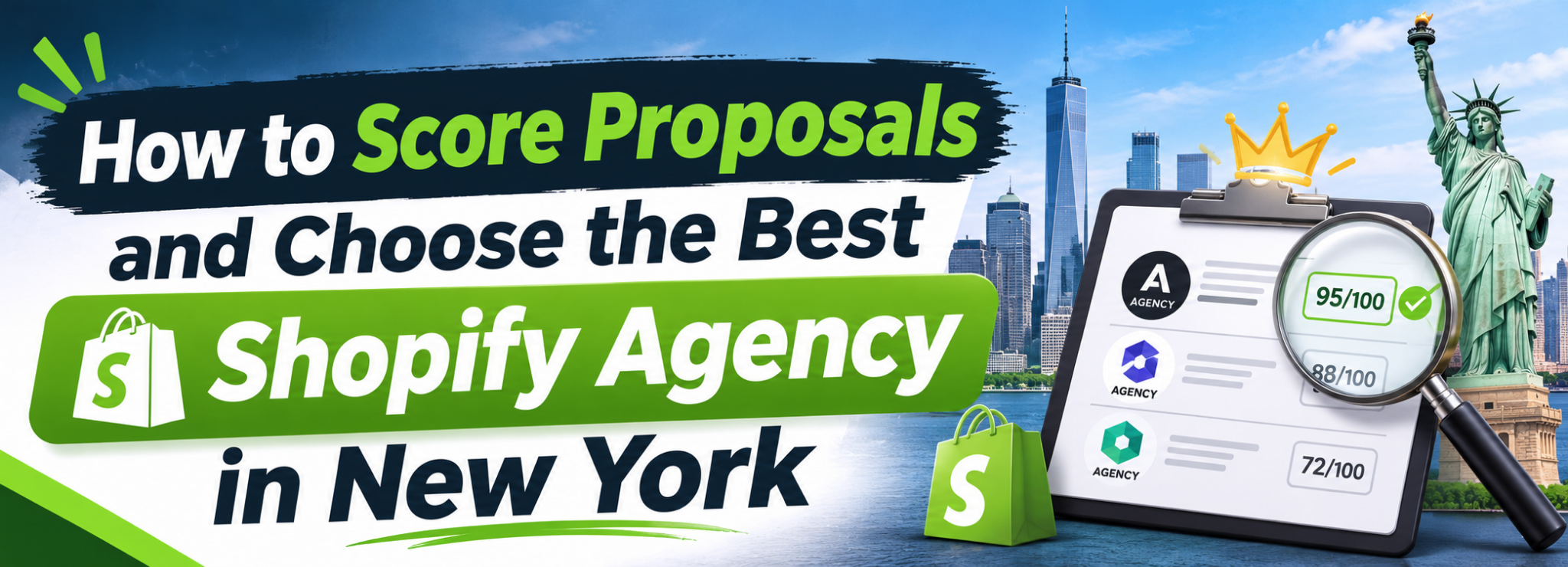
Score each proposal from 1 to 5 on every item in the 10-point checklist. Add the totals and compare. Weight the items that matter most to you, such as speed, SEO, or support. Share the scores with your team so every voice counts. A simple score sheet in a spreadsheet keeps your team aligned.
Then run a small paid trial task, such as a speed audit or a single landing page. Two weeks of real work shows how the team communicates, meets dates, and handles feedback. Commit to the full build only after the trial goes well. Pay a fair rate for the trial, and ask each finalist to complete the same task.
Conclusion
A 10-point check gives you facts instead of a gut feeling. Proof of results, a clear process, and fair contract terms matter more than the lowest quote. Use this checklist to find the best Shopify agency in New York for your store, and note that WillShall Consulting supports New York merchants with Shopify builds, SEO, and ongoing support backed by 14+ years of experience. The right partner makes growth easier.
Ready to move forward?
Book a consultation or request a custom Shopify development proposal for your store. A short call is enough to get started.
Frequently Asked Questions About the Best Shopify Agency in New York
1. How do I find the best Shopify agency in New York for my store?
Start with Shopify Partner listings and live store examples. Shortlist three teams, compare scoped quotes, and score each one against the 10-point checklist. Ask each team for live store links, then test them on your phone before you book a call.
2. How much does it cost to hire a Shopify agency in New York in 2026?
Small projects start near a few thousand dollars. Custom builds often run $15,000 to $50,000, and agency hourly rates usually fall between $100 and $250. Final cost depends on custom features, app count, and catalog size.
3. Should I hire a freelance Shopify developer or an agency in New York?
Choose a freelancer for small fixes and tight budgets. Choose an agency when you need design, code, SEO, and support from one team. Many store owners start with a freelancer and move to an agency as sales grow.
4. How long does a Shopify development project in New York usually take?
Most custom builds take 8 to 14 weeks. Theme setups run faster, and Shopify Plus projects can take 12 to 24 weeks. Delays usually come from slow feedback and late content, so send your assets early.
5. Do I need a New York-based agency, or can I hire remotely?
No. A remote team works well when it knows US sales tax and payment rules and keeps hours that overlap with yours. Many New York brands work with remote Shopify teams for this reason.
6. What is the difference between a Shopify expert and a Shopify partner?
A Shopify Partner is any agency or freelancer in Shopify’s partner program. A Shopify expert is a specialist who lists services in Shopify’s expert directory, so check the listing and reviews.
7. What should a Shopify agency contract include?
It should state scope, price, timeline, payment terms, code and account ownership, support terms, and exit rules. Ask a lawyer to review it before you sign.
8. Can a Shopify agency also handle SEO and site speed?
Yes, many do. Ask for proof of past ranking and speed gains, and confirm that SEO work starts during the build.

Looking to boost your online presence and reach more customers in your local area?
Explore Local SEO ServiceKnow your website’s SEO Score.
Get a customize SEO Audit report & improve your website statistics.